Subaru has long been a key player in the automotive industry, known for producing a diverse lineup of vehicles, ranging from the popular Subaru Legacy sedan to the rugged Subaru Forester SUV. Over the years, the brand has expanded its operations, with many models now being manufactured in the United States. However, some vehicles from Subaru’s past, like the Subaru Baja, only lasted a few years before being discontinued. The Baja, a unique and unconventional UTE, was sold between 2003 and 2006.
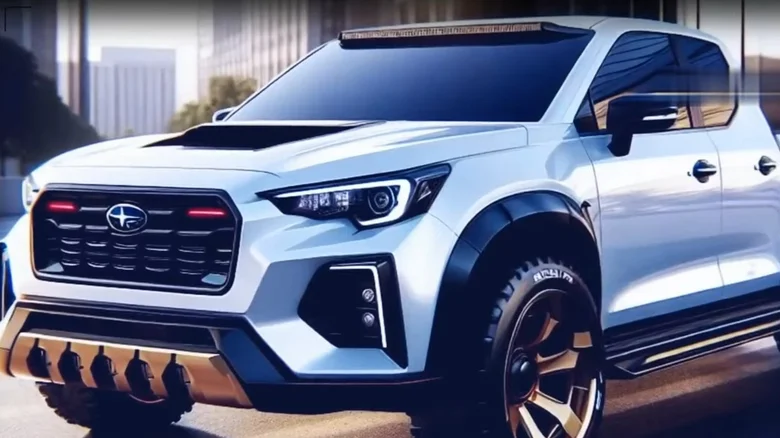
Now, as we approach two decades since the Subaru Baja was discontinued, rumors have surfaced about a potential comeback in 2025. Some online sources have speculated that the Baja will return as a modern pickup truck, even sharing images of what they claim to be the new model. However, there is no official confirmation from Subaru about the revival of the Baja. While a new Baja could have the same impact for Subaru that the Maverick had for Ford, these rumors are not grounded in any factual evidence.
The claims about a 2025 Subaru Baja are largely based on false information. Many of the images circulating online are artificially generated, misleading car enthusiasts into believing the Baja is making a comeback. If you’ve encountered these photos, you’re not alone—they’ve fooled many. These images are simply AI-generated fabrications, part of a growing trend in the automotive world.
Identifying AI-Generated Images of the 2025 Subaru Baja
AI-generated car images, including the ones claiming to show the 2025 Subaru Baja, might look convincing at first glance, but there are clear signs that they aren’t real. For example, the text on tires or badges in these images often appears blurry or illegible, a common flaw in AI-rendered images. Additionally, small details, such as the grill, hubcaps, and badges, can appear distorted or warped in ways that wouldn’t occur in human-made concept designs. The overly perfect and pristine look of the image is another common feature of AI-generated renderings.
While the idea of a new Subaru Baja is exciting for many fans, the reality is that there is no truth to the rumors of a 2025 model. Subaru has made no official announcements regarding the return of the Baja, and the images being shared online are simply the result of AI-generated content.
The Rise of AI in Car Renderings: A Growing Challenge
AI-generated images are becoming more common in the automotive space, often spreading misinformation about upcoming vehicle releases. These AI-created “concepts” can lead people to believe that discontinued models, such as the Subaru Baja, are being revived or that future versions of existing vehicles will have impractical designs.
As AI tools become more prevalent, it’s important to be cautious about the images and information shared online. Staying aware of the signs of AI-generated content can help prevent falling victim to misinformation, especially as these digital creations continue to flood automotive discussions.
George Mensah
George Mensah is Editor-in-Chief of TechFullPost, covering tech news, gaming, gadgets, mobile, and apps. Writing since 2018 and researching technology since 2013, he leads TechFullPost's mission to keep readers connected to the stories shaping the world of tech.
For much of the past decade, Tesla has defined the modern electric vehicle revolution. But in recent months, an uncomfortable question has become harder to ignore: does Tesla still see itself as a car company at all?
That question loomed large during Tesla’s latest quarterly earnings call, where Elon Musk and senior executives appeared to all but confirm what critics have long suspected. Tesla’s future, they suggested, lies less in building and selling cars—and far more in artificial intelligence, autonomous systems, and humanoid robots.
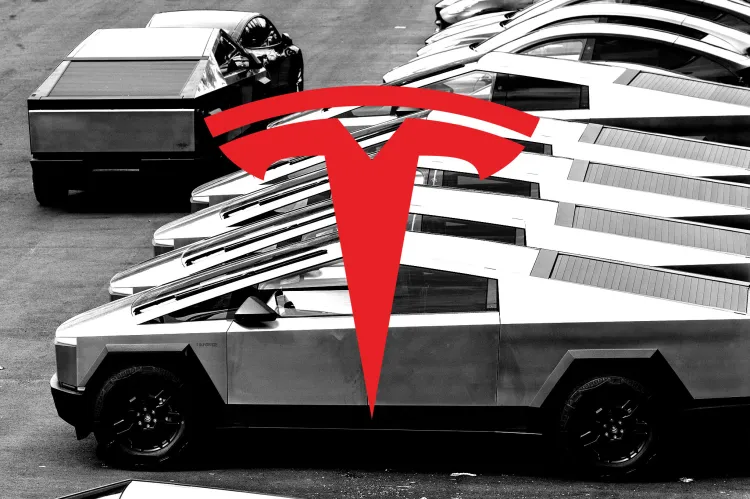
In one of the most striking moves yet, Tesla quietly ended production of its original flagship vehicles, the Model S and Model X, vehicles that once symbolized the company’s technological edge and luxury ambitions. Their exit makes room, executives say, for an entirely different priority: scaling up production of Tesla’s Optimus humanoid robot, a project that still struggles to perform basic tasks without human assistance.
At the same time, a top Tesla executive urged investors to stop thinking of the company as an automaker altogether, framing Tesla instead as a “transportation as a service” provider. Musk reinforced the message with a familiar refrain: in the long run, people won’t be driving cars at all.
“The vast majority of miles traveled will be autonomous in the future,” Musk said. “Probably less than 5 percent of miles driven will be where somebody’s actually driving the car themselves—maybe as low as 1 percent.”
Moments later, he went further. “Long-term,” Musk said, “the only vehicles we’ll make will be autonomous vehicles.”
A Car Company in Name Only?
On paper, Tesla is still very much in the car business. In 2025, the company reported $94.8 billion in revenue, with $69.5 billion—about 73 percent—coming from vehicle sales. But the trend lines tell a different story. Automotive revenue fell 10 percent year over year, while Tesla’s non-car businesses—energy generation, battery storage, and services—continued to grow.
Tesla has also lost its crown as the world’s largest EV seller, overtaken by China’s BYD. Meanwhile, its two remaining mass-market vehicles, the Model 3 and Model Y, are seeing declining demand despite refreshed designs and attempts to introduce cheaper variants.
The broader market isn’t helping. EV subsidies and tax incentives that once fueled demand are being rolled back in multiple countries. Musk himself played a role in that shift through political donations and vocal support for Donald Trump, moves that have alienated parts of Tesla’s historically progressive customer base. Combined with Musk’s increasingly polarizing public persona, the Tesla brand has lost some of its former shine.
Betting on Subscriptions and Software
Like many technology companies before it, Tesla is increasingly turning toward subscription-based revenue. For the first time, the company disclosed that it has 1.1 million active Full Self-Driving (Supervised) subscriptions, a 38 percent increase from late 2024.
Musk recently announced plans to stop selling Full Self-Driving (FSD) as a one-time purchase and move to a subscription-only model. While FSD enables hands-free driving in many scenarios, drivers must still monitor the road and remain ready to intervene. Tesla’s autonomy claims have repeatedly drawn scrutiny from regulators, lawsuits from consumers, and investigations over safety and marketing practices.
Still, Musk remains convinced that autonomy—and robotaxis in particular—will define Tesla’s future. He claimed Tesla’s autonomous taxi service will launch in “dozens” of U.S. cities this year, a scaled-back promise compared with earlier projections. He also teased a third-generation Optimus robot, which he says could be ready for mass production by late 2027.
The Trillion-Dollar Incentive
Autonomy is not just a technological obsession for Musk—it’s central to his compensation. Under a controversial pay package, Musk stands to earn up to $1 trillion if Tesla meets a series of aggressive milestones, including deploying more than a million robotaxis, producing a million humanoid robots, and generating $7.5 trillion in shareholder value.
Notably, the plan does not require Tesla to dramatically expand car sales. If Tesla averages 1.2 million vehicles sold annually over the next decade, Musk would still qualify for massive stock awards—fewer cars per year than Tesla sold in 2024. In effect, declining vehicle sales are already baked into the deal.
Board Approval and Growing Doubts
Tesla’s board and major shareholders have consistently backed Musk’s vision, despite mounting evidence that the company is lagging behind competitors in key areas. Waymo’s robotaxis operate with fewer incidents, while federal crash data reported by Electrek suggests Tesla’s autonomous vehicles crash at higher rates than human-driven cars—even with safety drivers present.
Optimus robots, meanwhile, remain largely dependent on remote human operators. Musk himself admitted during the earnings call that Optimus is not yet meaningfully deployed inside Tesla’s own factories.
Still, Tesla’s pivot away from traditional car manufacturing reflects a broader industry trend. Automakers increasingly talk about “software-defined vehicles,” promising continuous improvements through over-the-air updates—and recurring revenue through paid features. Compared with the capital-intensive, low-margin business of building cars, subscription software looks irresistible.
A Risky Transformation
The problem is scale. FSD subscriptions, even if they grow, are unlikely to replace Tesla’s primary revenue engine anytime soon. And with the Model S and Model X gone, Tesla has fewer vehicles to sell at a time when it needs cash the most.
Pursuing robots and robotaxis isn’t cheap. Tesla expects to spend $20 billion in capital expenditures in 2026, more than double last year’s spending. The money will go toward Cybercab production lines, the long-delayed Semi truck, Optimus robots, and new battery and lithium facilities, according to CFO Vaibhav Taneja.
Toward the end of the earnings call, Musk conceded that much of this spending is being driven by necessity rather than strategy.
“Why do we have to build these things?” Musk said, referring to lithium and cathode refineries. “Can someone else build these things? It’s very hard to build these things.”
The Identity Crisis Deepens
Tesla’s transformation is far from complete—and far from guaranteed to succeed. For now, the company still depends on selling cars to survive. But its leadership increasingly behaves as though that era is already over.
Whether Tesla can successfully reinvent itself as an AI and robotics powerhouse remains an open question. What is clear is that the company is drifting further away from the business that made it famous—and profitable—in the first place.
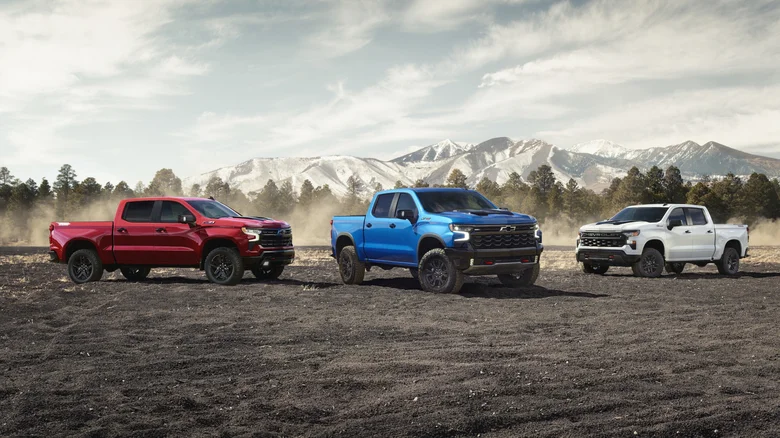
The Chevrolet Silverado 1500 remains one of America’s most popular full-size trucks, competing head-to-head with the heavy hitters: the Ford F-150, Ram 1500, and Toyota Tundra. As Chevy’s best-selling vehicle, the Silverado offers a wide mix of engines, three cab configurations, multiple bed lengths, and a long list of customizable features. There’s even an all-electric Silverado for buyers looking to ditch gasoline entirely.
But perhaps the most exciting part of the Silverado range is its wide variety of off-road-focused trims; from basic work-ready models to premium, adventure-ready machines, Chevrolet has created options for nearly every budget and terrain.
Where the ZR2 Sits in the Lineup
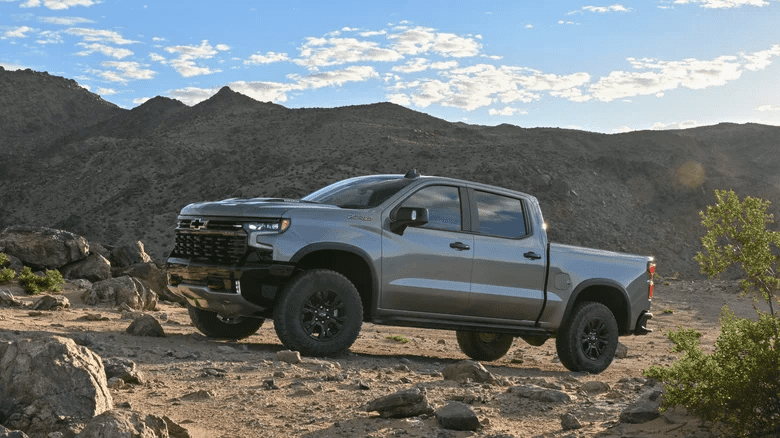
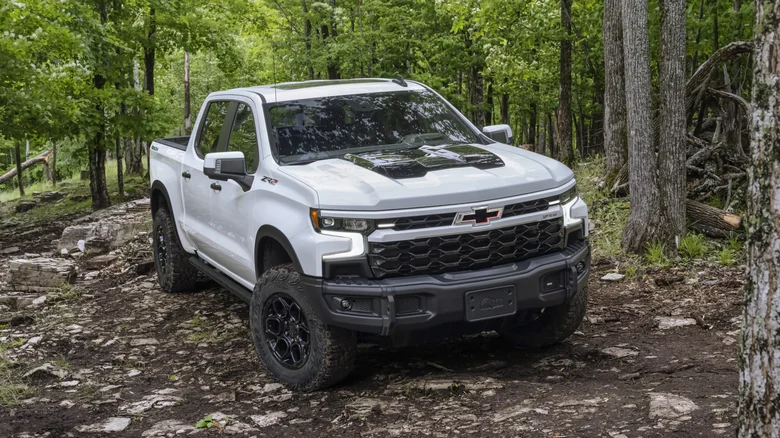
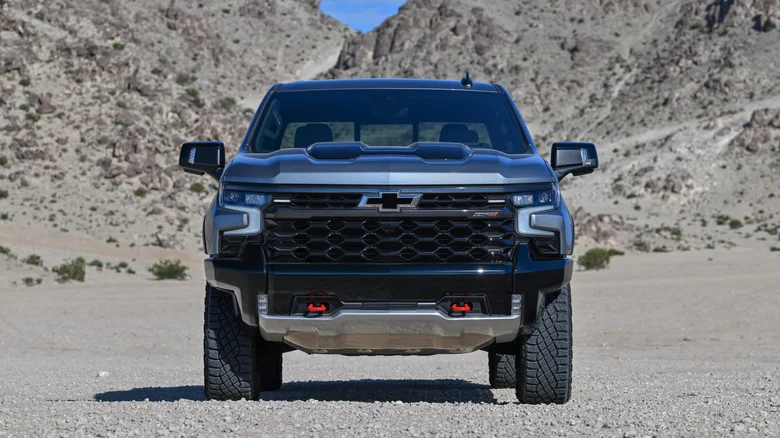
At the top of the off-road hierarchy is the Silverado ZR2-the brand’s most trail-capable gas-powered variant. While not quite as extreme as the Ford F-150 Raptor or Ram RHO, the ZR2 nonetheless delivers serious off-road performance courtesy of hardware specifically engineered for rocky, muddy, and uneven conditions.
Pricing for the 2026 ZR2 begins at $74,690 including the $2,595 destination fee. For that premium price, buyers get:
A 2-inch factory lift
Multimatic DSSV dampers featuring exceptional off-road control
High-clearance bumpers
Aluminum skid plates
33-inch mud-terrain tires
Exterior design that is muscular and clearly sets it apart from lower trims
The ZR2 is a powerhouse—but it’s also a major investment.
Why the Trail Boss Models Stand Out for Budget-Conscious Off-Roaders
Lower in the lineup sit a pair of trims that promise formidable capability at a friendlier price: the LT Trail Boss and Custom Trail Boss.
These trims don’t have the extreme engineering of the ZR2, but in the real world of off-roading-mud trails, forest roads, campsites, and mild rock sections-they do far better than many buyers expect.
Price Breakdown
2026 Silverado ZR2: $74,690
2026 LT Trail Boss: $62,195
2026 Custom Trail Boss: $55,395
The Custom Trail Boss is nearly $20,000 cheaper than the ZR2 and $7,000 below the LT Trail Boss. For drivers who enjoy personalizing their trucks with aftermarket upgrades, the Trail Boss trims leave a lot of room in the budget.
What You Get With the Custom Trail Boss
For being on the more budget-friendly end of off-road trims, the Custom Trail Boss is relatively well-equipped:
Standard Equipment Includes:
2-inch suspension lift with the Z71 off-road package
Underbody skid plates (oil pan, transfer case, differential)
Red tow hooks for recovery situations
Hill Descent Control
18-inch black wheels with Goodyear mud-terrain tires
Four-wheel drive standard
A 7-inch infotainment system with wireless Apple CarPlay and Android Auto
Engine & Performance
Standard power for both the Custom Trail Boss and LT Trail Boss is Chevy’s TurboMax 2.7-liter four-cylinder, which churns out:
305 horsepower
430 lb-ft of torque
8-speed automatic transmission
This engine has great low-end torque, perfect for off-road crawls and rough terrain.
Where It Falls Short
The Custom Trail Boss foregoes many comfort and tech features, such as:
Heated seats
Wireless smartphone charging
360-degree camera system
Larger 13.4-inch touchscreen
These can be found on the LT Trail Boss, for those buyers willing to invest a little more.
Methodology: Why the Trail Boss Trims Make More Sense for Most Drivers
But after considerable hands-on testing and experience with the lineup on off-road terrain, most drivers clearly don’t need a full ZR2 package. The ZR2 shines in extreme situations of deep ruts, high-speed desert runs, or technical rock crawling, but full-size truck owners generally want:
The capable 4×4
Enough ground clearance for uneven trails
Strong towing capacity
A price that doesn’t sink their budget
And that is where the Trail Boss trims shine.
How Trail Boss Stacks Up Against Competitors
Across the market,
The Ford Raptor is better suited to more desert-style off-roading.
The Ram RHO prioritizes high-speed terrain and aggressive performance.
But for everyday adventurers-those pulling a camper, driving muddy access roads, or exploring forest trails-the Silverado LT Trail Boss and Custom Trail Boss offer power, capability, and value.
Bottom Line The ZR2 is a great machine for hardcore off-road enthusiasts, but the price keeps it out of reach for most buyers. The LT and Custom Trail Boss trims strike the perfect balance between trail capability, comfort, and affordability. For most drivers looking for adventure without overspending, the Trail Boss models represent the best blend of rugged performance and real-world usability.