Techfullpost

Windows 11 Compatibility: The Hardware Requirements Your PC Must Meet in 2026

Windows 11 Compatibility

Millions of PC owners still running Windows 10 face a decision in 2026: upgrade to Windows 11 or find another way to keep their computer secure. The answer depends on hardware most people never think about until it becomes a problem.

Microsoft built specific technical requirements into Windows 11 when it launched, and those requirements haven’t loosened. A computer needs a compatible 64-bit processor running at 1 GHz or faster with at least two cores. It also needs a minimum of 4GB of memory and 64GB of available storage. Older machines built before 2018 often fall short on one or more of these marks, particularly around processor compatibility, even when the chip itself still runs fast enough for everyday tasks.

Firmware matters just as much as raw processing power. Windows 11 requires a computer to use UEFI firmware with Secure Boot enabled, a setup that replaced the older BIOS standard on most machines built in the last several years. The operating system also requires Trusted Platform Module (TPM) 2.0, a security chip that handles encryption keys and protects against certain types of malware. Many PCs from the mid-2010s either lack a TPM chip entirely or ship with an older version that doesn’t meet the 2.0 standard.

Graphics hardware carries its own requirement. A PC needs a graphics card or integrated graphics processor that supports DirectX 12 or later and runs a WDDM 2.0 driver. Most computers sold since 2015 clear this bar, but older business desktops and budget laptops sometimes don’t.

Microsoft says these combined requirements exist to give Windows 11 systems a stable foundation. Machines that meet the full list get consistent driver support and fewer compatibility issues over the life of the operating system, according to the company. A computer that squeaks by on one requirement while failing another can still run into problems even if Windows 11 technically installs.

image

Display specifications round out the list. Windows 11 calls for a screen with a resolution of at least 720p, a diagonal measurement greater than 9 inches, and support for 8 bits per color channel. These numbers cover the vast majority of monitors and laptop screens sold in the past decade, so display compatibility rarely trips up users the way processor or TPM requirements do.

Passing every listed requirement still doesn’t guarantee full functionality. Some Windows 11 features and built-in apps carry additional hardware demands beyond the baseline list, so a PC that installs the operating system without issue may still miss out on specific tools or capabilities tied to newer chipsets.

Checking compatibility before you upgrade
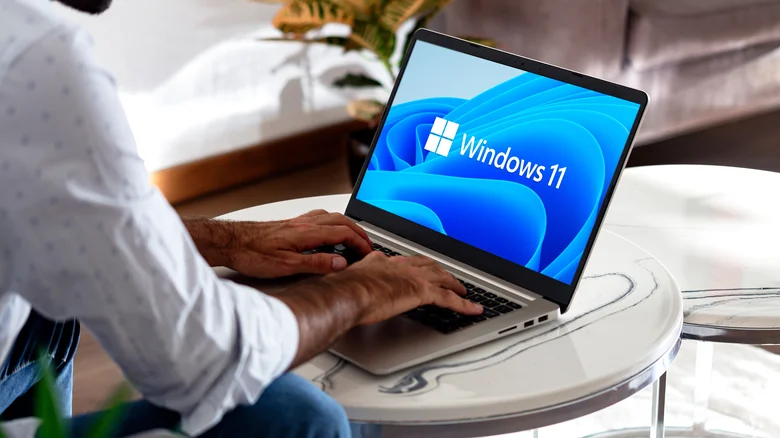
image 1

Owners of older PCs don’t have to guess whether their hardware qualifies. Microsoft’s PC Health Check app scans a computer and reports whether it meets Windows 11’s requirements, flagging any specific component that falls short. Users who recently swapped out hardware, such as adding a TPM module or upgrading a processor, should know that Windows Update can take up to 24 hours to refresh a device’s eligibility status after the change.

For PC owners whose hardware can’t make the jump, Microsoft has built in a fallback. The company’s Consumer Extended Security Updates program lets eligible Windows 10 version 22H2 computers keep receiving security patches after mainstream support ends. The program doesn’t add new features, and Microsoft does not offer technical support through it. ESU coverage for Windows 10 runs through October 12, 2027, giving those users a defined window rather than an open-ended extension.

Microsoft offers three ways to enroll in ESU. Users can sync their PC settings through a Microsoft account at no cost, redeem 1,000 Microsoft Rewards points, or pay a one-time fee of $30 plus applicable tax. A single ESU license covers up to 10 devices, which makes it a practical option for households or small offices juggling several older machines at once.

The combination of PC Health Check and ESU gives Windows 10 users a clear path forward. Those with newer hardware can confirm eligibility and move to Windows 11 without guesswork. Those stuck with older machines get roughly a year and a half of continued security coverage while they weigh whether to buy new hardware or replace their PC outright. Either way, the requirements Microsoft laid out for Windows 11 remain the deciding factor in which group a given computer falls into.
ADVERTISEMENT
RECOMMENDED
NEXT UP

Right in time for Halloween 2024, Meta has launched Meta Spirit LM, its first open-source multimodal language model capable of handling both text and speech inputs and outputs. This groundbreaking model directly challenges similar AI technologies such as OpenAI’s GPT-4 and Hume’s EVI 2, along with specific text-to-speech (TTS) and speech-to-text (ASR) tools like ElevenLabs.

The Future of AI Agents

Created by Meta’s Fundamental AI Research (FAIR) team, Spirit LM open source seeks to enhance AI voice systems by offering more natural and expressive speech generation. It also tackles multimodal tasks, including automatic speech recognition (ASR), text-to-speech (TTS), and speech classification.

However, for the time being, Spirit LM open source is only available for non-commercial use under Meta’s FAIR Noncommercial Research License. This allows researchers to modify and experiment with the model, but any commercial usage or redistribution of the models must adhere to the noncommercial stipulations.

A New Approach to Speech and Text AI

Most traditional AI voice models first convert spoken words into text using ASR, then process that text through a language model and finally use TTS to produce the spoken output. While this approach works, it often fails to capture the full emotional and tonal range of natural human speech.

Meta Spirit LM open source solves this issue by integrating phonetic, pitch, and tone tokens, allowing it to create more expressive and emotionally nuanced speech. The model is available in two variants:

Spirit LM Base: Focuses on phonetic tokens for speech generation and processing.

Spirit LM Expressive: Incorporates pitch and tone tokens to convey emotional cues such as excitement or sadness, bringing an added layer of expressiveness to speech.
Both models are trained on datasets that include both speech and text, allowing Spirit LM open source to excel in cross-modal tasks like converting text to speech and vice versa, all while maintaining the natural nuances of speech.

Fully Open-Source for Noncommercial Use

image 40

Consistent with Meta’s dedication to open research, Meta Spirit LM open source has been released for non-commercial research purposes. Developers and researchers have full access to the model weights, code, and accompanying documentation to advance their own projects and experiment with new applications.

Mark Zuckerberg, Meta’s CEO, has emphasized the importance of open-source AI, expressing that AI holds the potential to significantly enhance human productivity and creativity, and drive forward innovations in fields like medicine and science.

Potential Applications of Spirit LM Open Source

Meta Spirit LM open source is designed to handle a wide range of multimodal tasks, such as:

Automatic Speech Recognition (ASR): Converting spoken words into written text.
Text-to-Speech (TTS): Transforming written text into spoken words.
Speech Classification: Recognizing and categorizing speech based on content or emotional tone.

The Spirit LM Expressive model takes things further by not only recognizing emotions in speech but also generating responses that reflect emotional states like joy, surprise, or anger. This opens doors for more lifelike and engaging AI interactions in areas like virtual assistants and customer service systems.

Meta’s Larger AI Research Vision

Meta Spirit LM open source is part of a larger set of open tools and models that Meta FAIR has released. This includes advancements like Segment Anything Model (SAM) 2.1 for image and video segmentation, widely used across industries like medical imaging and meteorology, as well as research aimed at improving the efficiency of large language models.

Meta’s broader mission is to advance Advanced Machine Intelligence (AMI) while ensuring that AI tools are accessible to a global audience. For over a decade, the FAIR team has been leading research that aims to benefit not just the tech world but society at large.

What Lies Ahead for Meta Spirit LM Open Source?

With Meta Spirit LM open source, Meta is pushing the boundaries of what AI can achieve in integrating speech and text. By making the model open-source and focusing on a more human-like, expressive interaction, Meta is giving the research community the opportunity to explore new ways AI can bridge the gap between humans and machines.

Whether in ASR, TTS, or other AI-driven systems, Spirit LM open source represents a significant leap forward, shaping a future where AI-powered conversations and interactions feel more natural and engaging than ever before.

The U.S. Space Force has awarded SpaceX a contract worth $733 million for eight launches, reinforcing the organization’s efforts to increase competition among space launch providers. This deal is part of the ongoing “National Security Space Launch Phase 3 Lane 1” program, overseen by Space Systems Command (SSC), which focuses on less complex missions involving near-Earth orbits.

Under the contract, SpaceX will handle seven launches for the Space Development Agency and one for the National Reconnaissance Office, all using Falcon 9 rockets. These missions are expected to take place no earlier than 2026.

Space Force launch contract

image 15

In 2023, the Space Force divided Phase 3 contracts into two categories: Lane 1 for less risky missions and Lane 2 for heavier payloads and more challenging orbits. Although SpaceX was chosen for Lane 1 launches, competitors like United Launch Alliance and Blue Origin were also in the running. The Space Force aims to foster more competition by allowing new companies to bid for future Lane 1 opportunities, with the next bidding round set for 2024. The overall Lane 1 contract is estimated to be worth $5.6 billion over five years.

Lt. Col. Douglas Downs, SSC’s leader for space launch procurement, emphasized the Space Force’s expectation of more competitors and greater variety in launch providers moving forward. The Phase 3 Lane 1 contracts cover fiscal years 2025 to 2029, with the option to extend for five more years, and the Space Force plans to award at least 30 missions over this period.

While SpaceX has a strong position now, emerging launch providers and new technologies could intensify the competition in the near future.

ADVERTISEMENT
Receive the latest news

Subscribe To Our Weekly Newsletter

Get notified about new articles