
Anthropic is removing a major limitation from Claude’s voice mode, letting users hold spoken conversations with any of the AI chatbot’s available models instead of being locked into the smallest one. Until now, the feature ran exclusively on Haiku, the fastest and least capable of Claude’s four models, a common tradeoff AI chatbots make to keep spoken conversations flowing naturally. Lighter models spend less time reasoning through a request, which speeds up response time but leaves them prone to stumbling on complicated questions.
With the update, users can now switch voice mode between Haiku, Sonnet, and Opus, the same dropdown menu used in text chat controls the switch. Opus ranks as Claude’s most capable model and is built to handle complex problem-solving tasks. Anthropic’s newest tier, Fable, remains excluded from voice mode for now. Users launch the feature by tapping the waveform icon after selecting their model of choice.
Anthropic designed the update to work across formats rather than lock users into one mode. A conversation can start as typed text, shift to speech partway through, or even accept typed input while a voice conversation is active. Context carries over automatically between the two, so switching to voice mid-thread doesn’t require re-explaining what’s already been discussed. Since both formats run through the same underlying conversation, time spent talking to Claude counts against the same usage limits that apply to typed chats.
Voice mode can now act inside connected apps
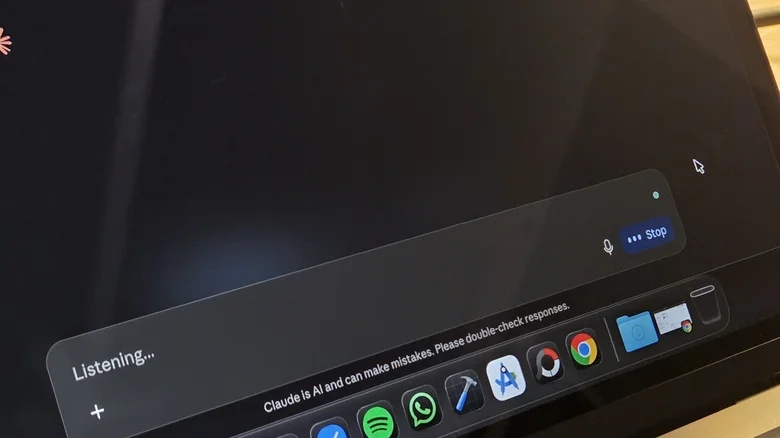
The update also extends what voice mode can do beyond conversation. Users can direct Claude to complete tasks in connected apps including Gmail, Google Calendar, Google Docs, Slack, Notion, and Canva, using nothing but spoken instructions. That means telling Claude to push back a meeting after hitting traffic, draft replies to urgent messages sitting in an inbox, or turn a spoken ramble into a formatted one-page pitch.
Voice commands carry more risk of misinterpretation than typed instructions, and a misfired email or calendar change can create real problems. To guard against that, Claude confirms with the user before executing any action inside a connected app, regardless of whether the instruction came through text or speech. Voice mode does not expand what Claude can access. It works within whatever permissions a user has already granted through typed chat.
Nine new languages added
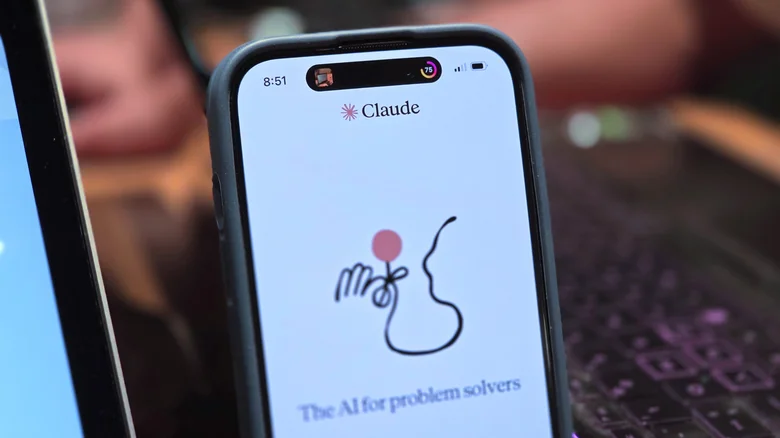
Alongside model flexibility, Anthropic added voice support for nine additional languages: French, German, Hindi, Indonesian, Italian, Japanese, Korean, Brazilian Portuguese, and Spanish, covering both the Latin American and Spain dialects. Users can switch languages mid-conversation simply by asking Claude to do so, and a default language can also be set through Settings, under General, then Voice, then Language.
The full range of new capabilities isn’t available to everyone. Free-tier users remain limited to the Haiku model and a single connected app, even though the expanded language support applies across all subscription tiers. Users on paid plans get access to the complete update, including the ability to run voice mode on Sonnet or Opus and connect multiple apps at once.
The change addresses a gap that set Claude’s voice mode apart from competitors in a less favorable way. Locking spoken conversations to a single, lightweight model meant users faced a tradeoff every time they chose to talk instead of type: faster responses, but a higher chance the AI would misunderstand a nuanced or multi-step request. Extending model choice to voice mode removes that tradeoff for anyone willing to accept slightly slower response times in exchange for more accurate handling of complex tasks.
Combined with the new app integrations, the update pushes Claude’s voice mode closer to a full assistant model rather than a simple conversational add-on. Where earlier versions of the feature functioned mainly as a way to chat hands-free, the ability to draft emails, reschedule meetings, and generate documents through spoken commands turns voice mode into a tool for getting actual work done without touching a keyboard.
Anthropic has not indicated when Fable will gain voice mode support, leaving the company’s newest model as the one notable omission from an otherwise broad expansion of the feature.