Techfullpost

Chevrolet’s Silverado ZR2 looks great, but smart money buys a different trim

evrolet's Silverado ZR2 looks great

The Chevrolet Silverado 1500 remains one of America’s most popular full-size trucks, competing head-to-head with the heavy hitters: the Ford F-150, Ram 1500, and Toyota Tundra. As Chevy’s best-selling vehicle, the Silverado offers a wide mix of engines, three cab configurations, multiple bed lengths, and a long list of customizable features. There’s even an all-electric Silverado for buyers looking to ditch gasoline entirely.

But perhaps the most exciting part of the Silverado range is its wide variety of off-road-focused trims; from basic work-ready models to premium, adventure-ready machines, Chevrolet has created options for nearly every budget and terrain.

Where the ZR2 Sits in the Lineup
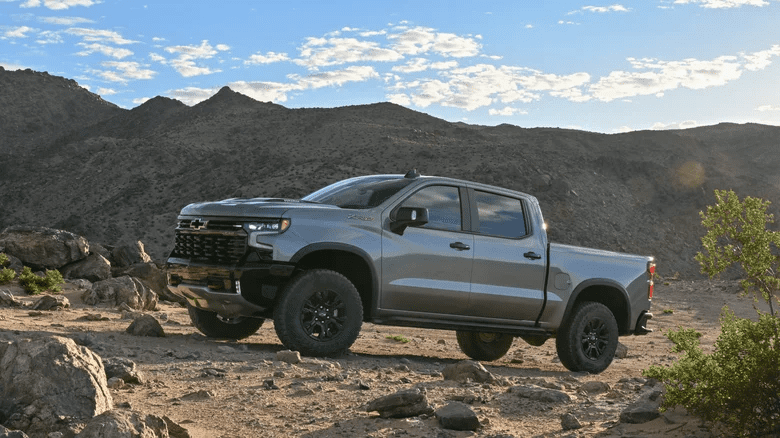
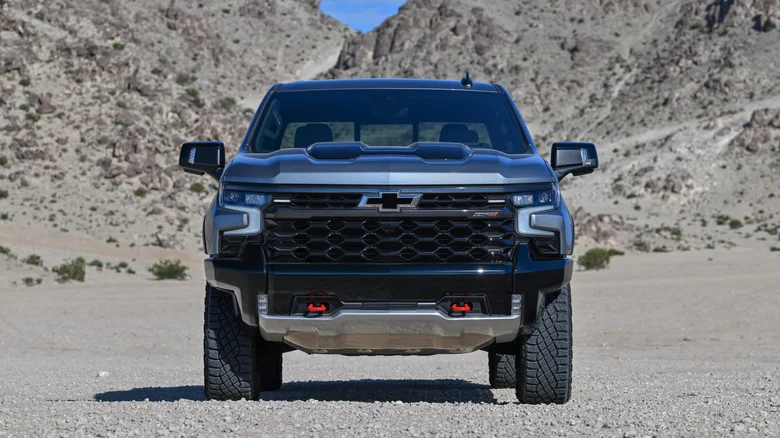
At the top of the off-road hierarchy is the Silverado ZR2-the brand’s most trail-capable gas-powered variant. While not quite as extreme as the Ford F-150 Raptor or Ram RHO, the ZR2 nonetheless delivers serious off-road performance courtesy of hardware specifically engineered for rocky, muddy, and uneven conditions.

Pricing for the 2026 ZR2 begins at $74,690 including the $2,595 destination fee. For that premium price, buyers get:

A 2-inch factory lift

Multimatic DSSV dampers featuring exceptional off-road control

High-clearance bumpers

Aluminum skid plates

33-inch mud-terrain tires

Exterior design that is muscular and clearly sets it apart from lower trims

The ZR2 is a powerhouse—but it’s also a major investment.

Why the Trail Boss Models Stand Out for Budget-Conscious Off-Roaders

Lower in the lineup sit a pair of trims that promise formidable capability at a friendlier price: the LT Trail Boss and Custom Trail Boss.

These trims don’t have the extreme engineering of the ZR2, but in the real world of off-roading-mud trails, forest roads, campsites, and mild rock sections-they do far better than many buyers expect.

Price Breakdown

2026 Silverado ZR2: $74,690

2026 LT Trail Boss: $62,195

2026 Custom Trail Boss: $55,395

The Custom Trail Boss is nearly $20,000 cheaper than the ZR2 and $7,000 below the LT Trail Boss. For drivers who enjoy personalizing their trucks with aftermarket upgrades, the Trail Boss trims leave a lot of room in the budget.

What You Get With the Custom Trail Boss
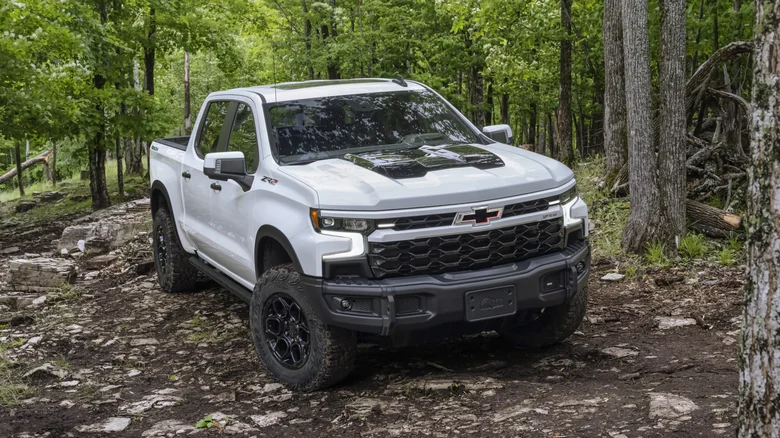
For being on the more budget-friendly end of off-road trims, the Custom Trail Boss is relatively well-equipped:

Standard Equipment Includes:

2-inch suspension lift with the Z71 off-road package

Underbody skid plates (oil pan, transfer case, differential)

Red tow hooks for recovery situations

Hill Descent Control

18-inch black wheels with Goodyear mud-terrain tires

Four-wheel drive standard

A 7-inch infotainment system with wireless Apple CarPlay and Android Auto

Engine & Performance

Standard power for both the Custom Trail Boss and LT Trail Boss is Chevy’s TurboMax 2.7-liter four-cylinder, which churns out:

305 horsepower

430 lb-ft of torque

8-speed automatic transmission

This engine has great low-end torque, perfect for off-road crawls and rough terrain.

Where It Falls Short

The Custom Trail Boss foregoes many comfort and tech features, such as:

Heated seats

Wireless smartphone charging

360-degree camera system

Larger 13.4-inch touchscreen

These can be found on the LT Trail Boss, for those buyers willing to invest a little more.

Methodology: Why the Trail Boss Trims Make More Sense for Most Drivers
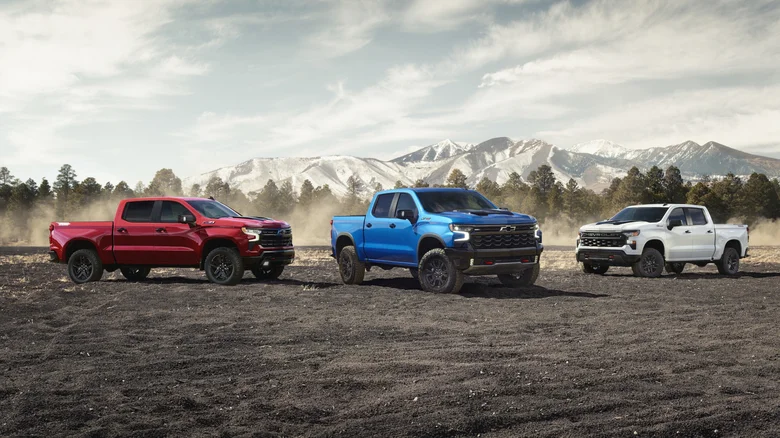
But after considerable hands-on testing and experience with the lineup on off-road terrain, most drivers clearly don’t need a full ZR2 package. The ZR2 shines in extreme situations of deep ruts, high-speed desert runs, or technical rock crawling, but full-size truck owners generally want:

The capable 4×4

Enough ground clearance for uneven trails

Strong towing capacity

A price that doesn’t sink their budget

And that is where the Trail Boss trims shine.

How Trail Boss Stacks Up Against Competitors

Across the market,

The Ford Raptor is better suited to more desert-style off-roading.

The Ram RHO prioritizes high-speed terrain and aggressive performance.
But for everyday adventurers-those pulling a camper, driving muddy access roads, or exploring forest trails-the Silverado LT Trail Boss and Custom Trail Boss offer power, capability, and value.

Bottom Line The ZR2 is a great machine for hardcore off-road enthusiasts, but the price keeps it out of reach for most buyers. The LT and Custom Trail Boss trims strike the perfect balance between trail capability, comfort, and affordability. For most drivers looking for adventure without overspending, the Trail Boss models represent the best blend of rugged performance and real-world usability.


ADVERTISEMENT
RECOMMENDED
NEXT UP

For half a century, Caterpillar Inc. has been a heavyweight of heavy machinery and industry globally. Renowned for producing some of the world’s hardest-nosed loaders, bulldozers, and tractors, the Illinois company has built a reputation for toughness and reliability. But behind earthmovers and mining equipment, Caterpillar had another profitable business — truck engines that powered some of America’s most iconic long-distance rigs on highways from sea to shining sea.

Engines like the Cat 3406E and C15 became legends of the trucking aspect, being famous for pure torque, longevity, and going a million miles with TLC. But despite popularity, Caterpillar finally closed down its on-highway truck engine manufacturing — something that took many by surprise within the industry.

So, what drove one of the biggest brands in diesel power to walk away from the trucking market it assisted in generating?

Caterpillar’s Truck Engine Heritage Traces Back to 1939

Eight decades of producing truck engines for Caterpillar started in 1939, when the company entered its first foray into this marketplace with the Caterpillar D468, a six-cylinder diesel engine that produced 90 horsepower at 1,800 RPM — humble by today’s standards, but revolutionary at the time.

This initial introduction began the long-term legacy of Caterpillar in the trucking industry. Over the years, the company released a number of other important engines, including the D312, 3408, and the wildly popular 3406E. The latter, introduced in the 1990s, was a driver and fleet operator favorite due to its power, fuel efficiency, and smooth performance.

But with the dawning of the 21st century, the landscape of diesel engines was about to change overnight — and Caterpillar found itself at a crossroads.

The Emissions Challenge That Changed Everything

By the early 2000s, governments around the world — and especially the U.S. — began implementing stricter emissions regulations to reduce emissions of NOx and particulate matter. For engine manufacturers, this meant massive investments in cleaner-burning technology in a bid to meet the 2007 and 2010 EPA standards.

Caterpillar initially responded to the challenge with its Advanced Combustion Emission Reduction Technology (ACERT) technology. This cutting-edge technology utilized a mix of precise fuel injection, advanced air management, and electronic controls to minimize emissions without compromising power.

But even with its greatness, ACERT engines began causing headaches in the real world. Truck operators reported reliability issues, maintenance nightmares, and higher operating costs, all of which smudged Caterpillar’s then-tarnished image in the trucking industry. There were even customers who sued for performance issues, further damaging the brand’s reputation with its top highway customers.

Meanwhile, competitors like Cummins, Detroit Diesel, and PACCAR were adapting faster and better to the new emission regulations. Their engines met emission regulations with fewer problems of reliability — leaving Caterpillar in a more and more vulnerable position.

Too Costly to Compete

Meeting the rapidly evolving emission standards would cost more than technical expertise — it would cost millions of dollars. Caterpillar would have needed to spend a lot on research, redesigning, and testing to keep its engines in compliance and competitive.

For a company whose business is in the construction, mining, and industrial segments, the revenues no longer justified the investment for its trucking operations. Rather than continue investing in a shrinking, regulation-based business, Caterpillar decided to strategically phase out on-highway truck engine production in 2010.

Though Caterpillar’s off-highway engines — those that drove heavy equipment, generators, and marine equipment — were still strong, driving big rigs was no longer in its plans.

The Legacy Lives On

Even though Caterpillar is no longer making on-highway truck engines, its reputation can’t be shaken. Engines like the 3406E and C15 remain legends for their strength and longevity, typically commanding high prices on the used market. Many owner-operators still rebuild and maintain these engines to this day, holding them as symbols of a generation when power and simplicity ruled the road.

In the last couple of years, Caterpillar has exerted enormous efforts in shifting its focus toward sustainable energy solutions like hybrid systems, electrically propelled machinery, and next-generation diesel technologies optimized for reduced emissions in mining and construction purposes.

Although the golden age of Caterpillar truck engines is in the past, the company’s engineering skills and genius continue to shape industries across the globe — ensuring that legends also evolve with the times.

Final Thoughts

Caterpillar’s decision to stop making truck engines wasn’t a decision based on rules alone — it was one based on survival on a strategic level. Compliance expenses, changing market dynamics, and the emergence of cleaner technology all played a role.

Today, with the trucking sector moving toward electrification and alternative fuels, Caterpillar’s pullback appears a visionary move that allowed it to focus on its core strength: building the world’s toughest machines.

Chevy is taking its all-electric Silverado where few trucks dare to go—deep into the wild. The 2026 Silverado EV Trail Boss is the rugged, off-road-ready version of Chevy’s electric pickup, packing more power, better range, and serious trail-conquering tech. And yes, it somehow manages to outrange even the standard Silverado EV—an already class-leading electric truck.

Trail Boss vs. Regular Silverado EV: What’s New?

1. Off-Road Upgrades That Matter

The Trail Boss trim isn’t just a badge—it’s a hardcore off-road package designed for serious adventurers:
✔ 2-Inch Lift Kit – Extra ground clearance for rocks, ruts, and rough terrain.
✔ 35-Inch All-Terrain Tires on 18-Inch Wheels – Aggressive tread for mud, sand, and snow.
✔ Exclusive Terrain Mode – Optimizes 4-wheel steering, torque distribution, and traction control for slow-speed crawling.
✔ Sidewinder Mode – Borrowing tech from the GMC Hummer EV, this allows diagonal “crab-like” driving for tight off-road maneuvers.

2. Shockingly Long Range—Even for an Off-Roader

Despite the added weight and drag from off-road gear, the Trail Boss still delivers a GM-estimated 478 miles with the Max Range battery—making it one of the longest-range EVs on the market, period.

  • Standard battery: ~350 miles (est.)
  • Extended Range: ~440 miles (est.)
  • Max Range478 miles (official GM estimate)

3. Brutal Power & Towing Prowess

The electric powertrain doesn’t hold back:
⚡ 725 HP & 775 lb-ft of torque (with Max Range battery)
⚡ 12,500 lbs max towing capacity (expect range to drop under heavy loads)
⚡ 2,100 lbs payload capacity (great for overlanding gear)

Tech & Interior: Smarter Than Your Average Off-Roader

Super Cruise Goes Off the Beaten Path

Chevy’s enhanced Super Cruise now comes standard on Trail Boss and LT trims, offering:
✔ Hands-free highway driving (even while towing!)
✔ Automatic lane changes & trailering assist
✔ Over-the-air updates for continuous improvements

A Modern, Tech-Filled Cabin

Inside, the Trail Boss keeps things premium:

  • 17.7-inch touchscreen (center display)
  • 11-inch digital gauge cluster (now standard on Work Truck too)
  • Multi-color ambient lighting & premium materials

Pricing: Is the Trail Boss Worth the Premium?

Chevy dropped the base Silverado EV price to $54,895, but the Trail Boss commands a premium:

  • Extended Range Trail Boss$72,095
  • Max Range Trail Boss$88,695

Who Should Buy the Trail Boss?

✅ Off-road enthusiasts who want EV efficiency without sacrificing capability.
✅ Overlanders & campers needing long-range + serious towing.
✅ Tech lovers who want Super Cruise & cutting-edge features.

Final Verdict: The Most Capable Electric Truck Yet?

The 2026 Silverado EV Trail Boss isn’t just an electric truck—it’s a statement. With class-leading range, insane power, and legit off-road chops, it proves that EVs can dominate both pavement and wilderness.

If you’re ready to ditch gas without compromising adventure, the Trail Boss might just be your perfect match.

ADVERTISEMENT
Receive the latest news

Subscribe To Our Weekly Newsletter

Get notified about new articles