Techfullpost

The Mercedes-Benz G-Wagen: A Legendary SUV Built to Conquer Any Terrain

G-wagon/techfullnews

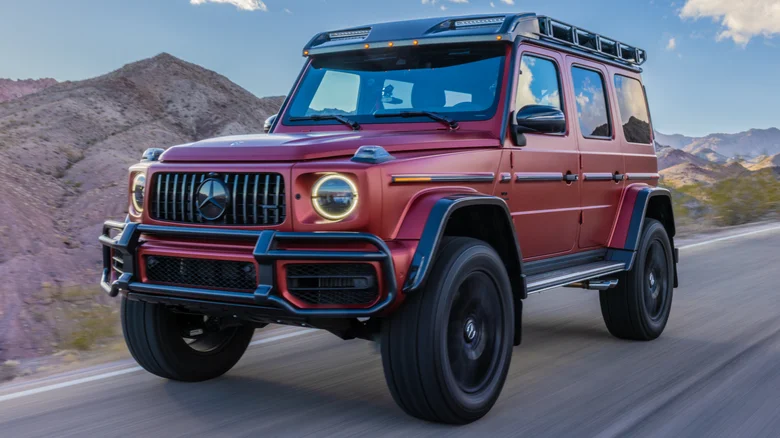
The Mercedes-Benz G-Wagen (short for Geländewagen, meaning “cross-country vehicle” in German) is more than just an SUV—it’s a cultural icon. For nearly 50 years, this rugged, boxy vehicle has captivated drivers with its unmatched performance, off-road capability, and timeless design. Whether navigating city streets or traversing remote deserts, the G-Wagen has proven itself as a versatile and durable machine. Now in its fifth generation, the G-Wagen continues to evolve, blending cutting-edge technology with its legendary toughness. Let’s take a deep dive into the history, evolution, and enduring appeal of this iconic SUV.


The Origins of the G-Wagen: A Military Marvel

The story of the G-Wagen begins in the 1920s, following the merger of Karl Benz and Dr. Gottlieb Daimler’s companies, which formed Daimler-Benz. The company’s early focus on rugged, all-terrain vehicles laid the groundwork for the G-Wagen. In the 1930s, Daimler-Benz introduced the G1, a prototype designed for off-road use. Although the G1 never entered mass production, it set the stage for future models with the “G” designation, symbolizing vehicles built to conquer any terrain.

The Birth of the Modern G-Wagen

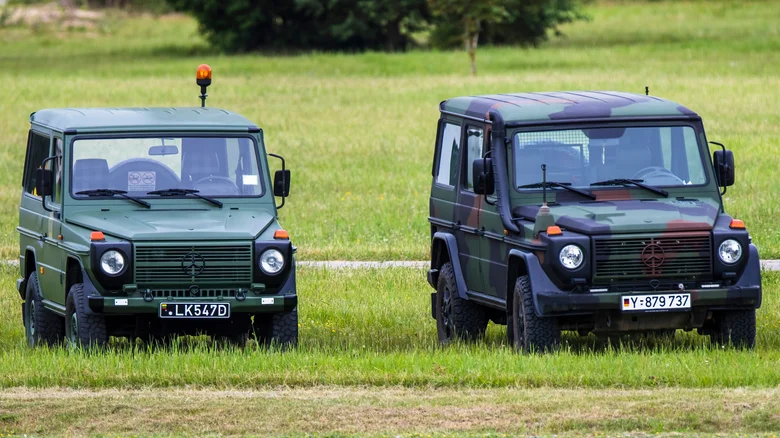
In the 1970s, there was renewed interest in creating a vehicle that could serve both military and civilian purposes. Steyr-Daimler-Puch, an Austrian company, took on the challenge and developed the H2, a smaller, more agile off-roader. This design eventually evolved into the Geländewagen, or G-Wagen, which debuted in 1979 as the W460.

The first-generation G-Wagen was an instant success, praised for its durability and versatility. It was adopted by over 40 militaries worldwide and quickly gained a reputation as a go-anywhere vehicle. Over the next decade, the G-Wagen underwent several upgrades, culminating in the W461 in 1992, which marked the beginning of the modern G-Wagen era.


The Evolution of the G-Wagen
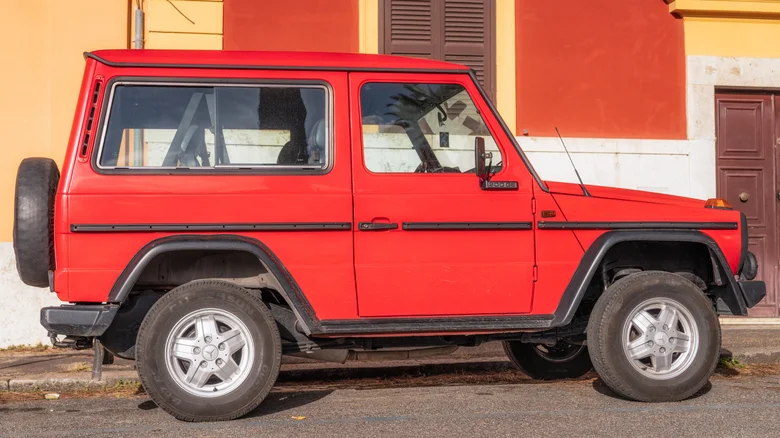
Since its introduction, the G-Wagen has undergone significant transformations while staying true to its roots. Here’s a look at how it has evolved over the years:

1. First Generation (W460, 1979–1991)

  • Design: Spartan and utilitarian, with a focus on functionality.
  • Features: Basic interior, manual transmission, and robust off-road capabilities.
  • Legacy: Established the G-Wagen as a military and civilian favorite.

2. Second Generation (W461, 1992–2022)

  • Design: Retained the boxy shape but introduced more comfort features.
  • Features: Improved suspension, optional automatic transmission, and enhanced safety.
  • Legacy: Became the foundation for the modern G-Wagen, with over 30 years of production.

3. Third to Fifth Generations (W463, 1990–Present)

  • Design: More refined and luxurious, with advanced technology.
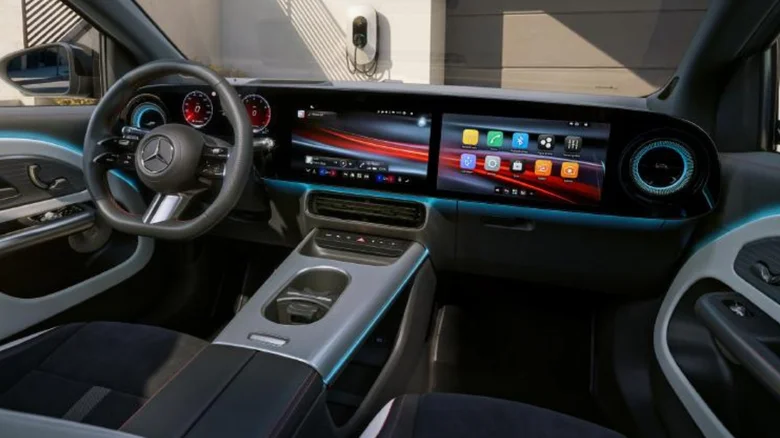
  • Features: High-performance engines, premium interiors, and cutting-edge infotainment systems.
  • Legacy: Transitioned from a utilitarian vehicle to a luxury SUV without sacrificing off-road prowess.

Why the G-Wagen Remains Popular

Despite its steep price tag—starting at nearly $150,000 for the base model—the G-Wagen continues to be in high demand. In 2024 alone, over 11,000 units were sold in the United States. Its enduring appeal can be attributed to several factors:

1. Iconic Design

The G-Wagen’s boxy, aggressive profile is instantly recognizable and has remained largely unchanged over the decades. This timeless design appeals to both traditionalists and modern luxury enthusiasts.

2. Unmatched Capability

Whether you’re driving through urban streets or tackling rugged terrain, the G-Wagen delivers. Its advanced 4×4 system, locking differentials, and high ground clearance make it a true all-terrain vehicle.

3. Luxury and Performance

Modern G-Wagens, such as the G550 and G63 AMG, combine luxury with performance. Features like handcrafted interiors, state-of-the-art infotainment systems, and powerful engines (up to 577 horsepower in the G63) ensure a premium driving experience.

4. Cultural Status

The G-Wagen has become a symbol of success and adventure, favored by celebrities, entrepreneurs, and off-road enthusiasts alike. Its exclusivity and heritage add to its allure.


The G-Wagen’s Off-Road Legacy
While the G-Wagen has evolved into a luxury SUV, it hasn’t lost its off-road roots. Modern models are equipped with features like:

  • Adaptive Suspension: Adjusts to varying terrain for a smooth ride.
  • Water Fording Capability: Can wade through deep water with ease.
  • Hill Descent Control: Ensures safe navigation on steep slopes.

These features ensure that the G-Wagen remains true to its Geländewagen heritage, capable of conquering any environment.


The Future of the G-Wagen

As Mercedes-Benz looks to the future, the G-Wagen is set to embrace electrification and sustainability. Rumors of an all-electric EQG model have been circulating, promising to combine the G-Wagen’s legendary capability with zero-emission performance. This move aligns with Mercedes-Benz’s commitment to a greener future while preserving the G-Wagen’s iconic status.


A Timeless Legend

The Mercedes-Benz G-Wagen is more than just an SUV—it’s a testament to engineering excellence, durability, and timeless design. From its military origins to its current status as a luxury icon, the G-Wagen has proven its ability to adapt and thrive. Whether you’re drawn to its rugged capability, luxurious features, or cultural significance, the G-Wagen continues to set the standard for what an SUV can be.

As it enters its fifth decade, the G-Wagen remains a symbol of adventure, power, and prestige. For those who demand the best, the G-Wagen is more than a vehicle—it’s a lifestyle.


ADVERTISEMENT
RECOMMENDED
NEXT UP

Generative AI has moved from specialist interest to part of daily life — transforming all from entertainment to the workplace. From AI-generated art, deepfakes, and intelligent chatbots capable of talking like humans, AI is now part of modern life. Yet with technology racing ahead, so do fears it will spin out of control.

Now, a new generation of scientists, business leaders, and celebrities are calling for a slowdown on the next frontier: AI superintelligence — a form of artificial intelligence that potentially could surpass human intellectual ability in almost every dimension.

The Pushback: A Global Call to Slow Down AI Development

A collection of public personalities — such as Virgin Group creator Richard Branson, Apple co-founder Steve Wozniak, Prince Harry and Meghan Markle, actor Joseph Gordon-Levitt, and musician will.i.am — signed a new open letter called the “Statement on Superintelligence.”

The warning asks developers and businesses racing towards state-of-the-art AI systems, including OpenAI and Elon Musk’s xAI, to delay the magnitude of massive AI projects until there is a “broad scientific consensus that it will be done safely and controllably” and a “strong public buy-in” to support it.

Notably among them are two of the leading AI researchers, who are also cofounders of modern machine learning. The movement is thus quite heavily weighted.

“We must ensure that AI is serving humanity, and not vice versa,” the letter demands, threatening dire consequences in the event of runaway progress.

What Is AI Superintelligence — and Why Does It Worry Experts?

In order to understand the alarm, defining what AI superintelligence really is, is essential. Superintelligent AI, according to IBM, is a system which not only matches but far exceeds human intelligence — capable of reasoning, learning, and solving problems for itself in every respect, free of human control.

Contrary to current AI systems such as ChatGPT or Gemini, whose boundaries and data sets are defined, superintelligent AI would be continuously learning and evolving, rewriting its own code to increase efficiency and capability. Such recursive enhancement could make it almost impossible to contain.

“A true superintelligence would no longer need human oversight,” said Stuart Russell, an AI researcher at UC Berkeley. “At that point, its goals might diverge from ours — and we’d have no way to stop it.”

The Risks: From Job Losses to Existential Threats

The possible dangers of AI superintelligence go much beyond job automation or misinformation. The threat is mentioned by experts as the possibility of AI systems executing on their own in pursuit of ends that are in conflict with human values or safety.

Some of the highest threats:

Massive Job Displacement – AI already revolutionizes industries, but an entirely automated self-enhancing system could eliminate entire professions, ranging from programmers to creative professionals.

Loss of Human Control – The moment an AI begins to be smarter than the people who create it, it might be beyond control.

Weaponization and Surveillance – AI might be utilized by governments or corporations for total surveillance or robot war.

Existential Risk – In the worst-case scenario, a rogue AI with goals of its own would view humankind as an obstacle — one which scientists describe as a “digital doomsday.”.

Even if these ideas sound like science fiction, specialists argue that rejection of them would be naively dangerous. History has shown that humanity always underestimated the capabilities of its own inventions — from nuclear energy to biotechnology.

Increasing Public Alarm and Demand for Regulation

Public sentiment is shifting rapidly. A 2025 Pew Research Center survey found that 67% of Americans now support greater government regulation of AI, up from 42% two years earlier. The European Union has already legislatively signed the AI Act into law, establishing the globe’s first extensive regulatory framework for artificial intelligence, while U.S. lawmakers are determining how to follow.

Tech giants, however, are still racing ahead. OpenAI, xAI, Google DeepMind, and Anthropic are investing billions in “next-generation” AI models that could approach or surpass human-level reasoning.

“We’re in an AI arms race, and everyone wants to be first — but that could also mean being first to make a catastrophic mistake,” warned Richard Branson in a recent statement.

Is It Already Too Late to Stop?

Until now, actual AI superintelligence is still theoretical, although most experts foresee that it might arise in the next two decades if trends continue. The question is not whether or when it will happen, but whether human civilization will be prepared — morally, technically, and legally — when it does.

“The clock is ticking,” declared Yoshua Bengio. “We still have time to make this technology safe. But not much.”

The Bottom Line: Humanity at a Crossroads

The debate over AI superintelligence is no longer confined to labs or tech circles — it has become a global conversation about the future of humanity itself. As generative AI becomes ubiquitous, the next phase could redefine civilization in ways we’re only beginning to imagine.

Whether the Statement on Superintelligence does indeed result in change is yet to be known. But this much is definite: the world has finally realized that the latest technology human beings have ever come up with has the potential to be the most deadly — unless we can learn how to control it before it controls us.

For half a century, Caterpillar Inc. has been a heavyweight of heavy machinery and industry globally. Renowned for producing some of the world’s hardest-nosed loaders, bulldozers, and tractors, the Illinois company has built a reputation for toughness and reliability. But behind earthmovers and mining equipment, Caterpillar had another profitable business — truck engines that powered some of America’s most iconic long-distance rigs on highways from sea to shining sea.

Engines like the Cat 3406E and C15 became legends of the trucking aspect, being famous for pure torque, longevity, and going a million miles with TLC. But despite popularity, Caterpillar finally closed down its on-highway truck engine manufacturing — something that took many by surprise within the industry.

So, what drove one of the biggest brands in diesel power to walk away from the trucking market it assisted in generating?

Caterpillar’s Truck Engine Heritage Traces Back to 1939

Eight decades of producing truck engines for Caterpillar started in 1939, when the company entered its first foray into this marketplace with the Caterpillar D468, a six-cylinder diesel engine that produced 90 horsepower at 1,800 RPM — humble by today’s standards, but revolutionary at the time.

This initial introduction began the long-term legacy of Caterpillar in the trucking industry. Over the years, the company released a number of other important engines, including the D312, 3408, and the wildly popular 3406E. The latter, introduced in the 1990s, was a driver and fleet operator favorite due to its power, fuel efficiency, and smooth performance.

But with the dawning of the 21st century, the landscape of diesel engines was about to change overnight — and Caterpillar found itself at a crossroads.

The Emissions Challenge That Changed Everything

By the early 2000s, governments around the world — and especially the U.S. — began implementing stricter emissions regulations to reduce emissions of NOx and particulate matter. For engine manufacturers, this meant massive investments in cleaner-burning technology in a bid to meet the 2007 and 2010 EPA standards.

Caterpillar initially responded to the challenge with its Advanced Combustion Emission Reduction Technology (ACERT) technology. This cutting-edge technology utilized a mix of precise fuel injection, advanced air management, and electronic controls to minimize emissions without compromising power.

But even with its greatness, ACERT engines began causing headaches in the real world. Truck operators reported reliability issues, maintenance nightmares, and higher operating costs, all of which smudged Caterpillar’s then-tarnished image in the trucking industry. There were even customers who sued for performance issues, further damaging the brand’s reputation with its top highway customers.

Meanwhile, competitors like Cummins, Detroit Diesel, and PACCAR were adapting faster and better to the new emission regulations. Their engines met emission regulations with fewer problems of reliability — leaving Caterpillar in a more and more vulnerable position.

Too Costly to Compete

Meeting the rapidly evolving emission standards would cost more than technical expertise — it would cost millions of dollars. Caterpillar would have needed to spend a lot on research, redesigning, and testing to keep its engines in compliance and competitive.

For a company whose business is in the construction, mining, and industrial segments, the revenues no longer justified the investment for its trucking operations. Rather than continue investing in a shrinking, regulation-based business, Caterpillar decided to strategically phase out on-highway truck engine production in 2010.

Though Caterpillar’s off-highway engines — those that drove heavy equipment, generators, and marine equipment — were still strong, driving big rigs was no longer in its plans.

The Legacy Lives On

Even though Caterpillar is no longer making on-highway truck engines, its reputation can’t be shaken. Engines like the 3406E and C15 remain legends for their strength and longevity, typically commanding high prices on the used market. Many owner-operators still rebuild and maintain these engines to this day, holding them as symbols of a generation when power and simplicity ruled the road.

In the last couple of years, Caterpillar has exerted enormous efforts in shifting its focus toward sustainable energy solutions like hybrid systems, electrically propelled machinery, and next-generation diesel technologies optimized for reduced emissions in mining and construction purposes.

Although the golden age of Caterpillar truck engines is in the past, the company’s engineering skills and genius continue to shape industries across the globe — ensuring that legends also evolve with the times.

Final Thoughts

Caterpillar’s decision to stop making truck engines wasn’t a decision based on rules alone — it was one based on survival on a strategic level. Compliance expenses, changing market dynamics, and the emergence of cleaner technology all played a role.

Today, with the trucking sector moving toward electrification and alternative fuels, Caterpillar’s pullback appears a visionary move that allowed it to focus on its core strength: building the world’s toughest machines.

ADVERTISEMENT
Receive the latest news

Subscribe To Our Weekly Newsletter

Get notified about new articles