Techfullpost

RESALE VALUE OF THE MAZDA CX-5: HOW QUICK HAS THE SUV DEPRECIATED?

RESALE VALUE OF THE MAZDA CX-5

The Mazda CX-5 has been one of Mazda’s most influential models since its debut in 2012. Now entering its third generation with the 2026 model year, this compact SUV remains at the heart of the brand’s global success. Over 4.5 million units have been sold worldwide, of which 1.6 million were purchased in the United States, thus easily making it one of Mazda’s most successful nameplates.

But for many shoppers, especially in the used market, one major question remains: How well does the Mazda CX-5 hold its value over time?

Depreciation Breakdown: How Much Value Does a Mazda CX-5 Lose?
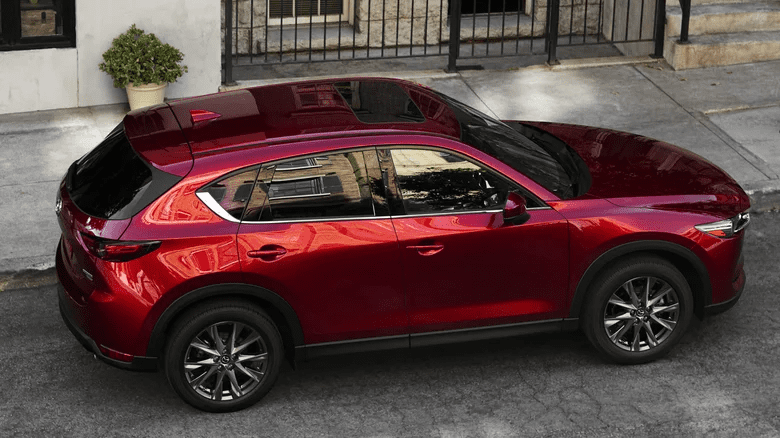
The resale value largely depends on the level of depreciation-the natural decline in a vehicle’s worth as time and mileage pile up. While CarEdge data indicates that the CX-5 holds its value relatively well for its class, it still depreciates more quickly than many of its top competitors.

Two-Year-Old Mazda CX-5

Average Depreciation: $12,963

Value Retained: 66.57%

Estimated Resale Value: $25,815

Mileage Assumption: 27,000 miles total (13,500 per year)

Five-Year-Old Mazda CX-5

Average Depreciation: $16,217

Value Retained: 58.18%

Estimated Resale Value: $22,561

Mileage Assumption: 67,500 miles total

These numbers suggest that while the CX-5 retains decent value, it nevertheless surrenders a significant portion of its value within the first five-year period, which is typically where most vehicles lose their value the fastest.

What Influences Depreciation Beyond Age and Mileage?
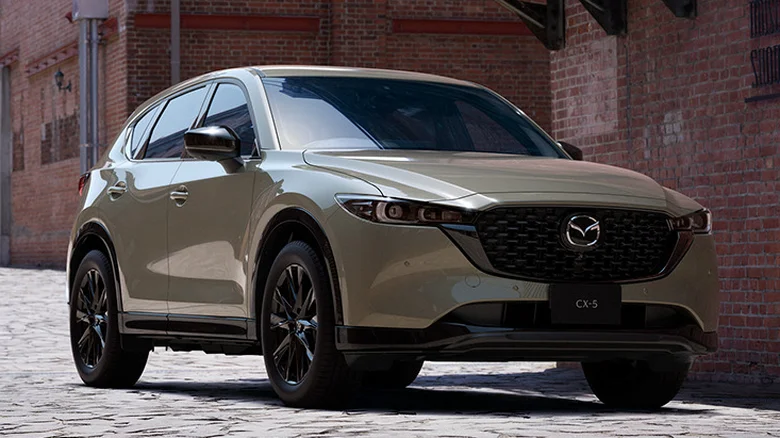
While time and mileage are the primary drivers of depreciation, several other factors play a major role in how much a used CX-5 is worth:

  1. History of maintenance

The better choice will always be a well-maintained CX-5.

Consistent oil changes

Scheduled services according to Mazda’s recommendations

Proper care for brakes, tires, and fluids

Complete service records can help your vehicle sell more quickly and bring a better sale price.

  1. Type of Driving

A car that does a lot of highway driving is often easier on the vehicle than constant stop-and-go city driving. A CX-5 that has spent its entire life doing long road trips might show less wear than one used to commute daily.

  1. History of Accidents

Clean CarFax or AutoCheck reports greatly increase resale value.

  1. Trim Level and Features

Higher trims, such as the Grand Touring or Signature, especially those with premium packages, will generally retain value better than their base-model brethren.

How the CX-5 Stacks Up Against Its Rivals

The compact SUV segment is highly competitive, with vehicles like the Toyota RAV4, Honda CR-V, and Subaru Forester always ranking near the very top in resale value. Here’s how the CX-5 compares:

After 2 Years

Toyota RAV4: 83.52% retained

Honda CR-V: 78.77%

Subaru Forester: 77.20%

Mazda CX-5: 66.57%

After 5 Years

Toyota RAV4: 69.42% retained

Honda CR-V: 67.01%

Subaru Forester: 65.98%

Mazda CX-5: 58.18%

These figures indicate that the CX-5 depreciates more quickly than its most popular rivals. For buyers, this is actually a good thing – used CX-5 models usually sell for less than similarly-equipped RAV4s or CR-Vs.

For sellers, though, the lower resale value means they may not recover as much of their investment when it’s time to move on.

The Bottom Line: Who Benefits Most?

Buyers: Buyers benefit by paying lower used prices because of higher depreciation.

Sellers: See resale returns lower than that of CR-V and RAV4 owners.

Simply stated, high depreciation works in the buyer’s favor, while strong resale value benefits the seller. Knowing which side you’re on helps you make the smartest financial decision.

Looking Ahead: The 2026 Mazda CX-5

Mazda is getting ready to introduce the highly anticipated third-generation CX-5 for the 2026 model year. Early reports indicate that

Refined design inspired by the CX-60 and CX-70

Updated safety and entertainment technology

More efficient powertrains

Improved handling and comfort These upgrades might be worth considering for shoppers who are torn between buying used or waiting for the latest model.


ADVERTISEMENT
RECOMMENDED
NEXT UP

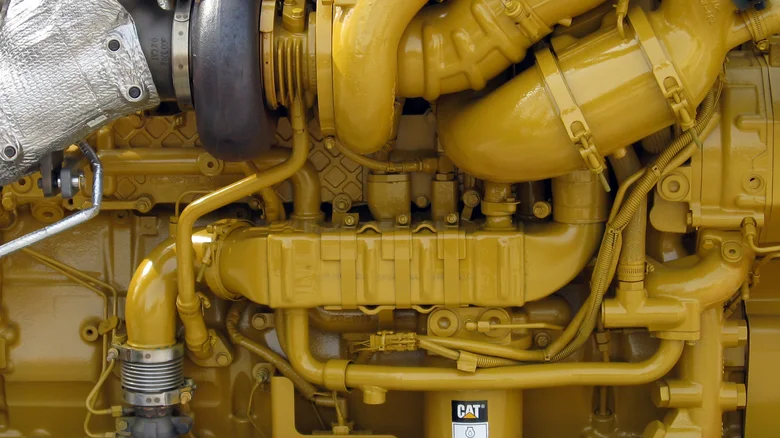
For half a century, Caterpillar Inc. has been a heavyweight of heavy machinery and industry globally. Renowned for producing some of the world’s hardest-nosed loaders, bulldozers, and tractors, the Illinois company has built a reputation for toughness and reliability. But behind earthmovers and mining equipment, Caterpillar had another profitable business — truck engines that powered some of America’s most iconic long-distance rigs on highways from sea to shining sea.

Engines like the Cat 3406E and C15 became legends of the trucking aspect, being famous for pure torque, longevity, and going a million miles with TLC. But despite popularity, Caterpillar finally closed down its on-highway truck engine manufacturing — something that took many by surprise within the industry.

So, what drove one of the biggest brands in diesel power to walk away from the trucking market it assisted in generating?

Caterpillar’s Truck Engine Heritage Traces Back to 1939

Eight decades of producing truck engines for Caterpillar started in 1939, when the company entered its first foray into this marketplace with the Caterpillar D468, a six-cylinder diesel engine that produced 90 horsepower at 1,800 RPM — humble by today’s standards, but revolutionary at the time.

This initial introduction began the long-term legacy of Caterpillar in the trucking industry. Over the years, the company released a number of other important engines, including the D312, 3408, and the wildly popular 3406E. The latter, introduced in the 1990s, was a driver and fleet operator favorite due to its power, fuel efficiency, and smooth performance.

But with the dawning of the 21st century, the landscape of diesel engines was about to change overnight — and Caterpillar found itself at a crossroads.

The Emissions Challenge That Changed Everything

By the early 2000s, governments around the world — and especially the U.S. — began implementing stricter emissions regulations to reduce emissions of NOx and particulate matter. For engine manufacturers, this meant massive investments in cleaner-burning technology in a bid to meet the 2007 and 2010 EPA standards.

Caterpillar initially responded to the challenge with its Advanced Combustion Emission Reduction Technology (ACERT) technology. This cutting-edge technology utilized a mix of precise fuel injection, advanced air management, and electronic controls to minimize emissions without compromising power.

But even with its greatness, ACERT engines began causing headaches in the real world. Truck operators reported reliability issues, maintenance nightmares, and higher operating costs, all of which smudged Caterpillar’s then-tarnished image in the trucking industry. There were even customers who sued for performance issues, further damaging the brand’s reputation with its top highway customers.

Meanwhile, competitors like Cummins, Detroit Diesel, and PACCAR were adapting faster and better to the new emission regulations. Their engines met emission regulations with fewer problems of reliability — leaving Caterpillar in a more and more vulnerable position.

Too Costly to Compete

Meeting the rapidly evolving emission standards would cost more than technical expertise — it would cost millions of dollars. Caterpillar would have needed to spend a lot on research, redesigning, and testing to keep its engines in compliance and competitive.

For a company whose business is in the construction, mining, and industrial segments, the revenues no longer justified the investment for its trucking operations. Rather than continue investing in a shrinking, regulation-based business, Caterpillar decided to strategically phase out on-highway truck engine production in 2010.

Though Caterpillar’s off-highway engines — those that drove heavy equipment, generators, and marine equipment — were still strong, driving big rigs was no longer in its plans.

The Legacy Lives On

Even though Caterpillar is no longer making on-highway truck engines, its reputation can’t be shaken. Engines like the 3406E and C15 remain legends for their strength and longevity, typically commanding high prices on the used market. Many owner-operators still rebuild and maintain these engines to this day, holding them as symbols of a generation when power and simplicity ruled the road.

In the last couple of years, Caterpillar has exerted enormous efforts in shifting its focus toward sustainable energy solutions like hybrid systems, electrically propelled machinery, and next-generation diesel technologies optimized for reduced emissions in mining and construction purposes.

Although the golden age of Caterpillar truck engines is in the past, the company’s engineering skills and genius continue to shape industries across the globe — ensuring that legends also evolve with the times.

Final Thoughts

Caterpillar’s decision to stop making truck engines wasn’t a decision based on rules alone — it was one based on survival on a strategic level. Compliance expenses, changing market dynamics, and the emergence of cleaner technology all played a role.

Today, with the trucking sector moving toward electrification and alternative fuels, Caterpillar’s pullback appears a visionary move that allowed it to focus on its core strength: building the world’s toughest machines.

Chevy is taking its all-electric Silverado where few trucks dare to go—deep into the wild. The 2026 Silverado EV Trail Boss is the rugged, off-road-ready version of Chevy’s electric pickup, packing more power, better range, and serious trail-conquering tech. And yes, it somehow manages to outrange even the standard Silverado EV—an already class-leading electric truck.

Trail Boss vs. Regular Silverado EV: What’s New?

1. Off-Road Upgrades That Matter

The Trail Boss trim isn’t just a badge—it’s a hardcore off-road package designed for serious adventurers:
✔ 2-Inch Lift Kit – Extra ground clearance for rocks, ruts, and rough terrain.
✔ 35-Inch All-Terrain Tires on 18-Inch Wheels – Aggressive tread for mud, sand, and snow.
✔ Exclusive Terrain Mode – Optimizes 4-wheel steering, torque distribution, and traction control for slow-speed crawling.
✔ Sidewinder Mode – Borrowing tech from the GMC Hummer EV, this allows diagonal “crab-like” driving for tight off-road maneuvers.

2. Shockingly Long Range—Even for an Off-Roader

Despite the added weight and drag from off-road gear, the Trail Boss still delivers a GM-estimated 478 miles with the Max Range battery—making it one of the longest-range EVs on the market, period.

  • Standard battery: ~350 miles (est.)
  • Extended Range: ~440 miles (est.)
  • Max Range478 miles (official GM estimate)

3. Brutal Power & Towing Prowess

The electric powertrain doesn’t hold back:
⚡ 725 HP & 775 lb-ft of torque (with Max Range battery)
⚡ 12,500 lbs max towing capacity (expect range to drop under heavy loads)
⚡ 2,100 lbs payload capacity (great for overlanding gear)

Tech & Interior: Smarter Than Your Average Off-Roader

Super Cruise Goes Off the Beaten Path

Chevy’s enhanced Super Cruise now comes standard on Trail Boss and LT trims, offering:
✔ Hands-free highway driving (even while towing!)
✔ Automatic lane changes & trailering assist
✔ Over-the-air updates for continuous improvements

A Modern, Tech-Filled Cabin

Inside, the Trail Boss keeps things premium:

  • 17.7-inch touchscreen (center display)
  • 11-inch digital gauge cluster (now standard on Work Truck too)
  • Multi-color ambient lighting & premium materials

Pricing: Is the Trail Boss Worth the Premium?

Chevy dropped the base Silverado EV price to $54,895, but the Trail Boss commands a premium:

  • Extended Range Trail Boss$72,095
  • Max Range Trail Boss$88,695

Who Should Buy the Trail Boss?

✅ Off-road enthusiasts who want EV efficiency without sacrificing capability.
✅ Overlanders & campers needing long-range + serious towing.
✅ Tech lovers who want Super Cruise & cutting-edge features.

Final Verdict: The Most Capable Electric Truck Yet?

The 2026 Silverado EV Trail Boss isn’t just an electric truck—it’s a statement. With class-leading range, insane power, and legit off-road chops, it proves that EVs can dominate both pavement and wilderness.

If you’re ready to ditch gas without compromising adventure, the Trail Boss might just be your perfect match.

ADVERTISEMENT
Receive the latest news

Subscribe To Our Weekly Newsletter

Get notified about new articles