Techfullpost

News

Xbox Copilot from Microsoft is now available on Windows 11 PCs globally

new Gaming Copilot

Microsoft is taking a bold step forward in blending artificial intelligence with gaming experiences. After weeks of limited testing, the company has officially begun rolling out its new Gaming Copilot to all Windows 11 users worldwide, with availability in nearly every region except mainland China. What started as a small preview has now become a global release, marking one of Microsoft’s most ambitious pushes into AI-powered gaming assistance.

Gaming Copilot Arrives on Windows 11
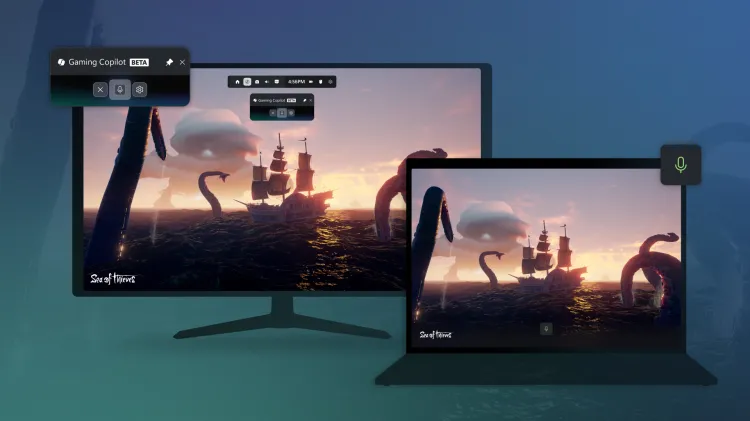
As part of today’s rollout, PC players will begin seeing Gaming Copilot integrated directly into the Windows Game Bar, the native overlay tool designed for quick access during gameplay. According to Taylor O’Malley, Principal Program Manager at Xbox, the rollout will happen gradually over the next few weeks.

Unlike traditional overlays or third-party tools, Gaming Copilot is more than just a widget. It features a built-in voice mode, enabling players to interact with the AI hands-free. This means you no longer need to pause or minimize your game—simply ask Copilot for guidance, and it responds in real time. Even more impressive, Copilot can analyze in-game screenshots to provide context-specific answers. For instance, if you’re struggling against a challenging boss, you can ask Copilot for help without having to explain the scenario in detail.

Expanding to Mobile and Beyond

The innovation doesn’t stop on PC. Microsoft has confirmed that Gaming Copilot will launch on the Xbox mobile app for both iOS and Android devices starting next month. This allows gamers to use their smartphone or tablet as a second screen companion, freeing up their main display for uninterrupted gameplay.

Additionally, Microsoft is preparing to optimize the Gaming Copilot experience for its upcoming Xbox Ally handheld devices, ensuring seamless integration for on-the-go gaming. Future updates are also expected to bring Copilot to Xbox consoles, expanding its reach across Microsoft’s entire gaming ecosystem.

What Can Gaming Copilot Do?

The AI assistant is designed to be more than a digital helper. Current features include:

  • Game Recommendations: Discover new titles based on your preferences and play history.
  • Achievement Tracking: Instantly view your most recent Xbox achievements without leaving your game.
  • Real-Time Coaching: Get strategies, tips, and recommendations tailored to your gameplay.
  • Team Support: In competitive games like Overwatch 2, Copilot can suggest the best hero picks to complement your squad.

By combining convenience, personalization, and smart AI interaction, Microsoft aims to turn Gaming Copilot into a true gaming coach rather than just a passive assistant.

Why This Matters for the Future of Gaming
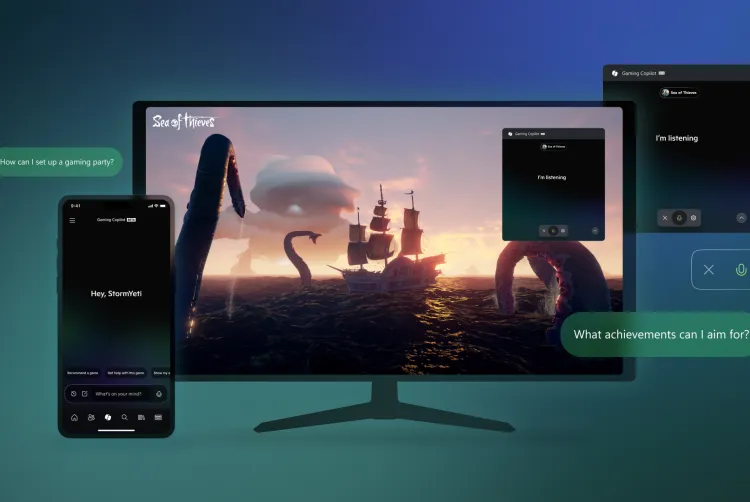
Microsoft’s Gaming Copilot represents more than a quality-of-life improvement—it’s a glimpse into the future of AI-driven gaming. As titles grow more complex and competitive, players often seek faster, smarter ways to improve their skills. Copilot has the potential to evolve into an interactive tutor, offering data-driven insights, strategies, and performance reviews, similar to how professional esports coaches train their players.

By bridging PC, mobile, and console platforms, Microsoft is also ensuring that Copilot becomes a unified gaming companion rather than a fragmented feature. This strategy not only strengthens the Xbox ecosystem but also positions Microsoft as a leader in AI integration for entertainment.

Final Thoughts

With Gaming Copilot, Microsoft is reshaping the way players interact with their games. What began as a simple AI widget inside Windows 11 could soon evolve into a personalized AI coach, capable of analyzing gameplay patterns, suggesting strategies, and even enhancing multiplayer teamwork.

As AI becomes an increasingly critical part of modern life, its integration into gaming highlights how technology can enhance—not replace—the human experience. For gamers, Copilot is not just a tool; it’s a sidekick, guide, and mentor all in one.

ADVERTISEMENT
RECOMMENDED
News

IOS 27 public beta arrives with siri ai overhaul, other Apple updates

By George Mensah 3 min read

Apple released public betas for iOS 27 and its other major operating system updates on Wednesday, giving users an early look at software set to launch broadly this fall. The headline addition this year is Siri AI, the long-delayed overhaul of Siri that adds AI-powered capabilities to the assistant. Early testing shows the feature actually functions as intended, though its responses tend to stay brief rather than conversational.

Apple also opened public betas for iPadOS 27, watchOS 27, and macOS 27 Golden Gate alongside the iOS update. All four betas are available now for anyone willing to install pre-release software on their devices.

What to expect from beta software

Installing a public beta comes with tradeoffs. Users testing early software may encounter glitches, app crashes, or faster battery drain than they’re used to on a stable release. Apple’s betas are functional but not fully polished, since the company uses this testing period to catch bugs before the official fall release. Anyone considering the install should weigh whether they’re comfortable dealing with those issues on a primary device.

Backing up your device before installing any beta is strongly recommended. If a beta causes problems serious enough to warrant reverting to the current public release, a backup makes that process far easier.

How to join the beta program

To install the iOS 27 public beta, visit Apple’s beta software page at beta.apple.com and sign up for the program. After backing up your device, open the Settings app and navigate to General, then Software Update. A “Beta Updates” section will appear near the top of the screen. Tap it, then select the iOS 27 public beta to begin the download.

The process works similarly across Apple’s other platforms. iPad users follow the same steps within iPadOS settings, while Apple Watch and Mac users can find comparable beta enrollment options within their respective settings menus after signing up through the same beta portal.

Siri AI takes center stage

Siri’s AI-powered update has been one of Apple’s most anticipated software changes in recent years, following repeated delays to the project. The version now available in the iOS 27 beta represents Apple’s first public look at the reworked assistant, and early impressions suggest it performs its core functions reliably. Its tendency toward short, direct answers rather than longer conversational responses marks a notable design choice, one that sets it apart from AI assistants built by competitors that lean toward more expansive replies.

For users who rely heavily on Siri for daily tasks, the beta offers a chance to test the new AI capabilities months before the general public gets access when iOS 27 launches this fall alongside new iPhone hardware expected around the same time.

Apple has not detailed a specific release date for the final version of iOS 27, though the company’s pattern in recent years points to a launch timed with new iPhone announcements in September.

News

TCS Bets Big on Forward-Deployed Engineers

By George Mensah 4 min read

Tata Consultancy Services is scaling up a workforce built specifically to sit inside client organizations and speed up artificial intelligence adoption, while also shopping for acquisitions in AI and cybersecurity, according to two company executives who spoke with Reuters. The move reflects a bet that AI will generate new business for India’s outsourcing giants rather than shrink it.

The plan comes as investors watch nervously. India’s IT services industry, valued at $315 billion, faces pressure from AI tools that can cut project timelines, reduce the need for large engineering teams, and give clients leverage to demand a cut of the productivity gains AI delivers.

CEO K Krithivasan said TCS wants “as many as 1% to 1.5% of our associates who could be what you would call FDEs.” TCS is India’s largest software services firm. Based on the company’s headcount at the end of June, that range works out to roughly 5,900 to 8,900 employees. Krithivasan did not say whether TCS plans to hire externally or retrain workers already on staff to fill those roles.

What Forward-Deployed Engineers Actually Do

Forward-deployed engineers, or FDEs, work directly alongside client teams to speed up AI adoption and adjust tools to fit specific business needs. The role has become one of the few hiring bright spots for an industry otherwise contending with AI’s push toward greater efficiency, and fewer people needed to get the same work done.

TCS is not alone in chasing this talent. OpenAI, Anthropic and Microsoft have all expanded their own forward-deployed engineering teams to help clients put AI tools to use, putting TCS in direct competition with some of the companies building the underlying technology it depends on.

A Shift Toward Acquisitions

TCS is also looking outward for growth. The Mumbai-based company is evaluating acquisitions in AI, data security and cybersecurity, a shift for a firm that mostly avoided buying other companies for years in favor of growing on its own. That changed in late 2025, according to the executives.

“We are looking at where we can find things which will help us enable or enhance our strategic positioning,” CFO Samir Seksaria said.

Krithivasan Pushes Back on Disruption Fears

Krithivasan pushed back on the idea that AI threatens the outsourcing business model TCS has relied on for decades. He argued that companies still need a partner like TCS to actually integrate AI systems into their operations, and that this need has little to do with price.

“What you need is a deep knowledge of the customer environment to make it work. That is where we differentiate ourselves. This has nothing to do with cost arbitrage. It’s essentially because of the talent pool that we have built,” Krithivasan said.

He pointed to a specific dynamic driving demand for TCS’s services: companies now run multiple AI models at once, and someone has to connect those models to existing systems and manage the data moving between them. That work, he said, is where TCS positions itself.

Growth Numbers Tell a Mixed Story

The numbers tell a more complicated story than Krithivasan’s confidence might suggest. TCS’s AI revenue growth slowed sharply, dropping to 13% in the first quarter from 28% the previous quarter. Krithivasan said he wants the AI business to grow around 25% quarter-on-quarter over the long run, but he cautioned that the path there will not be a straight line.

To support that ambition, TCS is putting real money behind internal AI capability. Seksaria said the company spends about $1 billion a year on talent development and making AI tools accessible across the organization. That spending covers training programs, targeted hiring, and recruitment aimed specifically at workers with experience in AI-native technologies, rather than general software skills.

The forward-deployed engineer push and the acquisition search represent two sides of the same strategy: build internal capacity to deploy AI for clients while buying capabilities TCS does not already have. Whether that combination proves enough to offset the slowdown in AI revenue growth, or to fend off competition from firms like OpenAI and Microsoft for the same pool of engineering talent, remains an open question the company will face over the coming quarters.

ADVERTISEMENT
Receive the latest news

Subscribe To Our Weekly Newsletter

Get notified about new articles