ByteDance, the owner of TikTok, has announced the termination of an intern for allegedly “maliciously interfering” with the training of one of its AI projects. However, the company has disputed claims regarding the severity of the damage caused by this incident, stating that reports include “exaggerations and inaccuracies.”
The situation gained traction on social media over the weekend, prompting ByteDance to clarify the details. The firm’s Doubao, a generative AI model similar to ChatGPT, stands as China’s most popular AI chatbot.
Tiktok Owner Fires Intern
In its statement, ByteDance noted, “The individual was an intern with the advertising technology team and has no experience with the AI Lab.” They further mentioned that the intern’s social media profiles and certain media reports contained inaccuracies.
Importantly, the company emphasized that its commercial online operations, including its large language AI models, were not affected by the intern’s actions. ByteDance also refuted claims that the incident resulted in damages exceeding $10 million (£7.7 million) by disrupting an AI project that relies on thousands of powerful graphics processing units (GPUs).
Along with terminating the intern’s employment in August, ByteDance reported that it has notified the intern’s university and relevant industry bodies about the incident.
As a prominent player in the tech industry, ByteDance operates some of the world’s most popular social media applications, including TikTok and its Chinese equivalent, Douyin. The company is recognized as a leader in algorithm development, which significantly enhances user engagement across its platforms.
Like many of its competitors both in China and globally, ByteDance is heavily investing in AI projects. The company utilizes this technology not only for its Doubao chatbot but also for various applications, including a text-to-video tool named Jimeng.
Microsoft is taking a bold step forward in blending artificial intelligence with gaming experiences. After weeks of limited testing, the company has officially begun rolling out its new Gaming Copilot to all Windows 11 users worldwide, with availability in nearly every region except mainland China. What started as a small preview has now become a global release, marking one of Microsoft’s most ambitious pushes into AI-powered gaming assistance.
Gaming Copilot Arrives on Windows 11
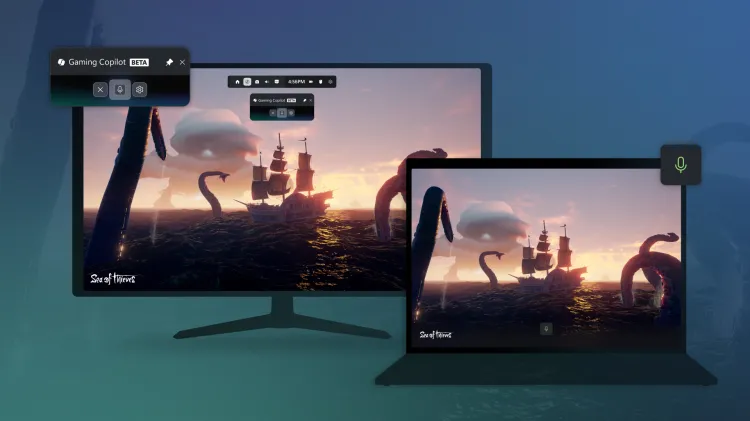
As part of today’s rollout, PC players will begin seeing Gaming Copilot integrated directly into the Windows Game Bar, the native overlay tool designed for quick access during gameplay. According to Taylor O’Malley, Principal Program Manager at Xbox, the rollout will happen gradually over the next few weeks.
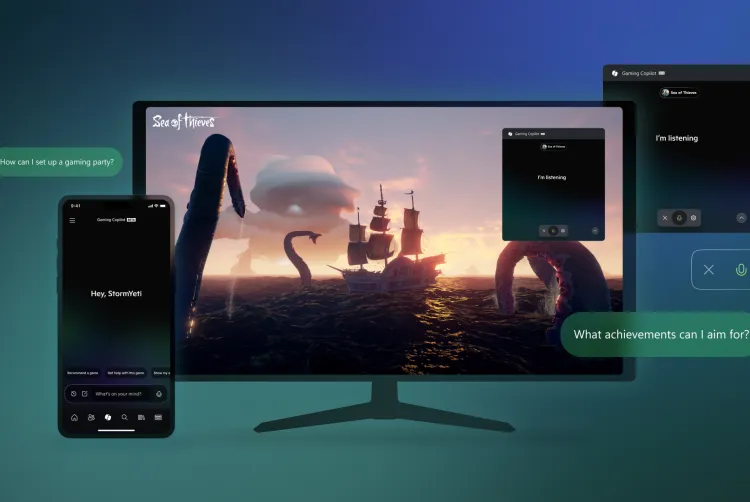
Unlike traditional overlays or third-party tools, Gaming Copilot is more than just a widget. It features a built-in voice mode, enabling players to interact with the AI hands-free. This means you no longer need to pause or minimize your game—simply ask Copilot for guidance, and it responds in real time. Even more impressive, Copilot can analyze in-game screenshots to provide context-specific answers. For instance, if you’re struggling against a challenging boss, you can ask Copilot for help without having to explain the scenario in detail.
Expanding to Mobile and Beyond
The innovation doesn’t stop on PC. Microsoft has confirmed that Gaming Copilot will launch on the Xbox mobile app for both iOS and Android devices starting next month. This allows gamers to use their smartphone or tablet as a second screen companion, freeing up their main display for uninterrupted gameplay.
Additionally, Microsoft is preparing to optimize the Gaming Copilot experience for its upcoming Xbox Ally handheld devices, ensuring seamless integration for on-the-go gaming. Future updates are also expected to bring Copilot to Xbox consoles, expanding its reach across Microsoft’s entire gaming ecosystem.
What Can Gaming Copilot Do?
The AI assistant is designed to be more than a digital helper. Current features include:
Game Recommendations: Discover new titles based on your preferences and play history.
Achievement Tracking: Instantly view your most recent Xbox achievements without leaving your game.
Real-Time Coaching: Get strategies, tips, and recommendations tailored to your gameplay.
Team Support: In competitive games like Overwatch 2, Copilot can suggest the best hero picks to complement your squad.
By combining convenience, personalization, and smart AI interaction, Microsoft aims to turn Gaming Copilot into a true gaming coach rather than just a passive assistant.
Why This Matters for the Future of Gaming
Microsoft’s Gaming Copilot represents more than a quality-of-life improvement—it’s a glimpse into the future of AI-driven gaming. As titles grow more complex and competitive, players often seek faster, smarter ways to improve their skills. Copilot has the potential to evolve into an interactive tutor, offering data-driven insights, strategies, and performance reviews, similar to how professional esports coaches train their players.
By bridging PC, mobile, and console platforms, Microsoft is also ensuring that Copilot becomes a unified gaming companion rather than a fragmented feature. This strategy not only strengthens the Xbox ecosystem but also positions Microsoft as a leader in AI integration for entertainment.
Final Thoughts
With Gaming Copilot, Microsoft is reshaping the way players interact with their games. What began as a simple AI widget inside Windows 11 could soon evolve into a personalized AI coach, capable of analyzing gameplay patterns, suggesting strategies, and even enhancing multiplayer teamwork.
As AI becomes an increasingly critical part of modern life, its integration into gaming highlights how technology can enhance—not replace—the human experience. For gamers, Copilot is not just a tool; it’s a sidekick, guide, and mentor all in one.
Apple released public betas for iOS 27 and its other major operating system updates on Wednesday, giving users an early look at software set to launch broadly this fall. The headline addition this year is Siri AI, the long-delayed overhaul of Siri that adds AI-powered capabilities to the assistant. Early testing shows the feature actually functions as intended, though its responses tend to stay brief rather than conversational.
Apple also opened public betas for iPadOS 27, watchOS 27, and macOS 27 Golden Gate alongside the iOS update. All four betas are available now for anyone willing to install pre-release software on their devices.
What to expect from beta software
Installing a public beta comes with tradeoffs. Users testing early software may encounter glitches, app crashes, or faster battery drain than they’re used to on a stable release. Apple’s betas are functional but not fully polished, since the company uses this testing period to catch bugs before the official fall release. Anyone considering the install should weigh whether they’re comfortable dealing with those issues on a primary device.
Backing up your device before installing any beta is strongly recommended. If a beta causes problems serious enough to warrant reverting to the current public release, a backup makes that process far easier.
How to join the beta program
To install the iOS 27 public beta, visit Apple’s beta software page at beta.apple.com and sign up for the program. After backing up your device, open the Settings app and navigate to General, then Software Update. A “Beta Updates” section will appear near the top of the screen. Tap it, then select the iOS 27 public beta to begin the download.
The process works similarly across Apple’s other platforms. iPad users follow the same steps within iPadOS settings, while Apple Watch and Mac users can find comparable beta enrollment options within their respective settings menus after signing up through the same beta portal.
Siri AI takes center stage
Siri’s AI-powered update has been one of Apple’s most anticipated software changes in recent years, following repeated delays to the project. The version now available in the iOS 27 beta represents Apple’s first public look at the reworked assistant, and early impressions suggest it performs its core functions reliably. Its tendency toward short, direct answers rather than longer conversational responses marks a notable design choice, one that sets it apart from AI assistants built by competitors that lean toward more expansive replies.
For users who rely heavily on Siri for daily tasks, the beta offers a chance to test the new AI capabilities months before the general public gets access when iOS 27 launches this fall alongside new iPhone hardware expected around the same time.
Apple has not detailed a specific release date for the final version of iOS 27, though the company’s pattern in recent years points to a launch timed with new iPhone announcements in September.