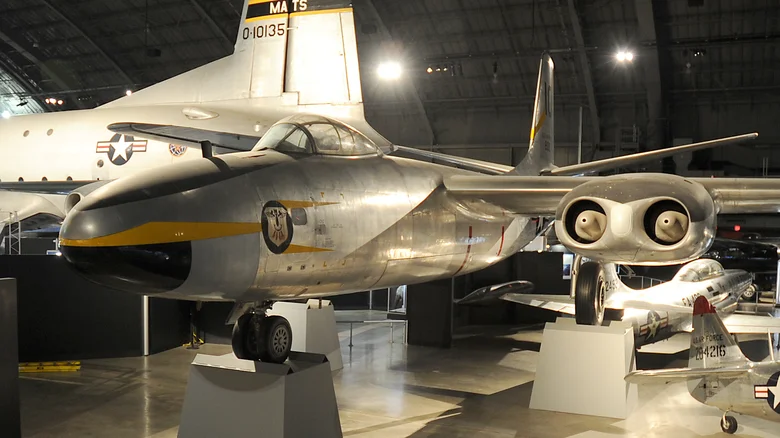
The United States Air Force has a long and storied history of innovation in aerial warfare, and its bomber fleet is a testament to that legacy. From the early days of jet-powered flight to the cutting-edge stealth technology of today, the evolution of these aircraft reflects the changing demands of modern combat. At the forefront of this evolution is the Northrop Grumman B-21 Raider, the latest addition to the Air Force’s bomber fleet. But to truly appreciate the B-21’s significance, we must look back at its predecessors, starting with the North American B-45 Tornado—the first jet-powered bomber in U.S. history.
The B-45 Tornado: America’s First Jet Bomber
Introduced in 1947, the North American B-45 Tornado marked a revolutionary leap in aviation technology. As the first jet-powered bomber in the U.S. Air Force, it set the stage for the future of aerial warfare. Equipped with four General Electric J47 engines, the B-45 could produce a combined 24,000 pounds of thrust, achieving a top speed of 570 miles per hour. With a payload capacity of 22,000 pounds, it was also the first jet bomber capable of carrying atomic bombs—a critical feature during the early years of the Cold War.
Despite its groundbreaking design, the B-45’s service history was relatively short-lived. It saw limited action during the Korean War and was primarily used for reconnaissance missions under the designation RB-45. By 1959, the Tornado was phased out in favor of more advanced bombers like the B-52 Stratofortress. Only 142 units were ever produced, making the B-45 a rare but pivotal chapter in aviation history.
The B-52 Stratofortress: A Cold War Icon

While the B-45 Tornado paved the way, the Boeing B-52 Stratofortress became the backbone of the U.S. bomber fleet. First introduced in 1955, the B-52 has undergone numerous upgrades over the decades, ensuring its relevance in modern warfare. With a payload capacity of up to 70,000 pounds and a range of over 8,800 miles, the B-52 remains a formidable force in the Air Force’s arsenal.
What’s truly remarkable about the B-52 is its longevity. Nearly 70 years after its debut, the Stratofortress continues to serve in active duty, a testament to its adaptability and enduring design. From the Cold War to the War on Terror, the B-52 has played a critical role in countless missions, earning its place as one of the most iconic aircraft in military history.
The B-1 Lancer: Speed and Power
The Rockwell B-1 Lancer, introduced in the 1980s, represents another leap forward in bomber technology. Designed for supersonic speeds and long-range missions, the B-1 boasts four engines producing over 120,000 pounds of thrust, enabling it to reach speeds exceeding 900 miles per hour. With a maximum payload of 75,000 pounds, the Lancer is capable of delivering precision strikes with unparalleled efficiency.
The B-1’s variable-sweep wings allow it to adapt to different flight conditions, making it a versatile asset for both high-speed and low-altitude missions. While its exact performance specifications remain classified, the B-1 Lancer is widely regarded as one of the most advanced bombers in the world.
The B-21 Raider: The Future of Stealth Bombers
The Northrop Grumman B-21 Raider, set to join the Air Force in 2025, represents the next generation of stealth bombers. With its sleek, futuristic design and cutting-edge technology, the B-21 is designed to operate in highly contested environments, evading enemy radar and delivering precision strikes with unmatched accuracy.
While specific details about the B-21’s capabilities remain classified, it is expected to feature advanced stealth materials, state-of-the-art avionics, and the ability to carry both conventional and nuclear payloads. The Raider’s introduction marks a new era in aerial warfare, combining the lessons of the past with the innovations of the future.
Comparing the Generations: From B-45 to B-21
To understand the evolution of U.S. bombers, let’s compare the key features of these iconic aircraft:
| Aircraft | Introduction Year | Top Speed | Payload Capacity | Key Features |
|---|---|---|---|---|
| B-45 Tornado | 1947 | 570 mph | 22,000 lbs | First jet bomber, atomic capability |
| B-52 Stratofortress | 1955 | 650 mph | 70,000 lbs | Long-range, high payload, enduring design |
| B-1 Lancer | 1986 | 900+ mph | 75,000 lbs | Supersonic, variable-sweep wings |
| B-21 Raider | 2025 (expected) | Classified | Classified | Advanced stealth, next-gen technology |
The Legacy of the B-45 Tornado
Though the B-45 Tornado’s service history may be brief, its impact on aviation cannot be overstated. As the first jet-powered bomber, it laid the foundation for the aircraft that followed, from the B-52 to the B-21. The Tornado’s introduction marked the beginning of the Jet Age, a period of rapid technological advancement that transformed the nature of aerial combat.
While it may not have the storied combat record of its successors, the B-45 Tornado remains a symbol of innovation and progress. Its legacy lives on in the advanced bombers that dominate the skies today, ensuring that the U.S. Air Force remains at the forefront of military aviation.
Conclusion: Honoring the Past, Embracing the Future
From the pioneering B-45 Tornado to the futuristic B-21 Raider, the evolution of U.S. bombers reflects the relentless pursuit of innovation and excellence. Each aircraft represents a milestone in aviation history, building on the lessons of the past to meet the challenges of the future.
As we look ahead to the introduction of the B-21 Raider, we honor the legacy of the bombers that came before it. These aircraft are more than just machines—they are symbols of the ingenuity, determination, and courage that define the U.S. Air Force.
Whether you’re an aviation enthusiast, a history buff, or simply curious about military technology, the story of these bombers offers a fascinating glimpse into the evolution of aerial warfare. Stay tuned as the B-21 Raider takes to the skies, ushering in a new chapter in the storied history of U.S. military aviation.