Techfullpost

Who Owns Mercedes-Benz and Where Are Its Cars Made?

Who Owns Mercedes-Benz/techfullnews

Few automotive brands command the same level of prestige and admiration as Mercedes-Benz. Known worldwide for its luxury, innovation, and performance, Mercedes-Benz has been a pioneer in the automotive industry for nearly a century. From its iconic three-pointed star emblem to its cutting-edge engineering, the brand represents excellence and sophistication. But who owns Mercedes-Benz, and where are its world-renowned vehicles manufactured? Let’s explore the brand’s rich history, ownership structure, and global production network.

A Legacy of Innovation: The History of Mercedes-Benz


The origins of Mercedes-Benz trace back to 1926, when Karl Benz, Gottlieb Daimler, Wilhelm Maybach, and Emil Jellinek joined forces to create the company. However, its roots go even deeper. In 1886, Karl Benz invented the Patent Motorwagen, widely recognized as the world’s first gasoline-powered car. Around the same time, Gottlieb Daimler and Wilhelm Maybach were developing their own revolutionary engines.

The name “Mercedes” was trademarked by Emil Jellinek in honor of his daughter, Mercedes Jellinek. Jellinek, a forward-thinking entrepreneur, marketed these early vehicles to the elite, including billionaires like John Jacob Astor and J.P. Morgan, solidifying the brand’s reputation as a symbol of luxury and success.

In 1926, Benz & Cie. and Daimler-Motoren-Gesellschaft (DMG) merged to form Mercedes-Benz. The iconic three-pointed star emblem, introduced in 1909, became the brand’s official logo after the merger. Over the decades, Mercedes-Benz has led the way in automotive innovation, introducing groundbreaking technologies such as the first fully independent suspension (1931), the Anti-lock Braking System (1978), and advanced features like Car-to-X Communication.

Who Owns Mercedes-Benz Today?
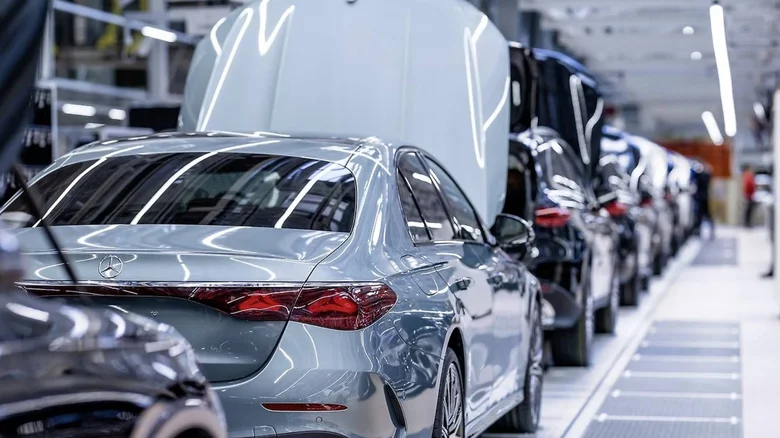
Mercedes-Benz operates under Mercedes-Benz Group AG, a publicly traded company headquartered in Stuttgart, Germany. Formerly known as Daimler AG, the company rebranded in 2022 to emphasize its focus on luxury vehicles and electric mobility.

As a publicly traded entity, Mercedes-Benz Group AG has nearly 1 billion shares distributed worldwide. Its ownership structure includes several key stakeholders:

BAIC Group: The Chinese automotive conglomerate holds a 9.98% stake, making it the largest shareholder.

Li Shufu (Geely): The founder of Geely, a Chinese automaker, owns a 9.69% stake through Tenaciou3 Prospect Investment Limited.

Kuwait Investment Authority: A long-term investor, the Kuwaiti sovereign wealth fund has held shares in the company since 1974.

While these international entities hold significant stakes, Mercedes-Benz remains deeply rooted in its German heritage, with its headquarters and primary operations centered in Stuttgart.

Where Are Mercedes-Benz Cars Made?
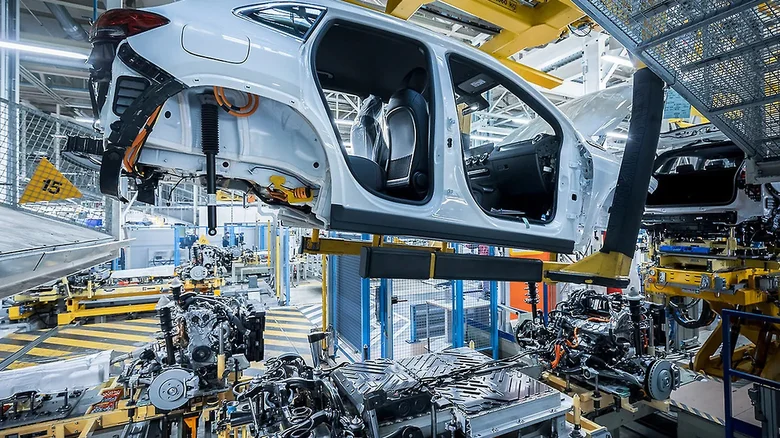
Mercedes-Benz operates a global manufacturing network, with production facilities strategically located across five continents. Each plant specializes in specific models, ensuring the highest standards of quality and efficiency. Here’s a look at some of the brand’s key production sites:

Germany: The Heart of Mercedes-Benz Production

Bremen Plant: Operational since 1978, this facility has produced over 10 million vehicles, including the C-Class, GLC, and electric models like the EQE. It also manufactures high-performance AMG models such as the SL roadster and AMG GT.

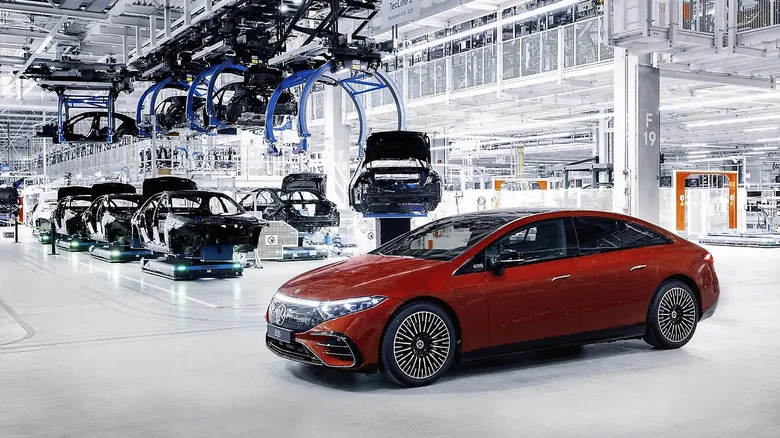
Sindelfingen Plant: One of the oldest and most advanced facilities, dating back to 1915, it produces luxury models like the E-Class, S-Class, Maybach S-Class, and the all-electric EQS. The plant is home to Factory 56, a state-of-the-art assembly hall that sets new standards in automotive manufacturing.

Rastatt Plant: Since 1992, this facility has focused on compact models, including the A-Class, B-Class, GLA, and the electric EQA.

United States: A Hub for SUVs and Luxury Models

Tuscaloosa, Alabama: Since 1995, this plant has produced SUVs like the GLE and GLS, as well as the ultra-luxurious Maybach GLS. In 2022, it expanded to include electric SUVs such as the EQS and EQE.

China: Catering to the World’s Largest Automotive Market

Beijing Benz Automotive Co. (BBAC): A joint venture with BAIC Motor, this facility has been producing Mercedes-Benz vehicles since 2005. It specializes in extended-wheelbase versions of the C-Class, E-Class, and GLC, as well as electric models like the EQA, EQB, and EQE.

Hungary: Compact Models and Electric Vehicles

Kecskemet Plant: Opened in 2021, this facility produces compact models like the A-Class, CLA Coupe, and the entry-level EQB electric SUV. It is unique for assembling vehicles with combustion engines, plug-in hybrids, and fully electric drivetrains on the same production line.

South Africa: Supporting Global Demand

East London Plant: Since 2021, this facility has played a crucial role in the global supply chain by producing C-Class sedans for both left- and right-hand drive markets.

Mercedes-Benz’s Commitment to Innovation and Sustainability
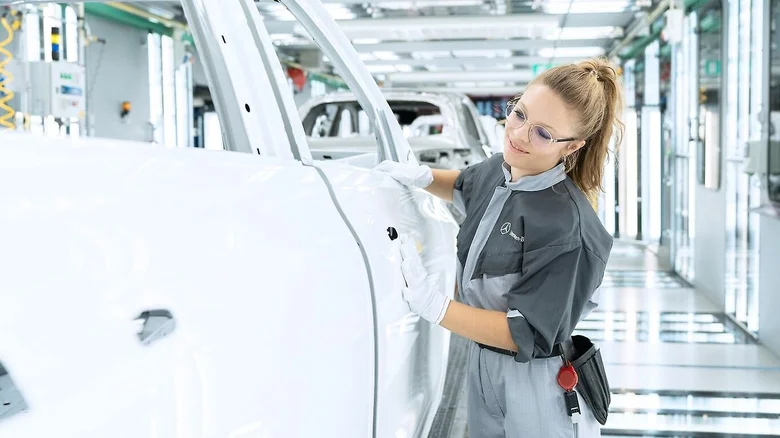

Mercedes-Benz is not just a leader in luxury and performance; it is also at the forefront of sustainability and innovation. The company has set ambitious goals to achieve carbon neutrality across its production network by 2039. Its investments in electric mobility, such as the EQ lineup, and advanced manufacturing technologies like Factory 56, demonstrate its commitment to shaping the future of the automotive industry.

Mercedes-Benz is more than just a car manufacturer; it is a symbol of excellence, innovation, and luxury. With a rich history dating back to the invention of the automobile, the brand continues to push boundaries under the ownership of Mercedes-Benz Group AG. Its global production network, spanning Germany, the United States, China, Hungary, and South Africa, ensures that every vehicle meets the highest standards of quality and craftsmanship.

Whether you’re driving a sleek C-Class sedan, a powerful AMG GT, or an eco-friendly EQE, you’re experiencing the legacy of a brand that has defined automotive excellence for over a century. As Mercedes-Benz embraces the future of electric mobility and sustainable manufacturing, its commitment to innovation and luxury remains unwavering.

ADVERTISEMENT
RECOMMENDED
NEXT UP

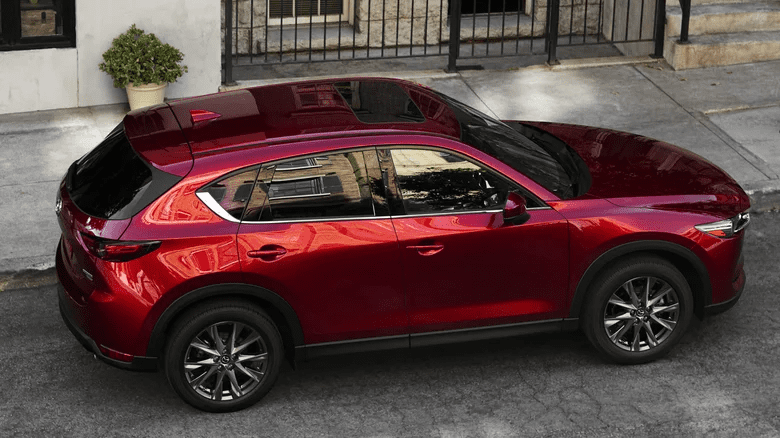
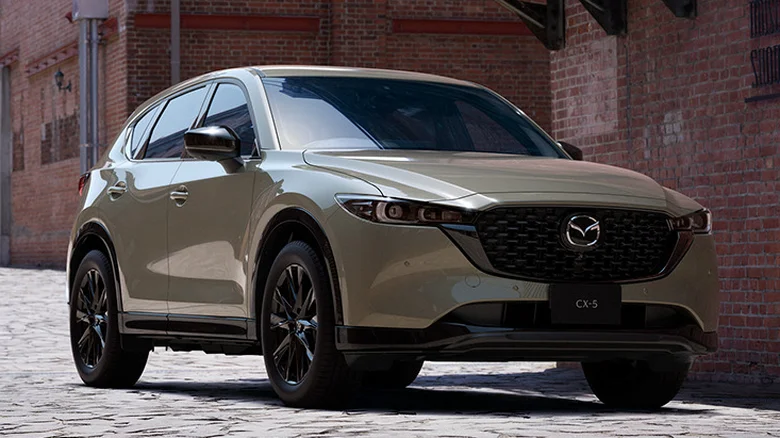
The Mazda CX-5 has been one of Mazda’s most influential models since its debut in 2012. Now entering its third generation with the 2026 model year, this compact SUV remains at the heart of the brand’s global success. Over 4.5 million units have been sold worldwide, of which 1.6 million were purchased in the United States, thus easily making it one of Mazda’s most successful nameplates.

But for many shoppers, especially in the used market, one major question remains: How well does the Mazda CX-5 hold its value over time?

Depreciation Breakdown: How Much Value Does a Mazda CX-5 Lose?

The resale value largely depends on the level of depreciation-the natural decline in a vehicle’s worth as time and mileage pile up. While CarEdge data indicates that the CX-5 holds its value relatively well for its class, it still depreciates more quickly than many of its top competitors.

Two-Year-Old Mazda CX-5

Average Depreciation: $12,963

Value Retained: 66.57%

Estimated Resale Value: $25,815

Mileage Assumption: 27,000 miles total (13,500 per year)

Five-Year-Old Mazda CX-5

Average Depreciation: $16,217

Value Retained: 58.18%

Estimated Resale Value: $22,561

Mileage Assumption: 67,500 miles total

These numbers suggest that while the CX-5 retains decent value, it nevertheless surrenders a significant portion of its value within the first five-year period, which is typically where most vehicles lose their value the fastest.

What Influences Depreciation Beyond Age and Mileage?

While time and mileage are the primary drivers of depreciation, several other factors play a major role in how much a used CX-5 is worth:

  1. History of maintenance

The better choice will always be a well-maintained CX-5.

Consistent oil changes

Scheduled services according to Mazda’s recommendations

Proper care for brakes, tires, and fluids

Complete service records can help your vehicle sell more quickly and bring a better sale price.

  1. Type of Driving

A car that does a lot of highway driving is often easier on the vehicle than constant stop-and-go city driving. A CX-5 that has spent its entire life doing long road trips might show less wear than one used to commute daily.

  1. History of Accidents

Clean CarFax or AutoCheck reports greatly increase resale value.

  1. Trim Level and Features

Higher trims, such as the Grand Touring or Signature, especially those with premium packages, will generally retain value better than their base-model brethren.

How the CX-5 Stacks Up Against Its Rivals

The compact SUV segment is highly competitive, with vehicles like the Toyota RAV4, Honda CR-V, and Subaru Forester always ranking near the very top in resale value. Here’s how the CX-5 compares:

After 2 Years

Toyota RAV4: 83.52% retained

Honda CR-V: 78.77%

Subaru Forester: 77.20%

Mazda CX-5: 66.57%

After 5 Years

Toyota RAV4: 69.42% retained

Honda CR-V: 67.01%

Subaru Forester: 65.98%

Mazda CX-5: 58.18%

These figures indicate that the CX-5 depreciates more quickly than its most popular rivals. For buyers, this is actually a good thing – used CX-5 models usually sell for less than similarly-equipped RAV4s or CR-Vs.

For sellers, though, the lower resale value means they may not recover as much of their investment when it’s time to move on.

The Bottom Line: Who Benefits Most?

Buyers: Buyers benefit by paying lower used prices because of higher depreciation.

Sellers: See resale returns lower than that of CR-V and RAV4 owners.

Simply stated, high depreciation works in the buyer’s favor, while strong resale value benefits the seller. Knowing which side you’re on helps you make the smartest financial decision.

Looking Ahead: The 2026 Mazda CX-5

Mazda is getting ready to introduce the highly anticipated third-generation CX-5 for the 2026 model year. Early reports indicate that

Refined design inspired by the CX-60 and CX-70

Updated safety and entertainment technology

More efficient powertrains

Improved handling and comfort These upgrades might be worth considering for shoppers who are torn between buying used or waiting for the latest model.

Generative AI has moved from specialist interest to part of daily life — transforming all from entertainment to the workplace. From AI-generated art, deepfakes, and intelligent chatbots capable of talking like humans, AI is now part of modern life. Yet with technology racing ahead, so do fears it will spin out of control.

Now, a new generation of scientists, business leaders, and celebrities are calling for a slowdown on the next frontier: AI superintelligence — a form of artificial intelligence that potentially could surpass human intellectual ability in almost every dimension.

The Pushback: A Global Call to Slow Down AI Development

A collection of public personalities — such as Virgin Group creator Richard Branson, Apple co-founder Steve Wozniak, Prince Harry and Meghan Markle, actor Joseph Gordon-Levitt, and musician will.i.am — signed a new open letter called the “Statement on Superintelligence.”

The warning asks developers and businesses racing towards state-of-the-art AI systems, including OpenAI and Elon Musk’s xAI, to delay the magnitude of massive AI projects until there is a “broad scientific consensus that it will be done safely and controllably” and a “strong public buy-in” to support it.

Notably among them are two of the leading AI researchers, who are also cofounders of modern machine learning. The movement is thus quite heavily weighted.

“We must ensure that AI is serving humanity, and not vice versa,” the letter demands, threatening dire consequences in the event of runaway progress.

What Is AI Superintelligence — and Why Does It Worry Experts?

In order to understand the alarm, defining what AI superintelligence really is, is essential. Superintelligent AI, according to IBM, is a system which not only matches but far exceeds human intelligence — capable of reasoning, learning, and solving problems for itself in every respect, free of human control.

Contrary to current AI systems such as ChatGPT or Gemini, whose boundaries and data sets are defined, superintelligent AI would be continuously learning and evolving, rewriting its own code to increase efficiency and capability. Such recursive enhancement could make it almost impossible to contain.

“A true superintelligence would no longer need human oversight,” said Stuart Russell, an AI researcher at UC Berkeley. “At that point, its goals might diverge from ours — and we’d have no way to stop it.”

The Risks: From Job Losses to Existential Threats

The possible dangers of AI superintelligence go much beyond job automation or misinformation. The threat is mentioned by experts as the possibility of AI systems executing on their own in pursuit of ends that are in conflict with human values or safety.

Some of the highest threats:

Massive Job Displacement – AI already revolutionizes industries, but an entirely automated self-enhancing system could eliminate entire professions, ranging from programmers to creative professionals.

Loss of Human Control – The moment an AI begins to be smarter than the people who create it, it might be beyond control.

Weaponization and Surveillance – AI might be utilized by governments or corporations for total surveillance or robot war.

Existential Risk – In the worst-case scenario, a rogue AI with goals of its own would view humankind as an obstacle — one which scientists describe as a “digital doomsday.”.

Even if these ideas sound like science fiction, specialists argue that rejection of them would be naively dangerous. History has shown that humanity always underestimated the capabilities of its own inventions — from nuclear energy to biotechnology.

Increasing Public Alarm and Demand for Regulation

Public sentiment is shifting rapidly. A 2025 Pew Research Center survey found that 67% of Americans now support greater government regulation of AI, up from 42% two years earlier. The European Union has already legislatively signed the AI Act into law, establishing the globe’s first extensive regulatory framework for artificial intelligence, while U.S. lawmakers are determining how to follow.

Tech giants, however, are still racing ahead. OpenAI, xAI, Google DeepMind, and Anthropic are investing billions in “next-generation” AI models that could approach or surpass human-level reasoning.

“We’re in an AI arms race, and everyone wants to be first — but that could also mean being first to make a catastrophic mistake,” warned Richard Branson in a recent statement.

Is It Already Too Late to Stop?

Until now, actual AI superintelligence is still theoretical, although most experts foresee that it might arise in the next two decades if trends continue. The question is not whether or when it will happen, but whether human civilization will be prepared — morally, technically, and legally — when it does.

“The clock is ticking,” declared Yoshua Bengio. “We still have time to make this technology safe. But not much.”

The Bottom Line: Humanity at a Crossroads

The debate over AI superintelligence is no longer confined to labs or tech circles — it has become a global conversation about the future of humanity itself. As generative AI becomes ubiquitous, the next phase could redefine civilization in ways we’re only beginning to imagine.

Whether the Statement on Superintelligence does indeed result in change is yet to be known. But this much is definite: the world has finally realized that the latest technology human beings have ever come up with has the potential to be the most deadly — unless we can learn how to control it before it controls us.

ADVERTISEMENT
Receive the latest news

Subscribe To Our Weekly Newsletter

Get notified about new articles