Techfullpost

U.S. and China Reach Final Deal on TikTok as Tensions Ease Over Tech Ownership

U.S. and China Reach Final Deal on TikTok as Tensions Ease Over Tech Ownership

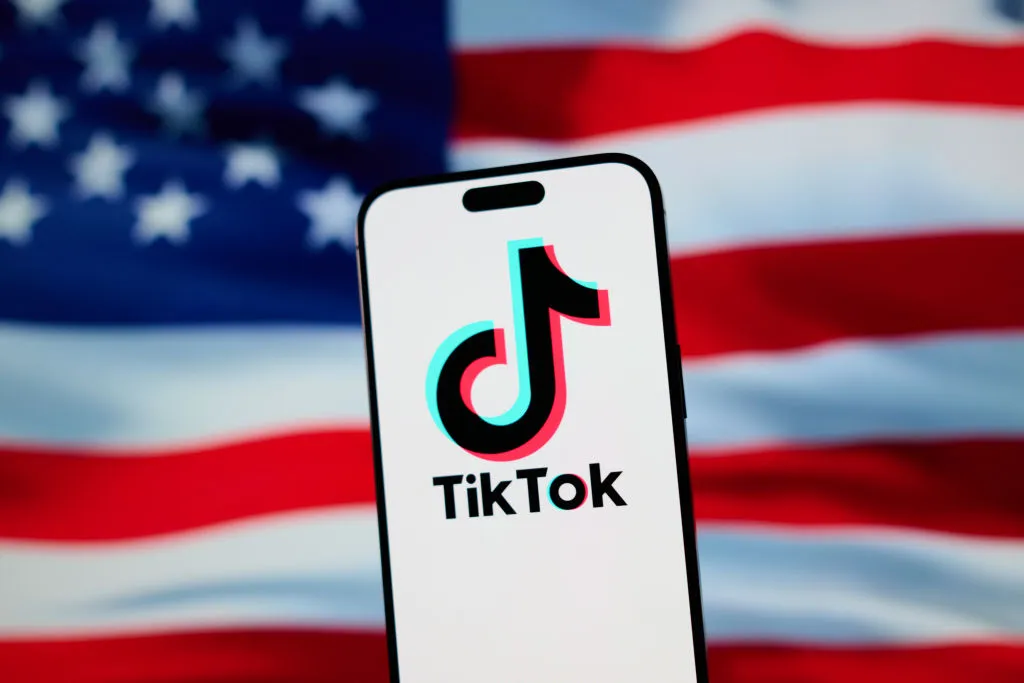
After months of negotiations and geopolitical tensions, the United States and China have finally agreed on TikTok, in a major development in one of the most acrid tech wars between the two superpowers. The two nations are now ready to implement the long-awaited agreement, U.S. Treasury Secretary Scott Bessent said.

The agreement would at last reveal what’s to become of the wildly popular short-video app, which has been threatened with a U.S. ban if its Chinese parent firm, ByteDance, did not divest its American business.

Deal Done Early Sunday Before Leaders’ Meeting

CBS’ Face the Nation on Sunday, Bessent revealed that Washington and Beijing have now agreed on all substantive terms of the deal for TikTok.

We had agreed on one in Madrid, and I believe that today all the pieces are in place,” Bessent said. “That will be up to the two leaders to close that transaction on Thursday in Korea.”

While he would not comment on the minutiae of the deal, Bessent did verify that America was successful in gaining China’s approval for the deal, labeling it “a significant step forward” following several months of see-sawing diplomacy.

The final accord is scheduled to be signed off on officially by President Donald Trump and Chinese President Xi Jinping in a scheduled meeting later this week in Seoul, an unusual moment of unity for the two economic titans.

Background: TikTok’s Long Battle in Washington

Ownership by TikTok has been a contentious issue in U.S.-China relations for years. There have long been national security concerns on the part of American officials over Chinese ownership of the app owing to possible user data and algorithm control risks.

Under a 2024 law signed by President Trump, ByteDance was forced to spin off U.S. operations of TikTok or face an outright ban. Multiple extensions were granted to allow for negotiations, as the platform — used by more than 170 million Americans — became deeply integrated into the nation’s digital and cultural landscape.

The new structure is reported to create a board of directors headquartered in the U.S. to oversee TikTok’s domestic operations. Cloud and data security activities for the app will be managed by technology giant Oracle, while ByteDance will have its function limited under scrutiny from U.S. regulators.

Who Owns the New Company

Several big American investors are reported to own a piece of the new TikTok company. These include:

Oracle Corporation, led by veteran Trump ally Larry Ellison, that will manage data integrity and storage.

Fox Corporation, the parent company of Fox News, whose participation in the deal has been publicly confirmed by President Trump.

Andreessen Horowitz and Silver Lake Management, two large venture capital firms which have deep foundations in America’s technology community.

Together, these investors aim to create a U.S. corporate entity that satisfies national security conditions but maintains TikTok’s global functionality and user interface.

Negotiations Broaden Beyond TikTok: Trade and Technology
Bessent addressed in Kuala Lumpur, Malaysia, where the two nations’ negotiators were talking about an expansive economic framework. Apart from the TikTok negotiations, the U.S. Trade Representative Jamieson Greer added that Washington and Beijing had made progress on issues involving tariffs and rare earths — a key component of producing semiconductors and other sophisticated technology.

“We talked about the prolongation of the ceasefire, we talked about rare earths, obviously we talked about all kinds of issues,” Greer said.

China, the dominant source of most of the world’s rare earth elements, previously signaled it could ease export restrictions on the elements — a move that would have immense consequences for U.S. technology and defense industries.

A Turning Point in U.S.-China Tech Relations

If it’s signed on time, the TikTok deal would be a symbolic easing of Beijing-Washington tech tensions. It also reflects growing realization that complete decoupling between the world’s two largest economies is impossible in the age of the internet.

For the United States, the agreement assures greater dominance over TikTok’s US data and algorithms. For China, it’s a diplomatic win — allowing ByteDance to retain partial control while demonstrating respect in the face of international pressure.

As the two nations prepare to finalize the pact in Korea later this week, tech watchers are calling it one of the most significant tech deals of the decade, with potential spillover effects in global data regulation, trade policy, and social media oversight.

Bottom Line

After years of uncertainty, the fate of TikTok in the United States may finally be secure — in fresh hands, fresh regulation, and a fresh age of U.S.-China collaboration. The coming days will tell us whether this landmark deal signals a new age of stability, or just the curtain-raiser to round two of great power tech wars.
ADVERTISEMENT
RECOMMENDED
NEXT UP

Meta is betting big, perhaps too big, on artificial intelligence. As the global race to build AI infrastructure heats up, the social media giant is investing billions into what it believes will define the next era of computing. But as Wall Street’s latest reaction shows, not everyone is buying it.

The company, whose chief executive is Mark Zuckerberg, is constructing two giant data centers in the U.S. as part of a wider AI expansion. U.S. tech companies collectively will invest as much as $600 billion in infrastructure over the next three years, according to estimates from industry insiders, with Meta as one of the biggest spenders.

But as Silicon Valley celebrates the AI boom, investors are asking one question: whether Meta’s spending spree is sustainable, let alone strategic.

Earnings Reveal Soaring Costs — and Investor Doubts

Meta’s latest quarterly report showed a sharp rise in costs: operating expenses were up $7 billion year over year and capital expenditures rose nearly $20 billion, largely driven by the acquisition of AI infrastructure and talent. The company generated $20 billion in profit for the quarter, but investors focused on the ballooning expenses — and the lack of clear AI monetization.

During the earnings call, Zuckerberg defended the aggressive spending.

“The right thing is to accelerate this — to make sure we have the compute we need for AI research and our core business,” he said. “Once we get the new frontier models from our Superintelligence Lab (MSL) online, we’ll unlock massive new opportunities.”

But the reassurance didn’t land. Meta’s stock sank 12% by Friday’s close, wiping out more than $200 billion in market value within days.

Big Spending, Small Returns (For Now)

While Meta isn’t alone in its AI splurge – Google, Microsoft, Nvidia, and OpenAI are also spending billions on computing – the key difference is in the results. Google and Nvidia are already experiencing strong revenue growth thanks to AI, while OpenAI, although much more risky, has one of the fastest-growing consumer products in history, generating around $20 billion a year.

But Meta has yet to introduce the blockbuster AI product that would seem to justify the astronomical spending.

Its flagship Meta AI assistant reportedly serves over a billion users, but this is largely a factor of its embedding across Facebook, Instagram, and WhatsApp rather than organic adoption. Analysts say it still lags far behind in functionality and brand strength compared to competitors such as ChatGPT and Claude.

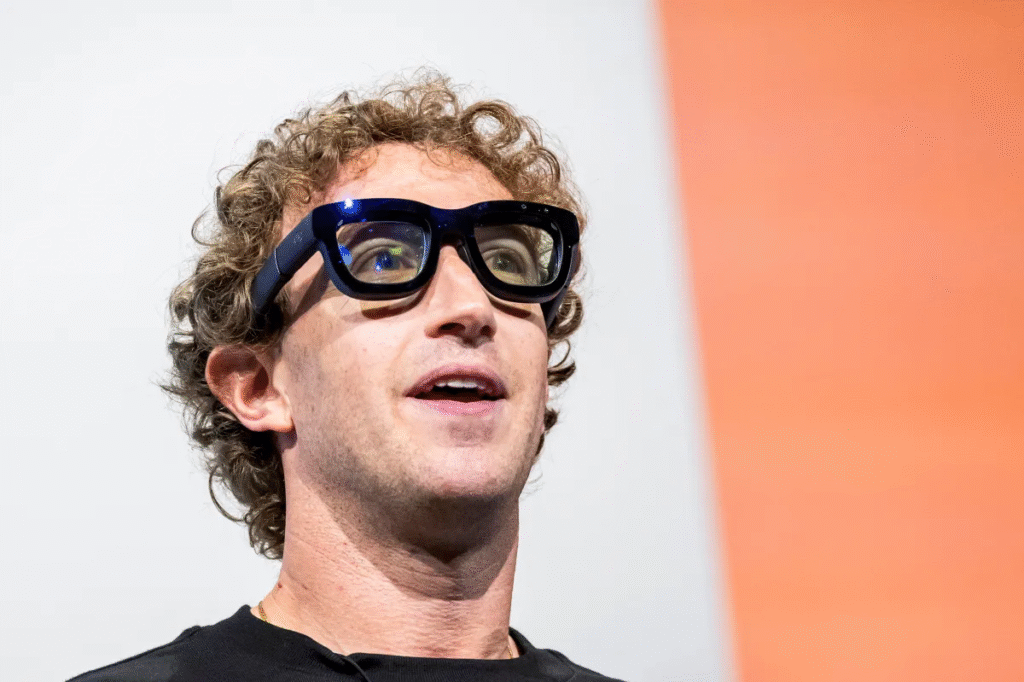
Meanwhile, Meta’s Vibes video generator, which gave the company a fleeting bump in engagement, has yet to prove its commercial viability. And while the Vanguard smart glasses it introduced with Ray-Ban do hold some promise for combining AI and augmented reality, they’re still more prototype than core business driver.

Zuckerberg’s Vision: Superintelligence and the Future

Undeterred by the skepticism, Zuckerberg insists Meta’s AI ambitions are only just getting started. He said the company’s Superintelligence Lab, or MSL, is working on next-generation “frontier models” that will power classes of products entirely new.

“It’s not just Meta AI as an assistant,” Zuckerberg said. “We expect to build new models and products — things that redefine how people and businesses interact with technology.”

Yet, he didn’t provide any details or timelines-a thing that frustrated analysts, who wanted some concrete projections. The promise of “more details in the coming months” wasn’t enough to calm investor nerves.

The AI Bubble Question

A massive infrastructure build-out at Meta has revived fears that the technology industry might be inflating yet another bubble. With tens of billions of dollars pouring into GPUs, data centers, and AI labs, some analysts warn that valuations in the sector are running ahead of tangible outcomes.

Yet, others argue that Meta’s financial position gives it more room to experiment. Unlike many AI startups, Meta still has a profitable advertising empire to fall back on. Its 3 billion monthly active users across its apps provide an unmatched data advantage — if it can find a compelling AI use case.

Where Does Meta Go From Here?

The direction of the company is not determined. Fundamental strategic questions are still hanging:

Will Meta use its vast personal data ecosystem to challenge OpenAI and Anthropic directly?

Does it want to integrate AI-powered advertising and business tools for enterprises?

Or will it shift to immersive consumer products, merging AI with AR/VR in the metaverse?

For now, those answers remain elusive. One thing is for sure: Zuckerberg is playing the long game, one that could either solidify Meta’s role in the next era of computing or turn into one of Silicon Valley’s most expensive miscalculations. As the AI arms race accelerates, Meta’s challenge isn’t just to build smarter machines — it’s to convince investors, and the world, that the company still knows where it’s going.

Redmond, Washington — In a bold move to expand its artificial intelligence infrastructure, Microsoft announced a $9.7 billion deal with data-center operator IREN that would give the tech giant long-term access to Nvidia’s next-generation AI chips. The agreement underscores how deeply the AI race has become defined by access to high-performance computing power.

That investment will also translate into a five-year partnership that lets Microsoft significantly ramp up its cloud computing and AI without having to immediately build new data centers or secure additional power—two of the biggest bottlenecks constraining Microsoft’s AI expansion today.

IREN Shares Spike Following Microsoft Partnership

Following that announcement, IREN’s stock soared as much as 24.7% to a record high before finishing nearly 10% higher by Monday’s close. The news also gave a modest lift to Dell Technologies, which will be supplying AI servers and Nvidia-powered equipment to IREN as part of the collaboration.

The deal includes a $5.8 billion equipment agreement with Dell, part of which involves IREN providing Microsoft with access to systems equipped with the advanced Nvidia chips known as the GB300.

Strengthening Microsoft’s AI Muscle

The move highlights the increasing competition between tech giants like Amazon, Google, and Meta in securing computing capacity that powers generative AI tools such as ChatGPT and Copilot among other machine-learning models.

Microsoft has invested heavily in OpenAI amid mounting infrastructure constraints, as demand for AI-powered services explodes across its cloud ecosystem. Earnings reports from major tech firms last week showed that a limited supply of chips and data-center capacity remains the cap on how much the industry can capitalize fully on the boom in AI.

In return, IREN gets an immediate infrastructure boost by partnering with Microsoft without the high upfront costs associated with building new hyperscale data centers. That is also a way to stay agile as the generations are coming fast from Nvidia.

“This deal is a strategic move by Microsoft to expand capacity while maintaining its AI leadership without taking on the depreciation risks tied to fast-evolving chip hardware,” said Daniel Ives, managing director at Wedbush Securities.

IREN’s Huge Expansion Plans

IREN, whose market value has risen more than sixfold in 2025 to $16.5 billion, operates several large-scale data centers across North America, with a combined total of 2,910 megawatts.

Under the new deal, the company will deploy Nvidia’s processors in phases through 2026 at its 750-megawatt Childress, Texas campus, where it is building liquid-cooled data centers designed to deliver approximately 200 megawatts of critical IT capacity.

The prepayment by Microsoft would finance IREN’s payment for Dell equipment valued at $5.8 billion. However, the deal comes with strict performance clauses that allow Microsoft to revoke the contract if delivery timelines are not met by IREN.

Rising “Neocloud” Powerhouses

The deal also speaks to the emergence of “neocloud” providers like CoreWeave, Nebius Group, and IREN — companies that specialize in selling Nvidia GPU-powered cloud computing infrastructure. These firms have become key partners for Big Tech companies trying to scale AI operations faster than traditional data-center timelines allow.

Earlier this year, Microsoft inked a $17.4 billion deal with Nebius Group, a similar provider, for cloud infrastructure capacity. Taken together, the moves mark Microsoft’s multi-pronged strategy to secure AI infrastructure from multiple partners amid global shortages of Nvidia hardware.

A Broader AI Infrastructure Push

On the same day, AI infrastructure startup Lambda revealed a multi-billion-dollar deal with Microsoft to deploy more GPU-powered cloud infrastructure using Nvidia’s latest hardware.

To the industry analysts, these rapid investments are part of a larger race to lock in supply chains for a resource now viewed as critical as oil in the digital economy: AI computing.

“We’re seeing the dawn of a whole new AI infrastructure ecosystem,” said Sarah McKinney, an AI market strategist. “Microsoft’s deals with IREN and Nebius show that the company is securing every possible avenue to power the next wave of AI applications.”

The Growing Infrastructure Challenge of AI

High demand for AI, meanwhile, has put incredible pressure on computing resources globally. As companies scramble to find GPUs and data-center capacity, the cost of AI infrastructure has soared.

The partnership with existing operators like IREN ultimately gives Microsoft flexibility to meet surging workloads with a minimum of capital expenditure and supply chain delays. This approach allows it to further diversify its geographic footprint, reducing risks associated with power constraints or regulatory hurdles in any single region.

With this agreement, Microsoft forges its status as one of the leaders in the world’s artificial intelligence ecosystem and positions its Azure cloud as a backbone for next-generation AI applications. For IREN, the partnership represents a turning point in its transformation from a low-profile data center provider to an important player in the infrastructure powering the AI revolution. As the world’s demand for AI accelerates, one thing is clear: the race for computing power is just getting underway, and partnerships like Microsoft’s $9.7 billion IREN deal will likely define who leads in the next decade of artificial intelligence.

ADVERTISEMENT
Receive the latest news

Subscribe To Our Weekly Newsletter

Get notified about new articles