Techfullpost

The Iconic Cars of Hollywood: How John Wick’s Mustang Became a Pop Culture Legend

john wick/techfullnews

Automobiles have long held a special place in pop culture, evolving from mere modes of transportation to symbols of power, freedom, and identity. From the fictional Batmobile to James Bond’s sleek Aston Martins, cars have become as iconic as the stars who drive them. In Hollywood, vehicles often transcend their roles as props, becoming central to the narrative and etching themselves into the collective memory of audiences.

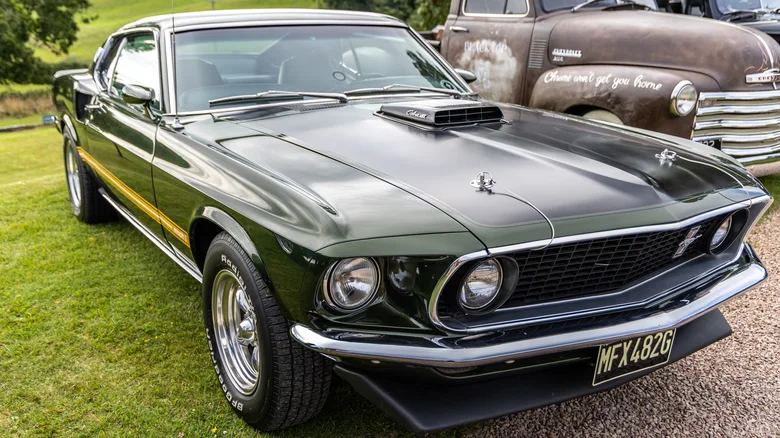
Among these legendary cars, John Wick’s 1969 Ford Mustang stands out as a true icon. While it may not have the most screen time, its impact on the John Wick franchise is undeniable. This article delves into the story behind Wick’s Mustang, its significance to the plot, and its enduring legacy in both cinema and car culture.


The Role of Cars in Pop Culture and Cinema
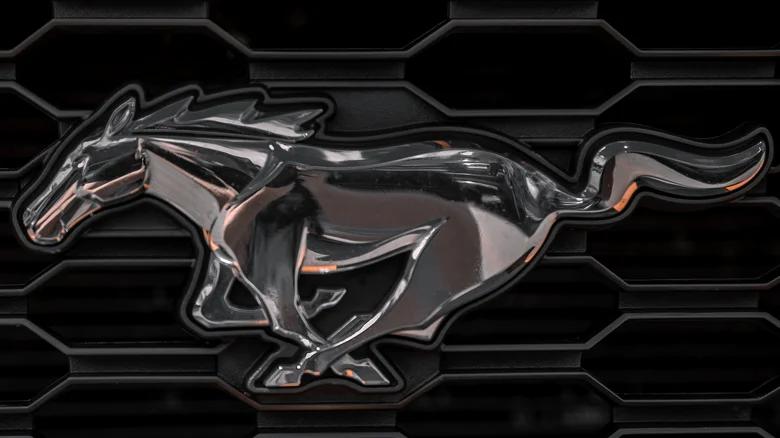
Cars in movies often serve as more than just vehicles—they become characters in their own right. Whether it’s the DeLorean from Back to the Future or the Mini Cooper from The Italian Job, these machines capture our imagination and leave a lasting impression. In the John Wick series, cars are not just tools for action; they are extensions of the protagonist’s personality and style.

John Wick’s Mustang, in particular, is a perfect example of how a car can drive a plot forward—literally and figuratively. While some might argue that it was the death of Wick’s puppy that set the story in motion, it was the theft of his beloved Mustang that ignited the chain of events. This car is more than just a symbol of Wick’s past; it represents his identity, his precision, and his unyielding determination.


John Wick’s 1969 Ford Mustang: A Legend on and Off the Screen

The Mustang’s Role in the Plot

The 1969 Ford Mustang Boss 429 is introduced early in the first John Wick film. During a routine gas station stop, Wick is approached by a group of thugs who admire his car. Their attempt to buy it escalates into violence, leading to the theft of the Mustang and the tragic death of Wick’s dog. This moment sets the stage for Wick’s relentless quest for vengeance, making the Mustang a pivotal element of the story.

The Mustang’s rarity and value add to its significance. The Boss 429 was a homologation special, designed to compete in NASCAR. With only 1,359 units ever produced, it’s one of the most sought-after muscle cars in history. Its inclusion in the film underscores Wick’s refined taste and attention to detail, traits that define his character.

The Real Story Behind the Movie Car

While the film portrays Wick’s Mustang as a Boss 429, the truth is a bit more nuanced. Due to the high cost and rarity of the Boss 429, the production team opted for a more practical solution: a modified 1969 Ford Mustang Mach 1. The Mach 1, while still a classic, was far more common and affordable, making it a suitable stand-in for the high-stakes action sequences.

The film car featured several custom modifications, including an automatic transmission, a Shelby steering wheel, and unique hood pins. These changes, while not true to the Boss 429’s original design, added to the car’s distinctive look and helped it stand out on screen. Despite these alterations, the Mustang’s presence in the film resonated with audiences, earning it the nickname “Hitman Mustang.”


The Legacy of John Wick’s Mustang
Inspiring a New Generation of Car Enthusiasts

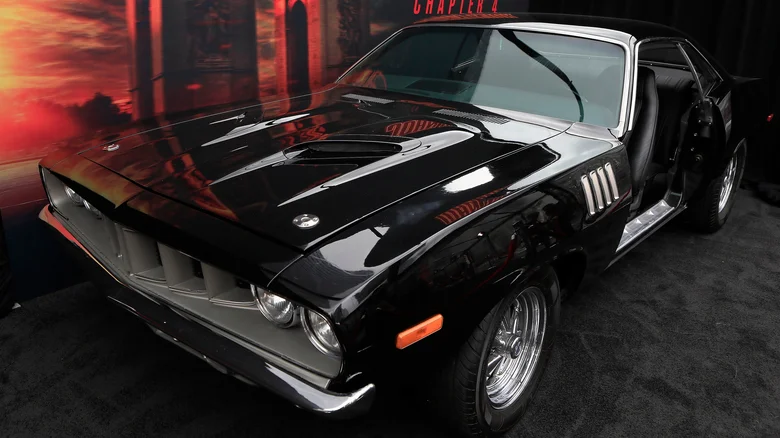
The John Wick franchise has had a profound impact on car culture, reigniting interest in classic muscle cars like the Mustang. The film’s portrayal of Wick’s Mustang as a symbol of power and style has inspired countless fans to seek out similar vehicles. Custom car builders have even created replicas of the “Hitman Mustang,” offering enthusiasts a chance to own a piece of cinematic history.

One notable example is Classic Recreations, a Texas-based company that specializes in restomod Mustangs. Their 1969 “Hitman” Fastback, priced at $377,000, pays homage to Wick’s iconic ride. With modern upgrades like a 670-horsepower engine and custom paint, this car captures the essence of the film’s Mustang while offering state-of-the-art performance.

The Fate of the Film Cars

Despite its enduring legacy, none of the Mustangs used in the John Wick films survived production. Five cars were built for the first movie, each meeting its demise during filming. Keanu Reeves, known for performing many of his own stunts, reportedly crashed one of the Mustangs during a take. While this might be disappointing for collectors, it underscores the film’s commitment to practical effects and realism.

The destruction of these cars has only added to their mystique, making them even more iconic in the eyes of fans. However, it has also contributed to a shrinking pool of first-generation Mustangs, driving up demand and prices in the classic car market.


Why John Wick’s Mustang Matters

John Wick’s Mustang is more than just a car—it’s a symbol of the franchise’s unique blend of style, action, and storytelling. Its role in the plot, combined with its striking design and cultural significance, has cemented its place in cinematic history. For car enthusiasts, it represents the golden age of American muscle cars, while for movie fans, it’s a reminder of the power of visual storytelling.

The John Wick series has redefined the action genre, and its iconic Mustang is a testament to the franchise’s attention to detail and commitment to authenticity. Whether you’re a fan of classic cars, action movies, or both, there’s no denying the impact of John Wick’s Mustang on pop culture.


Final Thoughts: A Tribute to the Hitman Mustang

As we reflect on the legacy of John Wick’s Mustang, it’s clear that this car is more than just a prop—it’s a character in its own right. Its presence in the films has inspired countless fans and car enthusiasts, proving that sometimes, a car can be just as memorable as the hero who drives it.

Whether you’re dreaming of owning a restomod “Hitman Mustang” or simply appreciating the artistry behind the films, one thing is certain: John Wick’s Mustang will continue to captivate audiences for generations to come. And while we may never see the original film cars again, their legacy lives on in every rev of a classic Mustang’s engine.

So, the next time you watch John Wick, take a moment to appreciate the car that started it all. After all, without that iconic Mustang, the world might never have met the Baba Yaga.
ADVERTISEMENT
RECOMMENDED
NEXT UP

A few years ago, the idea that Halo — the game that is synonymous with Xbox’s brand name — would be making a move to a PlayStation console would have been something akin to a parallel universe. But in 2025, that extremely unlikely truth is playing itself out. What was the pinnacle of the exclusivity of Xbox is now the most glaring sign that Microsoft’s gaming division is undergoing a ginormous transformation — one driven by survival, strategy, and the changing nature of the gaming industry.

From Locked Walls to Open Doors

Xbox’s previously locked-down environment is collapsing quickly. The company has been systematically knocking down its walls of exclusivity, inviting its biggest franchises into competition. What once was an experiment with smaller titles like Grounded and Pentiment on Nintendo Switch and Hi-Fi Rush and Sea of Thieves on PlayStation 5 has turned into a risky, multi-platform gamble.

Now, Microsoft’s biggest franchises — Indiana Jones and The Great Circle, Senua’s Saga: Hellblade II, Gears of War, and soon Halo — are not just “Xbox games.” They’re trans platform, cross-device gaming experiences.

It’s not really a software change but a change on what Xbox is in 2025. As Xbox executive Sarah Bond told Mashable, “The biggest games in the world are available everywhere. The idea of locking games to one store or one device is antiquated for most people.”

And she’s right — accessibility is the way to success. Sony’s report of May sales shows that Xbox-published titles like Indiana Jones, The Elder Scrolls V: Oblivion Remastered, and Forza Horizon 5 topped the highest downloads on PlayStation 5. Even Microsoft-owned games like Call of Duty: Black Ops 6 and Minecraft top charts across platforms.

The Business Behind the Shift

The transition away from Xbox consoles is not philosophical — it’s practical. Xbox hasn’t been able to compete with PlayStation and Nintendo in console hardware sales. Subscription growth of Xbox Game Pass has crested, and the formerly bright hope of “Netflix for games” is vanishing in the face of saturation and rising cost.

Even as it is, American tariff policies are driving console costs higher, turning the earlier trend of hardware getting cheaper by the day on its head. In an era where customers are prioritizing utility over entertainment indulgences, Microsoft’s Play Anywhere and Cloud Gaming initiatives become lifelines — allowing players to experience games on devices they already own.

“We’re trying to meet people where they are,” said Matt Booty, president of Xbox Game Content and Studios, in a New York Times interview. That means making Xbox more than a console — it’s a brand that spans PCs, TVs, mobile devices, and rival systems.

But comfort for die-hards is that Xbox isn’t abandoning hardware altogether. Bond suggested that the next-gen console will be “a very premium, high-end curated experience.” As Microsoft launched its pricey ROG Ally handhelds, it’s clear that the company remains committed to keeping one foot firmly in the high-end gaming market.

Trouble Beneath the Surface

But beneath this high-flying reorganization, Xbox is in turmoil. The company has shut down a number of studios, including Arkane Austin and Tango Gameworks — the former being the developer of fan favorite Hi-Fi Rush. High-profile titles like Perfect Dark and Everwild have been quietly canceled, and Fable’s much-hyped reboot has been delayed until 2026.

Even Halo Infinite, the one that was meant to reignite the franchise, failed critically and commercially. And so, now that the original Halo franchise is being released on PlayStation in an enhanced form, the fans cannot help but wonder: is this an expansion or a white flag?

Simultaneously, The Elder Scrolls VI persists in development purgatory six years after it was first revealed, and Fallout — with renewed hype due to Amazon’s hit TV show adaptation — has not seen a significant new game release in years. Todd Howard’s promise that Fallout 5 is “eventually coming” fails to assuage the skepticism.

Internal Strains and Image Problems

A recent Bloomberg article discovered that Microsoft set its gaming division a disputed 30% profit margin target, leading to unpopular actions such as increasing Game Pass prices and shutting down various studios.

The company’s new ROG Ally handhelds, priced at $600 to $1,000, have also been panned as too pricey and half-baked. Ironically enough, during a company town hall meeting, Booty highlighted “smaller, prestige games that win awards” — the day after shutting down the studio responsible for one of the handful of games that fit that description.

Microsoft has also been criticized for its global reputation. The firm was targeted by the BDS movement for alleged ties to Israeli defense practices and was confronted by worker demonstrations over its AI transactions with the Israeli regime. Perhaps most recently, Xbox’s Halo franchise found itself embroiled in scandal when the U.S. Department of Homeland Security used its imagery in a highly criticized ICE recruitment ad — an ad that Microsoft declined to comment on.

The Future of Xbox: Platform Over Console

Despite all the madness, Halo’s PlayStation debut isn’t the death of Xbox — it’s a redefinition of what Xbox is in 2025. Old-school “console war” among Sony, Nintendo, and Microsoft is over. The real war now is in time and attention — with platforms like TikTok, Fortnite, Roblox, and YouTube battling for large slices of gamers’ free time.

Microsoft’s new strategy welcomes that reality: to survive, Xbox must succeed everywhere. And that means embracing its competitors instead of fighting them.

So yes, seeing Master Chief — the iconic mascot of Xbox — on a PlayStation screen is surreal. But it is also representative of an industry evolving beyond old boundaries.

As the new chapter in gaming is written, Microsoft’s agility can be its salvation. Xbox will not perhaps capture the hardware war, but in the battle for the attention of gamers, it is positioning itself to stay in the game for many a long year to come.

Google has officially announced a major upgrade to Chrome, introducing a suite of new Gemini AI-powered features designed to reshape how users interact with the web. The most notable change? Gemini in Chrome is now free—no membership required—and is rolling out today for both Mac and Windows users across the United States.

This move underscores Google’s aggressive push into the AI browser wars, where tech giants like OpenAI, Anthropic, Perplexity, and Google itself are competing to define the future of online navigation.


Gemini in Chrome: From Assistant to AI Agent

According to Charmaine D’Silva, Chrome’s Director of Product Management, Gemini won’t just answer questions—it will soon perform “tedious tasks” on behalf of users.

In the coming months, Gemini will be able to:

  • Turn your emailed grocery lists into completed online orders.
  • Reschedule package deliveries automatically.
  • Book salon appointments or restaurant reservations.
  • Organize schedules, reminders, and personal tasks.

To ensure safety, Google will add checkpoints for high-risk or irreversible actions, giving users control over what Gemini executes. While the company hasn’t provided a specific launch date for this feature, its vision is clear: an AI that doesn’t just provide information but actively manages digital tasks.


Deep Integration Across Google Ecosystem

Starting today, Gemini is also gaining access to Google Workspace, making it available to both regular and enterprise-level users. With this rollout, Gemini can now connect directly with apps like:

  • Google Calendar – to reschedule meetings or set reminders.
  • YouTube – to pull up videos related to your browsing context.
  • Google Maps – to locate venues or provide navigation details.
  • Gmail – to retrieve or act on emails.

This integration allows Gemini to read and act on what’s happening across your screen, creating a more unified browsing experience that bridges productivity, research, and entertainment.

D’Silva also emphasized that enterprise adoption is a top priority, signaling Google’s intent to position Gemini not just as a consumer tool, but as a serious productivity solution for businesses.


Smarter Browsing With Tab and History Recall

One of the most practical new features is Gemini’s ability to recall closed tabs and past browsing sessions.

For example, if you were comparing team-building activities at work and closed your tabs at the end of the day, you can simply ask Gemini the next morning:
“Can you show me those team-building activities I was researching yesterday?”

Instead of cluttering your browser with dozens of open tabs, Gemini brings them back instantly. This transforms Chrome from a static browser into a dynamic, memory-enabled workspace.


Mobile Experience: Context-Aware AI

On Android, Gemini has already been available, but Google is expanding its functionality. Users can now share the full context of an entire webpage—not just the visible section—allowing Gemini to answer deeper, context-rich questions.

For iPhone users, Gemini will soon be integrated into the Chrome app, ensuring cross-platform accessibility and consistency.


The Competitive AI Browser Landscape

Google’s update arrives at a time of rapid innovation in AI-powered browsers:

  • Anthropic’s Claude gained a Computer Use feature last year, enabling it to complete tasks directly in browsers.
  • OpenAI introduced Operator before merging it with Deep Research into the all-in-one ChatGPT Agent.
  • Perplexity launched Comet, an AI-native web browser.
  • Atlassian made headlines by acquiring The Browser Company (makers of Arc, formerly Dia) for $610 million, highlighting just how valuable AI browsers are becoming.

By removing the paywall and embedding Gemini deeply into Chrome, Google is positioning itself to become the default AI companion for millions of users worldwide.


Why This Matters: The Dawn of Agentic Browsing

The integration of Gemini into Chrome is more than just a feature upgrade—it’s a paradigm shift. Browsers are evolving from passive windows into active AI agents that can recall information, automate tasks, and personalize experiences.

For everyday users, this means less time juggling tabs, emails, and appointments. For enterprises, it means greater efficiency, streamlined workflows, and AI-powered decision support.

By merging browsing with AI-driven productivity, Google is setting the stage for what many call the agentic era of the internet—a future where your browser becomes a digital co-pilot that learns, remembers, and acts on your behalf.


Final Thoughts

Google’s latest Gemini updates make Chrome more than just the world’s most popular browser—it’s becoming a personal AI assistant, productivity hub, and digital memory system. With free access, enterprise integration, and future task automation, Gemini is not just keeping pace with competitors like OpenAI and Anthropic—it’s aiming to lead the race.

As the AI browser market heats up, one thing is clear: the way we browse, research, and complete tasks online is about to change forever.

ADVERTISEMENT
Receive the latest news

Subscribe To Our Weekly Newsletter

Get notified about new articles