Techfullpost

Entertainment

Netflix leaves fans distraught as it announces end of beloved series

Netflix

Netflix users are abuzz with mixed emotions as they react to the recent announcement that the critically acclaimed animated series, “Disenchantment,” is coming to a close after five successful seasons. The news has sparked both outcry and relief among devoted viewers who have been engrossed in the show’s captivating world.

Created by Matt Groening, the mastermind behind “The Simpsons,” “Disenchantment” premiered in 2018 and instantly captured the hearts of its audience. The series centers around the adventurous escapades of a hard-drinking princess named Bean, accompanied by her loyal elf friend Elfo and mischievous personal demon, Luci. Together, they journey through the enchanting yet crumbling medieval kingdom of Dreamland, encountering an array of mystical creatures and embarking on thrilling adventures.

Over the course of four seasons, “Disenchantment” has amassed a dedicated fanbase who have eagerly followed the character’s development and immersed themselves in the rich storytelling. As Netflix recently unveiled a new trailer for the much-anticipated fifth season, fans were both delighted and heartbroken to learn that it would be the final chapter in this enthralling tale.

The show’s official Twitter account made the announcement with an enthusiastic declaration, inviting fans to brace themselves for the shocking conclusion: “HEAR YE! HEAR YE! THE FINAL SEASON OF DISENCHANTMENT IS AMONG US! Season Five premieres on 1 September, only on Netflix. Please enjoy our Final Teaser as we rally momentum for Bean’s shocking conclusion! More to come soon…”

Amidst the sea of responses on social media, fans expressed their love and appreciation for the show while lamenting its impending end. Some viewers fervently hoped for a revival on a different platform in the future, recognizing the potential for the series to continue captivating audiences beyond Netflix.

Others shared their desire for more seasons, expressing sadness that the story would be coming to a close soon. The emotional attachment to the characters and the fantastical world created by Matt Groening was palpable as one fan exclaimed, “Ooh y’all I’m gonna cry!”

Nevertheless, amidst the heartfelt goodbyes, a prevailing sentiment among fans was relief that “Disenchantment” would be given the opportunity to conclude its narrative in a natural and fulfilling manner. Many praised the decision, acknowledging that it has become increasingly rare for shows to have the chance to conclude their stories in today’s television landscape.

In this era of television, where abrupt cancellations have become all too common, fans expressed gratitude that the show’s creators would be able to bring their carefully crafted storylines to a satisfying close. As one viewer aptly remarked, “Glad Disenchantment will be able to finish its story. It’s been rarer and rarer for shows to do that these days,” with another concurring, “Sad it’s the final season but also very happy we are getting the ending the writers built towards and not canceled early like so many shows on Netflix.”

As the premiere date of the fifth and final season approaches, fans are bracing themselves for an epic and emotional conclusion to the beloved series. “Disenchantment” has undoubtedly left an indelible mark on its audience, and its legacy will be remembered fondly in the hearts of its devoted fans for years to come.
ADVERTISEMENT
RECOMMENDED
Entertainment

Gears of War: E-Day Xbox Controller Sparks Backlash Over Steep Price

By George Mensah 3 min read

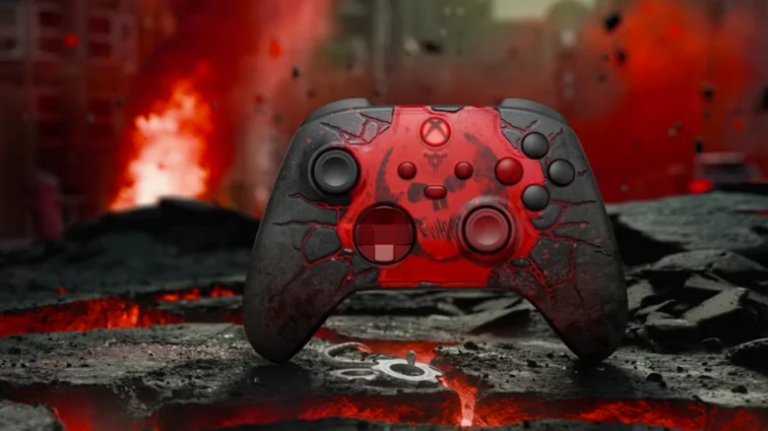
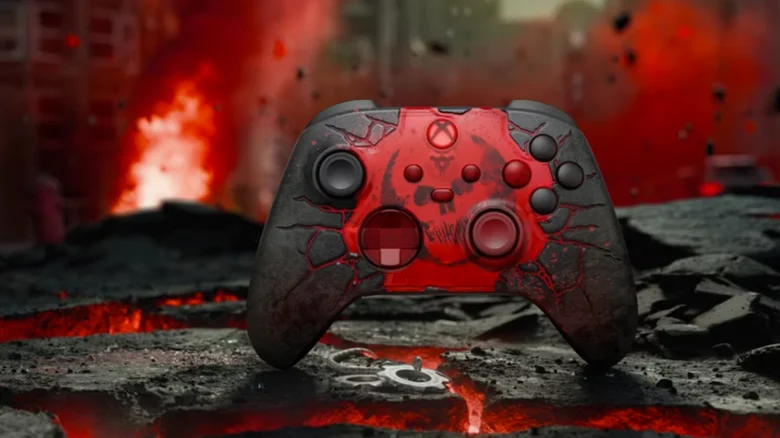
Microsoft has unveiled two Gears of War: E-Day Limited Edition Xbox controllers timed to the October 6th release of “Gears of War: E-Day,” and the reveal has split gamers between admiration for the design and frustration over the price.

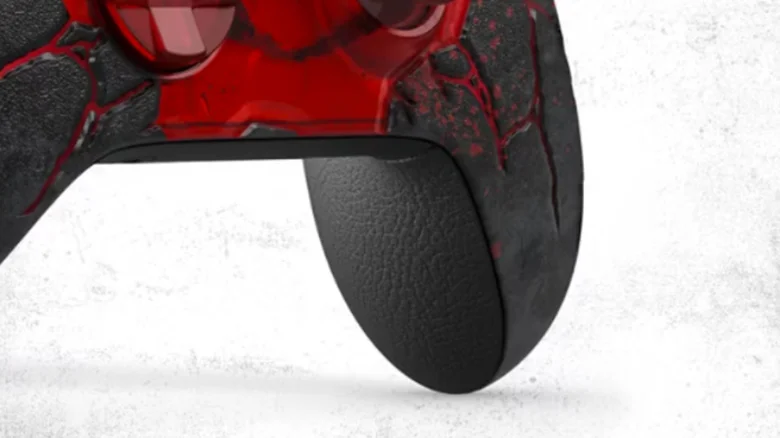
The controller features 3D sculpted grips styled after cracked, crackling volcanic rock, paired with a bright red center panel bearing the Gears of War logo. Transparent red buttons and a matching D-pad reinforce the aggressive look, while leather-like material on the back and side grips is meant to add comfort during extended play sessions. Microsoft is also selling a matching E-Day version through Xbox Design Lab, along with a coordinating E-Day 8BitDo Ultimate charging dock. The controllers themselves carry a rated battery life of 40 hours.

Pre-orders for the Gears of War: E-Day Limited Edition controller are open now on Microsoft’s website for Xbox Series X|S, PC, and cloud gaming. The release date is set for September 30th, 2026, ahead of the game’s own launch.

Fans praise the look, question the cost

Early reaction to the controller’s design has been largely positive. One fan called it “what beauty, what art” in a post on X. A Reddit user offered similar enthusiasm, writing that they weren’t expecting to buy another Xbox controller before seeing this one. Across social media, the visual design of the controller has drawn little criticism. The disagreement centers entirely on what Microsoft is charging for it.

The controller is priced at $89.99 for pre-order, a $25 jump from the standard $64.99 price of a normal Xbox controller. That gap has driven much of the pushback online. One Reddit user reacted to the price by comparing it unfavorably to Microsoft’s Forza and Doom-themed controllers, calling the cost “insane” for a limited edition release. Another commenter argued the controller was “purely meant for collectors” and predicted most players would skip it.

Part of the frustration stems from how gamers weigh the controller’s long-term value against its price. Critics online have pointed out that $89.99 is a steep amount to spend on hardware that could develop stick drift or otherwise wear down within a few years of regular use, the same durability concerns that affect standard controllers regardless of price point.

Microsoft’s pricing for the Gears of War: E-Day controller isn’t without precedent. The company’s Forza Horizon 6 Limited Edition controller launched at the same $89.99 price point, suggesting Microsoft has settled on that figure as its standard rate for premium, game-branded controllers rather than pricing this release as an outlier.

Players unwilling to pay the premium do have other options. A range of third-party Xbox controllers offer lower price points for those looking to skip the licensed design in favor of standard functionality, though none will carry the Gears of War: E-Day branding or matching accessories Microsoft built specifically around the game’s October launch.

Whether the backlash affects actual sales remains to be seen. Limited-edition, game-branded controllers tend to draw interest primarily from collectors and dedicated fans of the franchise rather than the broader Xbox player base, a pattern that held true for previous releases like the Forza Horizon 6 edition despite similar complaints about pricing at launch. With pre-orders already live and the September 30th release date approaching, gamers weighing whether to buy will have several weeks to decide if the design justifies the added cost.

Entertainment

AI “slop” studios chase Nolan’s Odyssey with cut-rate cash grabs

By George Mensah 4 min read

Christopher Nolan’s adaptation of The Odyssey opens in theaters this weekend, with early projections putting its opening haul between $80 million and $100 million over just a few days. Audiences are turning out to see how Nolan applies his signature filmmaking techniques to Homer’s epic. At the same time, another studio is trying to draft off that excitement to promote a very different take on the same story.

On Tuesday, film studio Fountain 0 announced an AI-generated version of The Odyssey titled “Odysseus: The Fall,” set to become available for digital rental or purchase later this summer. The project comes from director Ash Koosha, who previously worked with Fountain 0 on “Dreams of Violets,” an AI-generated docudrama about civil unrest and state violence in Iran between late 2025 and early 2026. That earlier film reportedly cost around $2,000 to produce. “Odysseus: The Fall” carries a similarly small budget, described as being in the “mid-five figures,” compared with the roughly $250 million Nolan spent making his version.

AI tools built the film’s look

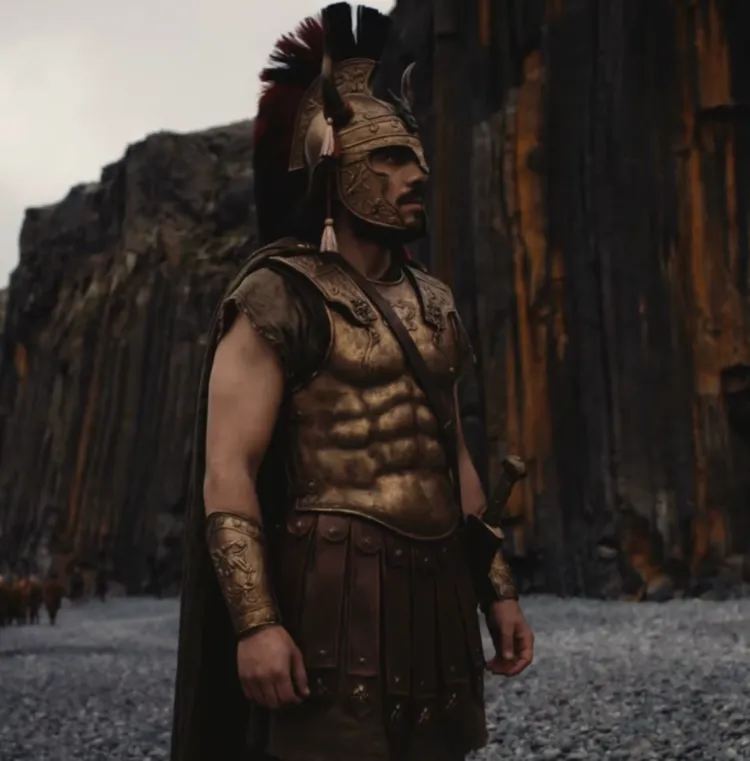
The trailer for “Odysseus: The Fall” shows what Koosha built using Kling’s AI video generator and Google’s Nano Banana tool. The shots run short, and the visuals carry the glossy, slightly artificial look common to AI-generated video. Koosha modeled the character of Odysseus after his own likeness and voices every character in the film himself. Even so, the figures move and speak with a stiffness that makes them read as clearly AI-made rather than human performances.

Fountain 0’s timing makes its intentions fairly clear. Releasing an AI-made Odyssey adaptation the same summer as Nolan’s big-budget version gives the company a way to market its production technology while offering what amounts to a low-cost alternative to a film people are already anticipating. Fountain 0’s executive chairman, Tom Rogers, told Variety that the project targets people who might not “like going to the movie theaters, but have a real interest in AI and what’s going on.”

That framing positions “Odysseus: The Fall” less as an independent artistic take on Homer’s story and more as a demonstration of Fountain 0’s AI production process.

A comparison Rogers seems eager to invite

Rogers went further, suggesting the release of his company’s film could actually drive interest in Nolan’s version. “We actually think, when our film is released, that it will be a catalyst for a lot of people who might not otherwise have seen the Odyssey to hopefully go see it, so they can compare the state of the highest state of human filmmaking achievement, which I truly expect the reviews to suggest Nolan’s film is, with what the top state of the art is in AI filmmaking today,” he said.

Rogers stopped short of claiming his film could compete with Nolan’s on quality. Instead, he framed Fountain 0’s work as representative of what AI-driven filmmaking can currently achieve. Whether that claim holds up is a separate question. “Dreams of Violets” plays like a sequence of individually generated clips strung together, and it’s difficult to imagine audiences who pay for movie tickets finding that comparison flattering to Fountain 0.

What Nolan’s film has that AI hasn’t matched

Nolan’s “The Odyssey” reflects the work of hundreds of people collaborating across departments, from cinematography to production design to sound. Fountain 0 has emphasized that Koosha and his brother Pooya handled most of the work on “Odysseus: The Fall” themselves, treating that as a selling point. But a small production team isn’t typically what draws audiences into theaters.

There was at least an argument, however debatable, that “Dreams of Violets” served a documentary purpose by drawing attention to human rights violations in Iran. “Odysseus: The Fall” doesn’t have that same justification. It reads more as a marketing exercise for Fountain 0’s AI capabilities than an attempt to say something new about Homer’s story.

Part of a wider pattern

Other AI ventures have made similar moves recently. ElevenLabs released an AI-narrated audiobook version of “The Odyssey” using a synthetic voice modeled on Michael Caine. Separately, studio and startup Particle6 has spent months promoting “Tilly Norwood,” an AI-generated performer it describes as an “AI actress,” and recently announced plans for a feature-length film built around the character.

Fountain 0 and Particle6 appear to share a strategy: generate attention through novelty and controversy first, then hope that visibility translates into acceptance as legitimate entertainment products. What both companies seem to miss is that audience enthusiasm for a film like Nolan’s “The Odyssey” comes specifically from the collaborative, human-driven process behind it, the thing their AI-generated alternatives are explicitly designed to skip.

Human filmmaking still drives the conversation

The mix of strong praise and sharp criticism directed at Nolan’s film reflects his skill at making work that provokes real emotional reactions from audiences. Those reactions fuel the discussions and debates that get people buying tickets, which in turn keeps studios like Universal financially invested in big theatrical releases.

Generative AI’s advocates have promised for years that the technology will reshape entertainment. So far, none of their releases have generated anything close to the anticipation surrounding Nolan’s adaptation. Based on what Fountain 0 and similar companies have shown, that gap isn’t likely to close through marketing stunts timed to piggyback on someone else’s release.

ADVERTISEMENT
Receive the latest news

Subscribe To Our Weekly Newsletter

Get notified about new articles