Techfullpost

Meta has an issue with its AI product

Meta has an issue with its AI product

Meta is betting big, perhaps too big, on artificial intelligence. As the global race to build AI infrastructure heats up, the social media giant is investing billions into what it believes will define the next era of computing. But as Wall Street’s latest reaction shows, not everyone is buying it.

The company, whose chief executive is Mark Zuckerberg, is constructing two giant data centers in the U.S. as part of a wider AI expansion. U.S. tech companies collectively will invest as much as $600 billion in infrastructure over the next three years, according to estimates from industry insiders, with Meta as one of the biggest spenders.

But as Silicon Valley celebrates the AI boom, investors are asking one question: whether Meta’s spending spree is sustainable, let alone strategic.

Earnings Reveal Soaring Costs — and Investor Doubts

Meta’s latest quarterly report showed a sharp rise in costs: operating expenses were up $7 billion year over year and capital expenditures rose nearly $20 billion, largely driven by the acquisition of AI infrastructure and talent. The company generated $20 billion in profit for the quarter, but investors focused on the ballooning expenses — and the lack of clear AI monetization.

During the earnings call, Zuckerberg defended the aggressive spending.

“The right thing is to accelerate this — to make sure we have the compute we need for AI research and our core business,” he said. “Once we get the new frontier models from our Superintelligence Lab (MSL) online, we’ll unlock massive new opportunities.”

But the reassurance didn’t land. Meta’s stock sank 12% by Friday’s close, wiping out more than $200 billion in market value within days.

Big Spending, Small Returns (For Now)

While Meta isn’t alone in its AI splurge – Google, Microsoft, Nvidia, and OpenAI are also spending billions on computing – the key difference is in the results. Google and Nvidia are already experiencing strong revenue growth thanks to AI, while OpenAI, although much more risky, has one of the fastest-growing consumer products in history, generating around $20 billion a year.

But Meta has yet to introduce the blockbuster AI product that would seem to justify the astronomical spending.

Its flagship Meta AI assistant reportedly serves over a billion users, but this is largely a factor of its embedding across Facebook, Instagram, and WhatsApp rather than organic adoption. Analysts say it still lags far behind in functionality and brand strength compared to competitors such as ChatGPT and Claude.

Meanwhile, Meta’s Vibes video generator, which gave the company a fleeting bump in engagement, has yet to prove its commercial viability. And while the Vanguard smart glasses it introduced with Ray-Ban do hold some promise for combining AI and augmented reality, they’re still more prototype than core business driver.

Zuckerberg’s Vision: Superintelligence and the Future
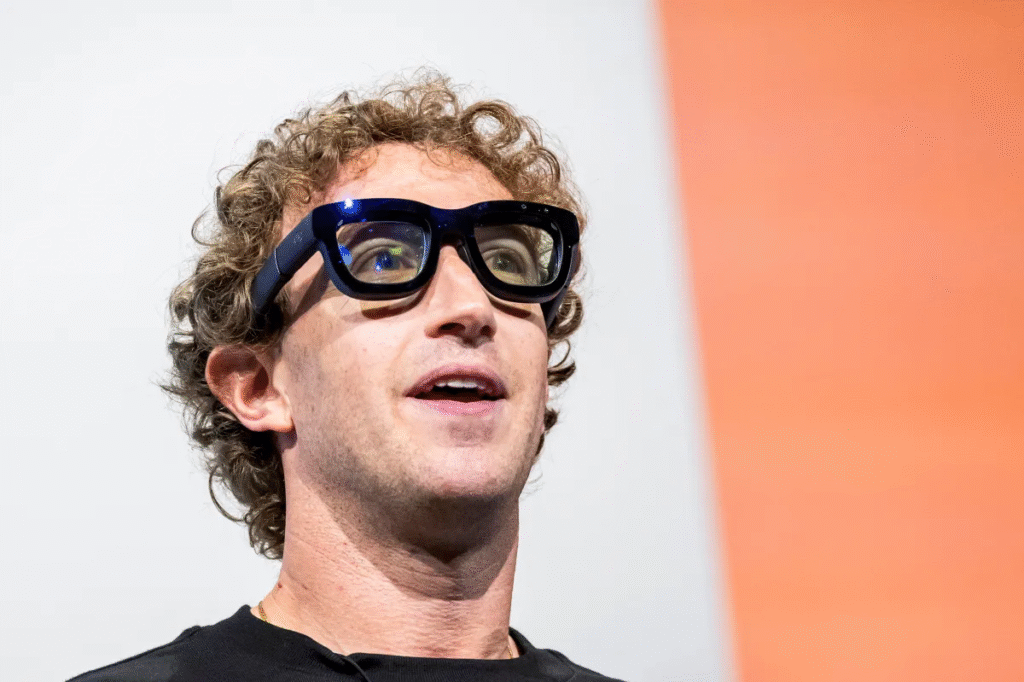
Undeterred by the skepticism, Zuckerberg insists Meta’s AI ambitions are only just getting started. He said the company’s Superintelligence Lab, or MSL, is working on next-generation “frontier models” that will power classes of products entirely new.

“It’s not just Meta AI as an assistant,” Zuckerberg said. “We expect to build new models and products — things that redefine how people and businesses interact with technology.”

Yet, he didn’t provide any details or timelines-a thing that frustrated analysts, who wanted some concrete projections. The promise of “more details in the coming months” wasn’t enough to calm investor nerves.

The AI Bubble Question

A massive infrastructure build-out at Meta has revived fears that the technology industry might be inflating yet another bubble. With tens of billions of dollars pouring into GPUs, data centers, and AI labs, some analysts warn that valuations in the sector are running ahead of tangible outcomes.

Yet, others argue that Meta’s financial position gives it more room to experiment. Unlike many AI startups, Meta still has a profitable advertising empire to fall back on. Its 3 billion monthly active users across its apps provide an unmatched data advantage — if it can find a compelling AI use case.

Where Does Meta Go From Here?

The direction of the company is not determined. Fundamental strategic questions are still hanging:

Will Meta use its vast personal data ecosystem to challenge OpenAI and Anthropic directly?

Does it want to integrate AI-powered advertising and business tools for enterprises?

Or will it shift to immersive consumer products, merging AI with AR/VR in the metaverse?

For now, those answers remain elusive. One thing is for sure: Zuckerberg is playing the long game, one that could either solidify Meta’s role in the next era of computing or turn into one of Silicon Valley’s most expensive miscalculations. As the AI arms race accelerates, Meta’s challenge isn’t just to build smarter machines — it’s to convince investors, and the world, that the company still knows where it’s going.

ADVERTISEMENT
RECOMMENDED
NEXT UP

Redmond, Washington — In a bold move to expand its artificial intelligence infrastructure, Microsoft announced a $9.7 billion deal with data-center operator IREN that would give the tech giant long-term access to Nvidia’s next-generation AI chips. The agreement underscores how deeply the AI race has become defined by access to high-performance computing power.

That investment will also translate into a five-year partnership that lets Microsoft significantly ramp up its cloud computing and AI without having to immediately build new data centers or secure additional power—two of the biggest bottlenecks constraining Microsoft’s AI expansion today.

IREN Shares Spike Following Microsoft Partnership

Following that announcement, IREN’s stock soared as much as 24.7% to a record high before finishing nearly 10% higher by Monday’s close. The news also gave a modest lift to Dell Technologies, which will be supplying AI servers and Nvidia-powered equipment to IREN as part of the collaboration.

The deal includes a $5.8 billion equipment agreement with Dell, part of which involves IREN providing Microsoft with access to systems equipped with the advanced Nvidia chips known as the GB300.

Strengthening Microsoft’s AI Muscle

The move highlights the increasing competition between tech giants like Amazon, Google, and Meta in securing computing capacity that powers generative AI tools such as ChatGPT and Copilot among other machine-learning models.

Microsoft has invested heavily in OpenAI amid mounting infrastructure constraints, as demand for AI-powered services explodes across its cloud ecosystem. Earnings reports from major tech firms last week showed that a limited supply of chips and data-center capacity remains the cap on how much the industry can capitalize fully on the boom in AI.

In return, IREN gets an immediate infrastructure boost by partnering with Microsoft without the high upfront costs associated with building new hyperscale data centers. That is also a way to stay agile as the generations are coming fast from Nvidia.

“This deal is a strategic move by Microsoft to expand capacity while maintaining its AI leadership without taking on the depreciation risks tied to fast-evolving chip hardware,” said Daniel Ives, managing director at Wedbush Securities.

IREN’s Huge Expansion Plans

IREN, whose market value has risen more than sixfold in 2025 to $16.5 billion, operates several large-scale data centers across North America, with a combined total of 2,910 megawatts.

Under the new deal, the company will deploy Nvidia’s processors in phases through 2026 at its 750-megawatt Childress, Texas campus, where it is building liquid-cooled data centers designed to deliver approximately 200 megawatts of critical IT capacity.

The prepayment by Microsoft would finance IREN’s payment for Dell equipment valued at $5.8 billion. However, the deal comes with strict performance clauses that allow Microsoft to revoke the contract if delivery timelines are not met by IREN.

Rising “Neocloud” Powerhouses

The deal also speaks to the emergence of “neocloud” providers like CoreWeave, Nebius Group, and IREN — companies that specialize in selling Nvidia GPU-powered cloud computing infrastructure. These firms have become key partners for Big Tech companies trying to scale AI operations faster than traditional data-center timelines allow.

Earlier this year, Microsoft inked a $17.4 billion deal with Nebius Group, a similar provider, for cloud infrastructure capacity. Taken together, the moves mark Microsoft’s multi-pronged strategy to secure AI infrastructure from multiple partners amid global shortages of Nvidia hardware.

A Broader AI Infrastructure Push

On the same day, AI infrastructure startup Lambda revealed a multi-billion-dollar deal with Microsoft to deploy more GPU-powered cloud infrastructure using Nvidia’s latest hardware.

To the industry analysts, these rapid investments are part of a larger race to lock in supply chains for a resource now viewed as critical as oil in the digital economy: AI computing.

“We’re seeing the dawn of a whole new AI infrastructure ecosystem,” said Sarah McKinney, an AI market strategist. “Microsoft’s deals with IREN and Nebius show that the company is securing every possible avenue to power the next wave of AI applications.”

The Growing Infrastructure Challenge of AI

High demand for AI, meanwhile, has put incredible pressure on computing resources globally. As companies scramble to find GPUs and data-center capacity, the cost of AI infrastructure has soared.

The partnership with existing operators like IREN ultimately gives Microsoft flexibility to meet surging workloads with a minimum of capital expenditure and supply chain delays. This approach allows it to further diversify its geographic footprint, reducing risks associated with power constraints or regulatory hurdles in any single region.

With this agreement, Microsoft forges its status as one of the leaders in the world’s artificial intelligence ecosystem and positions its Azure cloud as a backbone for next-generation AI applications. For IREN, the partnership represents a turning point in its transformation from a low-profile data center provider to an important player in the infrastructure powering the AI revolution. As the world’s demand for AI accelerates, one thing is clear: the race for computing power is just getting underway, and partnerships like Microsoft’s $9.7 billion IREN deal will likely define who leads in the next decade of artificial intelligence.

Microsoft co-founder and billionaire philanthropist Bill Gates is calling for a more optimistic strategy for confronting climate change, stating the world has already made tremendous progress and now must focus on improving lives by ending disease and hunger. In his latest memo, published Tuesday in anticipation of next month’s UN Climate Summit, Gates says it’s time to move beyond “doom and gloom” narratives — and not surprisingly, he sees artificial intelligence (AI) at the center of the next climate push.

But his message — one that was meant to be optimistic — has created a mixed reaction, with climate activists accusing him of downplaying the severity of the crisis and misunderstanding the condition of those living on the periphery of climate disasters.

Gates Calls for a Shift in Climate Strategy

In his “Three Tough Truths About Climate Change” blog entry, Gates argues that the “doomsday thinking” of the environmental movement is counterproductive. He believes it is leading governments and institutions to focus too intensely on reducing emissions in the short term, without action on more comprehensive strategies that would make life improved in a warmer world.

“Too many of the climate establishment are fixated on near-term emissions targets,” Gates wrote. “It’s diverting resources from what we can do best to make life better in a warming world.”

Gates maintains that while climate change is a risky threat, it will not trigger the “end of civilization.” Instead, he says, there must be a mix of reducing emissions and long-term development targets — namely in agriculture, health, and education.

Critics Allegue Gates Is “Dangerously Misguided”

Not everybody agrees with Gates’ view. Grassroots campaigners and environmental experts have outragedly condemned his memo as misguided and disrespectful of the plight of climate-impacted communities.

“He is seriously mistaken and misleading,” replied Stacy Malkan, co-founder of the nonprofit group U.S. Right to Know. “This kind of rhetoric risks pointing climate action in the wrong direction.”

Various critics argue that by deflecting criticism from emissions, Gates is giving important polluters a “free pass.” His reliance on technology-led solutions — such as AI-farmed crops — also fuels concerns about widening inequality and corporate control of the food supply.

AI: Solution or Two-Edged Sword?

Ironically, while Gates is an advocate for AI as solution, AI itself is exacerbating the climate problem. Microsoft, where Gates co-founded and remains extremely influential, made a commitment in 2020 to becoming carbon negative by 2030. The power-guzzling data centers that support complex AI models like ChatGPT, however, caused the company’s emissions to soar over the past few years.

Gates himself, however, remains upbeat about the benefits of AI, insisting that “the advantages outweigh the environmental costs.” In his memo, he pictures farmers using AI software to get personalized tips on planting and fertilizing crops, and health workers in developing countries using AI-enabled devices to enhance maternal care and disease prevention.

But ground officials argue that such perceptions underplay complex problems. Gabriel Manyangadze, manager of climate and food justice at the Southern African Faith Communities’ Environment Institute, says while AI gives important information, it won’t solve core issues.

“AI may give that information, but it may not assist when it comes to action,” he says. “Farmers can’t sow seeds without water.”

Manyangadze’s organization, and several others, have called for reparations from the Gates Foundation, accusing it of pushing African farmers into industrialized, corporate-controlled food systems based on expensive fertilizers and proprietary seeds — typically resulting in debt and dependency.

Overriding Climate Justice and Local Solutions

Critics continue that Gates’ paradigm also ignores the social and economic inequalities that make certain communities far more susceptible than others.

Although Gates recognizes that the poor stand to lose most from climate change, he believes they are unlikely to consider it their “biggest threat” since hunger and disease constitute greater direct threats. For people experiencing climate-driven disasters, however, the nexus between these crises is apparent.

When there’s a typhoon, you can’t fish. You can’t work in the fields,” a 17-year-old Filipino girl told reporters following Super Typhoon Haiyan in 2013 — one that displaced millions and killed thousands. Her story, alongside others, illustrates how climate change worsens poverty, migration, and even human trafficking.

“Health and Prosperity” as Climate Defense

In his three “truths,” Gates proposes that:

Climate change will not end civilization.

Temperature isn’t the optimum measure of climate advancement.

Prosperity and health are the best protectors against climate change.

He mentions the UN Human Development Index (HDI) as a better gauge of a country’s resilience in the face of climate risks, stating that improving healthcare and agriculture productivity can make countries more resilient to climate risks.

Gates’ foundation has spent billions on such initiatives, undercutting the cost of vaccine delivery, farm reform, and disease eradication programs. Critics argue that this makes climate adaptation a technocratic process — one driven by billionaire philanthropy, not bottom-up empowerment.

The Missing Piece: Accountability

Climate campaigners remind us that technological optimism should not replace responsibility. The call for “climate reparations” — compensating developing nations for the damage caused by industrialized emitters — remains one of the most urgent demands leading up to the next UN climate talks.

“Food and climate futures must be decided by the people who feed their communities, not billionaire gamblers who place bets on the next patented techno-fix,” said Loren Cardeli, strategy coordinator for A Growing Culture, a food sovereignty group.

Gates’ appeal to drive the “green premium” — the extra cost of clean technology — to zero is admirable. But it is naive, say critics. True climate justice, they say, involves confronting the perpetrators, investing in indigenous solutions, and addressing the roots of injustice — and not creating more gadgets and software.

A Divisive Vision of Hope

Bill Gates’ latest memo is just a statement of his long-standing faith that innovation will solve the world’s greatest challenges. But as climate disasters intensify — from African droughts to Caribbean hurricanes — some are questioning whether optimism unrestrained by responsibility is enough.

The world doesn’t need less alarm, its critics say — it needs more inclusive, people-driven action with a dash of pragmatism to balance out optimism.

With the UN climate negotiations approaching, one question lingers in the air:
Can the world be saved by philanthropy and technology — or will they, as some warn, simply reshape the crisis in the image of the people who can afford to ignore its most destructive impacts?

ADVERTISEMENT
Receive the latest news

Subscribe To Our Weekly Newsletter

Get notified about new articles