
Meta is pushing deeper into AI territory with new AI-editing tools in Instagram Stories, where users can edit images and videos simply by typing in what they want to modify. From hair color to special effects, the feature upends the possibilities of creators and regular users alike to personalize their content.
Text Prompts Meet Visual Creativity
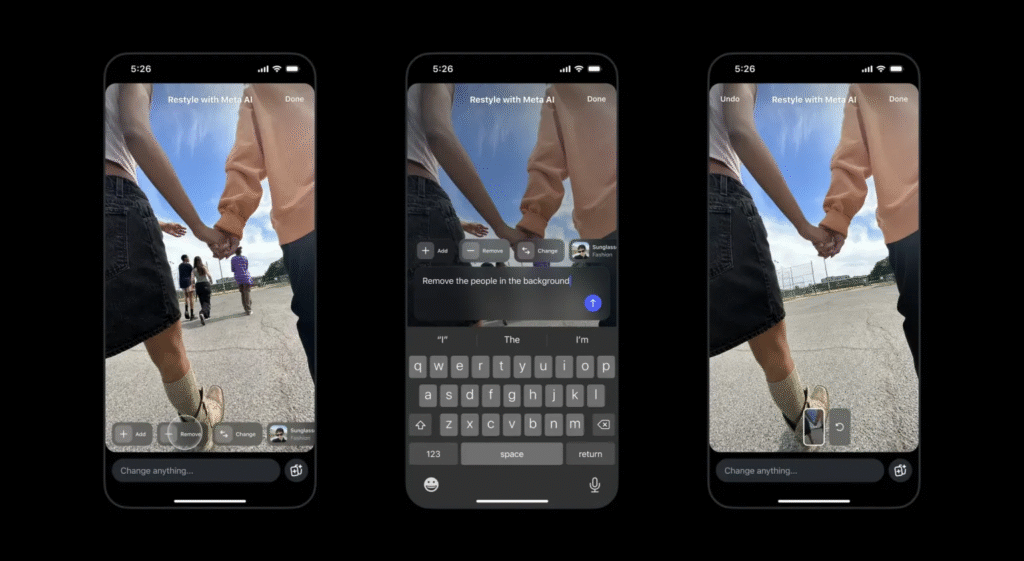
Until now, Instagram’s AI editing tools were primarily accessible through Meta AI’s chatbot, which required users to interact via direct messages. With this latest integration, however, AI editing becomes native to Stories, allowing anyone to make instant visual edits using plain language commands.
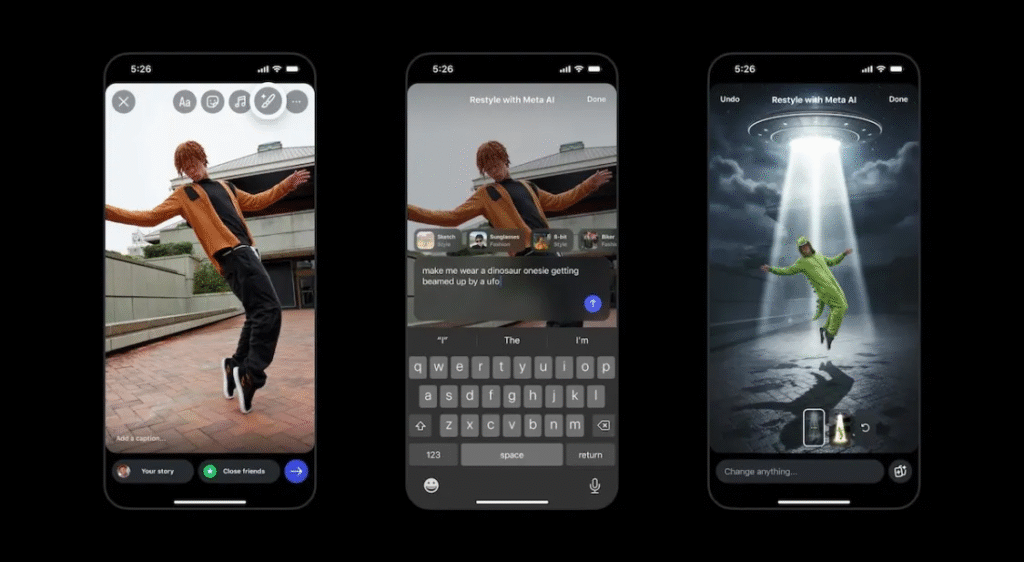
These new edit features come under the “Restyle” menu that can be accessed using the paintbrush icon in Instagram Stories. One can type commands such as “give me a sunset background,” “remove the person in the corner,” or “color my hair pink.” The AI carries out the edit one wants within seconds.
Meta suggests that users only have three primary actions to select from — Add, Remove, or Change — while specifying what they’d like to alter. The AI will automatically add objects, alter appearances, or completely restyle the photo based on what they’ve described.
Preset Effects and Dynamic Video Edits
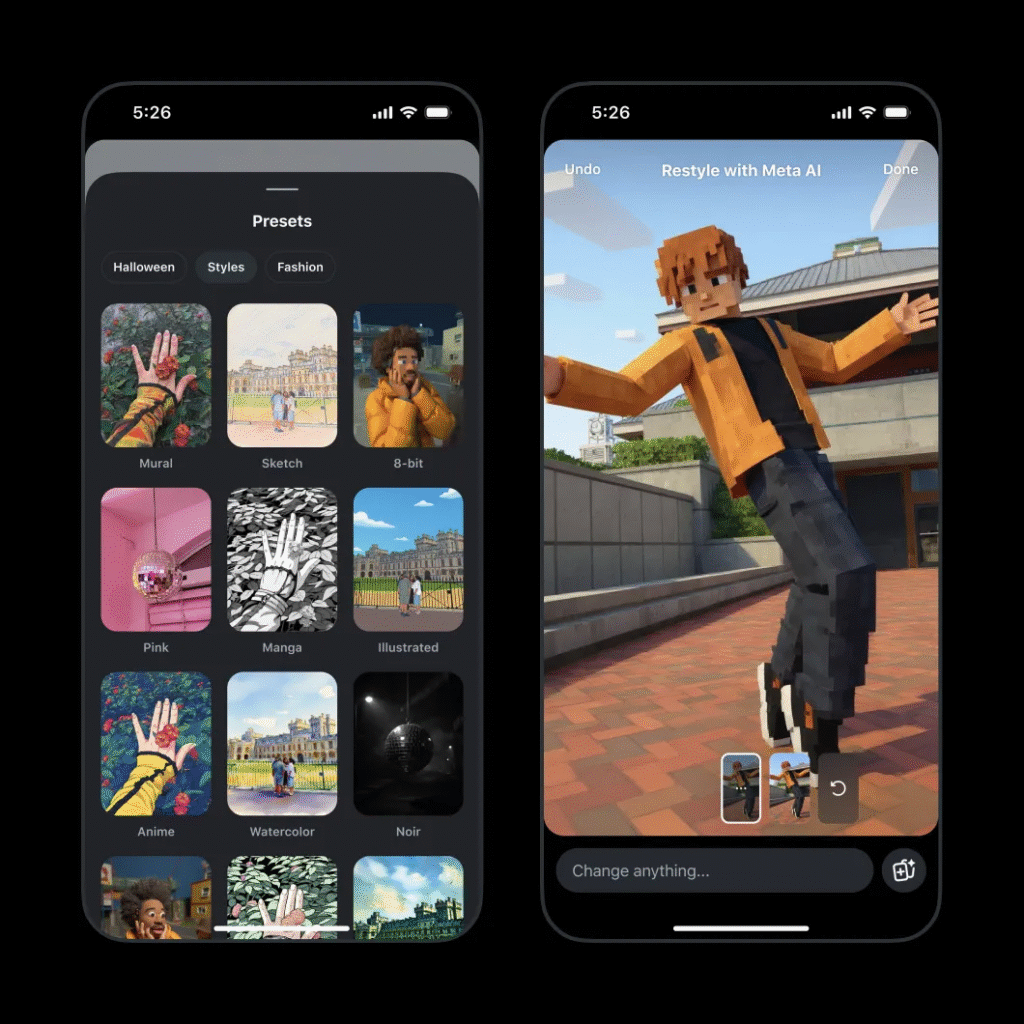
In addition to custom prompts, Instagram also has pre-select AI effects that can beautify or stylize posts. Filters like sunglasses, a denim jacket, or even a watercolor art effect can be applied.
On video content, the feature does even better — creators are able to superimpose atmospheric effects like falling snow, glowing embers, or cinematic lighting, which makes Stories appear more polished and professional without the necessity of using editing apps.
Privacy and AI Usage Terms
While the new features enable creativity, they come with privacy implications. Being used to introduce users to Meta’s Terms of Service for AI, which allow the company to “analyze photos and videos, including facial data, to make AI better.” According to Meta, it allows its systems to “summarize image contents, edit images, and generate new content based on the image.”
Critics have also had concerns regarding the ways in which such data might be used to train Meta’s broader AI models, though the company has sworn to remain committed to responsible innovation and transparency.
Meta’s Expanding AI Push
The release of AI editing software is just part of Meta’s overall strategy to roll out artificial intelligence on every platform it has, from Facebook and Instagram to WhatsApp. Recently, Meta began beta-testing a “Write with Meta AI” feature, which helps users compose intelligent or engaging comments under Instagram posts.
Meanwhile, Meta’s separate Meta AI app — with its chatbot and new “Vibes” AI-generated video stream — has been picking up steam. According to Similarweb estimates, iOS and Android daily active users rose from 775,000 to 2.7 million over a four-week span as of October 17.
Protecting Younger Users
As a response to increasing complaints from regulators and parents, Meta has also added new parental tools for its AI features. Parents may now shut off chats with AI characters and filter topics that their teens have with the chatbot to provide a safer online environment.
With these new instruments, Instagram is not only emerging as a social network but a creative platform fueled by generative AI. With Meta, OpenAI, and Google competing for leadership, this launch shows how AI is becoming more a part of the social fabric of our era — blurring the line between creativity, technology, and self-expression.