Techfullpost

Ecosia: The Search Engine That Plants Trees and Champions Sustainability

ecosia/techfullnews

In a world dominated by tech giants, Ecosia stands out as a beacon of hope for environmentalists and eco-conscious individuals. Founded in 2009 by German entrepreneur Christian Kroll, Ecosia is the world’s first non-profit search engine with a mission to make the planet greener, one search at a time. What began as a humble idea in Kroll’s Berlin apartment has grown into a global movement, planting millions of trees and inspiring millions of users to take action against climate change. Let’s dive into the story of Ecosia, how it works, and why it’s more than just a search engine—it’s a force for good.

The Vision Behind Ecosia

Christian Kroll’s journey to creating Ecosia was anything but conventional. Unlike most entrepreneurs driven by profit, Kroll was motivated by a desire to make a positive impact on the environment. During his travels as a young adult, he witnessed firsthand the devastating effects of deforestation and the transformative power of tree planting. This experience planted the seed for Ecosia, a search engine that would use its revenue to fund reforestation projects around the world.

Kroll recognized that search engines generate significant revenue through advertising, and he saw an opportunity to channel those funds toward environmental causes. With this vision, Ecosia was born—a search engine that not only helps users find information but also contributes to a greener, more sustainable planet.

Ecosia’s Impact: By the Numbers

Since its inception, Ecosia has achieved remarkable milestones:

  • By 2017, Ecosia had planted 10 million trees.
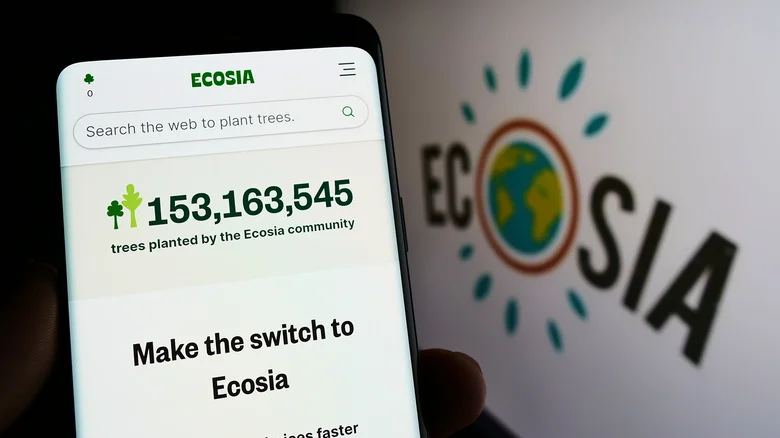
  • By 2022, that number skyrocketed to 160 million trees.
  • Today, Ecosia boasts over 20 million active users, each contributing to its mission with every search.

These numbers are a testament to Ecosia’s growing influence and the collective power of its users. But the impact goes beyond tree planting. Ecosia’s projects also support biodiversity, combat desertification, and provide livelihoods for local communities in regions where trees are planted.

A Commitment to Stewardship

Christian Kroll’s dedication to Ecosia’s mission is unwavering. In a bold move, he adopted a legally binding stewardship model for the company. This model ensures that Ecosia remains true to its purpose by:

  • Prohibiting the withdrawal of profits for personal gain.
  • Preventing external ownership of company stock.
  • Ensuring that shares cannot be sold for profit.

In a blog post, Kroll emphasized, “We’re not interested in maximizing profits; we’re interested in maximizing the number of trees we plant.” This commitment to stewardship sets Ecosia apart from traditional businesses and reinforces its dedication to environmental and social responsibility.

How Ecosia Funds Its Mission

One of the most common questions about Ecosia is how it generates revenue as a non-profit search engine. Unlike many tech companies that rely on selling user data, Ecosia takes a privacy-first approach, similar to DuckDuckGo. It does not collect or sell personal information, nor does it use personalized algorithms to track users.

Instead, Ecosia’s primary source of income is advertising revenue. When users click on ads displayed in search results, Ecosia earns money from advertisers. Even if users don’t click on ads, the sheer volume of searches increases the value of ad space, contributing to Ecosia’s revenue.

In December 2024 alone, Ecosia earned over 4million∗∗,withanaveragemonthlyrevenueof∗∗4million∗∗,withanaveragemonthlyrevenueof∗∗3 million. The company is transparent about its finances, publishing detailed financial reports and daily updates on its blog. Users can see exactly how their searches contribute to tree planting, operational costs, and investments in renewable energy.

Beyond Tree Planting: A Holistic Approach to Sustainability

Ecosia’s impact extends beyond reforestation. According to a paper published by Kiril Ivanov through World Scientific Publishing, Ecosia allocates 20% of its surplus income to renewable energy projects, regenerative agriculture, and grassroots activism. The remaining 80% is dedicated to planting and protecting trees worldwide.

This holistic approach ensures that Ecosia’s efforts address multiple facets of environmental sustainability, from reducing carbon emissions to promoting sustainable farming practices.

Why Ecosia Matters in the Fight Against Climate Change
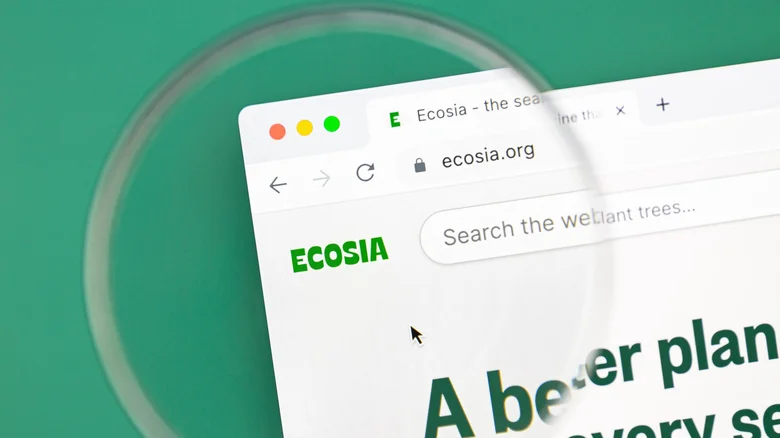
Ecosia is more than just an alternative to Google—it’s a tool for change. By simply switching your default search engine to Ecosia, you can contribute to global reforestation efforts without spending a dime. Here’s why Ecosia matters:

  1. Accessibility: Anyone with an internet connection can use Ecosia, making it easy for individuals to make a difference.
  2. Transparency: Ecosia’s open financial reporting builds trust and accountability.
  3. Scalability: With millions of users, Ecosia’s impact grows exponentially with each search.
  4. Innovation: Ecosia’s stewardship model challenges traditional business practices, proving that companies can prioritize purpose over profit.

How You Can Get Involved

Joining the Ecosia movement is simple:

  1. Switch to Ecosia: Make Ecosia your default search engine on your browser or mobile device.
  2. Spread the Word: Share Ecosia’s mission with friends, family, and social media followers.
  3. Stay Informed: Follow Ecosia’s blog and financial reports to see how your searches are making a difference.

Final Thoughts

Ecosia is a shining example of how technology can be harnessed for good. By combining the power of search engines with a commitment to environmental sustainability, Christian Kroll and his team have created a platform that empowers individuals to take action against climate change.

In a world where profit often takes precedence over purpose, Ecosia reminds us that businesses can—and should—be a force for positive change. So, the next time you search the web, consider using Ecosia. After all, every search is an opportunity to plant a tree and make the world a little greener.
ADVERTISEMENT
RECOMMENDED
NEXT UP

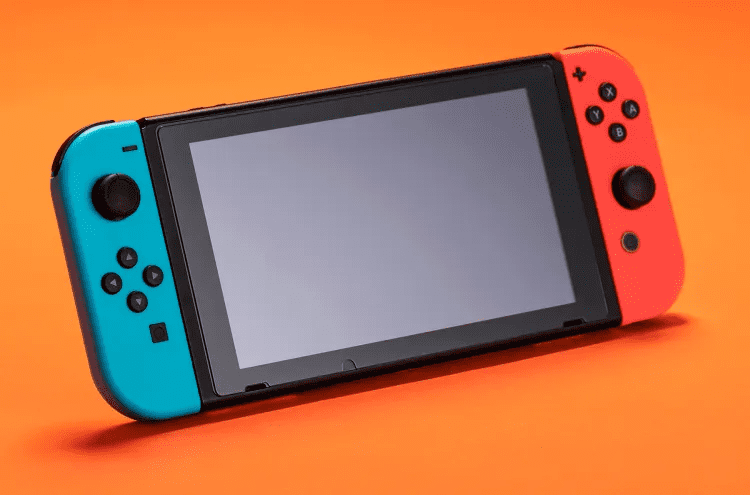
Nintendo is officially moving into a new era. In its just-posted financial results briefing, the gaming giant confirmed that it’s shifting its main development efforts to the Nintendo Switch 2, a decisive move away from the original 2017 Switch that rebooted the company’s fortunes.

“Going forward, we will shift our primary development focus to Nintendo Switch 2 and expand our business around this new platform,” Nintendo said during its briefing.

The announcement effectively signals that the Nintendo Switch’s eight-year reign is beginning to wind down, even if the company isn’t ready to retire the console completely just yet.

Switch Still in Stores, But Support Will Gradually Fade

Nintendo pointed out that it would also continue to sell the original Switch hardware for the foreseeable future, adjusting its production and marketing strategy “in line with consumer demand and business conditions.” But the writing is on the wall: as developers shift their focus, new releases for the older system will inevitably slow.

The company sought to reassure fans that various major titles were still planned for the Switch, with launches from October onwards: these may include final first-party releases or updates to existing franchises aimed at keeping the system’s large player base engaged as the next generation gains momentum.

Sell Switch 2 Off to a Strong Start

Off to an amazing start despite still having a few months into its lifecycle, the Nintendo Switch 2 has already sold over 10.36 million units worldwide since its launch back in June, according to data from Nintendo.

Notably, 84 percent of buyers were existing Switch owners — a clear sign that the new console is attracting loyal fans upgrading to the next generation rather than drawing in entirely new users. While that number still represents a fraction of the original Switch’s staggering 154 million lifetime sales, the company says it’s observing a “uniform migration” toward the newer platform.

This is in line with what has been happening in all major console transitions: early adoption is driven by the existing user base before the wider audience starts buying.

The Legacy of the Nintendo Switch

When the Nintendo Switch launched in March 2017, it marked a revolutionary hybrid console that combined handheld portability with the more traditional style of home gaming. It quickly became one of Nintendo’s most successful systems to date, revitalizing the company from underperforming sales of the Wii U and an era-defining lineup of games that included The Legend of Zelda: Breath of the Wild, Super Mario Odyssey, and Animal Crossing: New Horizons.

The versatility and affordability of the system helped it capture an immense audience worldwide, crossing over 154 million units in lifetime sales, making it the third-best-selling console in history after the PlayStation 2 and Nintendo DS.

What’s Next for the Switch 2

While Nintendo has not talked about all the technical details of Switch 2, reports and leaks indicate that it has a more powerful chipset, faster loading times, and increased graphical capabilities-all of which would draw Nintendo closer to the level of visual fidelity shown in their competitors, the PlayStation 5 and Xbox Series X.

This generational shift is pivotal for Nintendo-a balance between paying homage to a record-breaking legacy and forging ahead with innovation. While the company has managed transitions quite well in the past, with the original Switch still performing well in markets such as Japan and Europe, Nintendo faces the challenge of gradually sunsetting one of its most beloved consoles without alienating its vast player community. The message, as the Switch 2 gains even more momentum, is clear: the future of Nintendo is already here — and it’s building on the base of one of the most successful consoles ever made.

There are also rumors that the backward compatibility will be improved, allowing existing Switch owners to carry forward their digital libraries. With a larger OLED display combined with an enhanced Joy-Con design, the new console seems set to deliver performance and comfort upgrades in equal measure.

Analysts anticipate the Switch 2 will be the leader of the 2025 gaming cycle, especially with expected first-party games such as Metroid Prime 4, The Legend of Zelda sequel projects, and maybe new Mario entries already in development for the console.

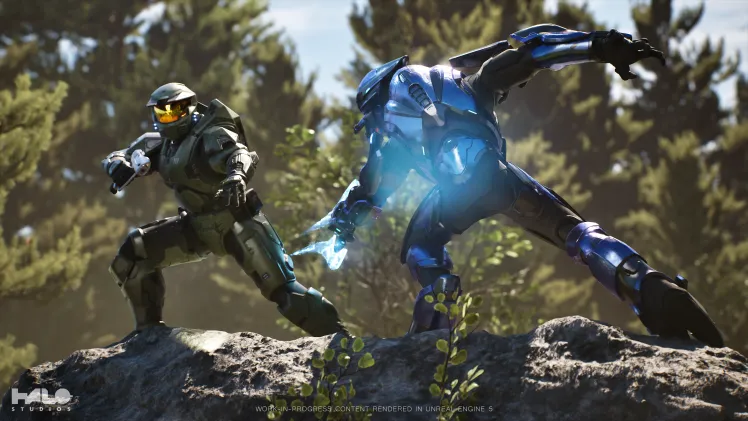
A few years ago, the idea that Halo — the game that is synonymous with Xbox’s brand name — would be making a move to a PlayStation console would have been something akin to a parallel universe. But in 2025, that extremely unlikely truth is playing itself out. What was the pinnacle of the exclusivity of Xbox is now the most glaring sign that Microsoft’s gaming division is undergoing a ginormous transformation — one driven by survival, strategy, and the changing nature of the gaming industry.

From Locked Walls to Open Doors

Xbox’s previously locked-down environment is collapsing quickly. The company has been systematically knocking down its walls of exclusivity, inviting its biggest franchises into competition. What once was an experiment with smaller titles like Grounded and Pentiment on Nintendo Switch and Hi-Fi Rush and Sea of Thieves on PlayStation 5 has turned into a risky, multi-platform gamble.

Now, Microsoft’s biggest franchises — Indiana Jones and The Great Circle, Senua’s Saga: Hellblade II, Gears of War, and soon Halo — are not just “Xbox games.” They’re trans platform, cross-device gaming experiences.

It’s not really a software change but a change on what Xbox is in 2025. As Xbox executive Sarah Bond told Mashable, “The biggest games in the world are available everywhere. The idea of locking games to one store or one device is antiquated for most people.”

And she’s right — accessibility is the way to success. Sony’s report of May sales shows that Xbox-published titles like Indiana Jones, The Elder Scrolls V: Oblivion Remastered, and Forza Horizon 5 topped the highest downloads on PlayStation 5. Even Microsoft-owned games like Call of Duty: Black Ops 6 and Minecraft top charts across platforms.

The Business Behind the Shift

The transition away from Xbox consoles is not philosophical — it’s practical. Xbox hasn’t been able to compete with PlayStation and Nintendo in console hardware sales. Subscription growth of Xbox Game Pass has crested, and the formerly bright hope of “Netflix for games” is vanishing in the face of saturation and rising cost.

Even as it is, American tariff policies are driving console costs higher, turning the earlier trend of hardware getting cheaper by the day on its head. In an era where customers are prioritizing utility over entertainment indulgences, Microsoft’s Play Anywhere and Cloud Gaming initiatives become lifelines — allowing players to experience games on devices they already own.

“We’re trying to meet people where they are,” said Matt Booty, president of Xbox Game Content and Studios, in a New York Times interview. That means making Xbox more than a console — it’s a brand that spans PCs, TVs, mobile devices, and rival systems.

But comfort for die-hards is that Xbox isn’t abandoning hardware altogether. Bond suggested that the next-gen console will be “a very premium, high-end curated experience.” As Microsoft launched its pricey ROG Ally handhelds, it’s clear that the company remains committed to keeping one foot firmly in the high-end gaming market.

Trouble Beneath the Surface

But beneath this high-flying reorganization, Xbox is in turmoil. The company has shut down a number of studios, including Arkane Austin and Tango Gameworks — the former being the developer of fan favorite Hi-Fi Rush. High-profile titles like Perfect Dark and Everwild have been quietly canceled, and Fable’s much-hyped reboot has been delayed until 2026.

Even Halo Infinite, the one that was meant to reignite the franchise, failed critically and commercially. And so, now that the original Halo franchise is being released on PlayStation in an enhanced form, the fans cannot help but wonder: is this an expansion or a white flag?

Simultaneously, The Elder Scrolls VI persists in development purgatory six years after it was first revealed, and Fallout — with renewed hype due to Amazon’s hit TV show adaptation — has not seen a significant new game release in years. Todd Howard’s promise that Fallout 5 is “eventually coming” fails to assuage the skepticism.

Internal Strains and Image Problems

A recent Bloomberg article discovered that Microsoft set its gaming division a disputed 30% profit margin target, leading to unpopular actions such as increasing Game Pass prices and shutting down various studios.

The company’s new ROG Ally handhelds, priced at $600 to $1,000, have also been panned as too pricey and half-baked. Ironically enough, during a company town hall meeting, Booty highlighted “smaller, prestige games that win awards” — the day after shutting down the studio responsible for one of the handful of games that fit that description.

Microsoft has also been criticized for its global reputation. The firm was targeted by the BDS movement for alleged ties to Israeli defense practices and was confronted by worker demonstrations over its AI transactions with the Israeli regime. Perhaps most recently, Xbox’s Halo franchise found itself embroiled in scandal when the U.S. Department of Homeland Security used its imagery in a highly criticized ICE recruitment ad — an ad that Microsoft declined to comment on.

The Future of Xbox: Platform Over Console

Despite all the madness, Halo’s PlayStation debut isn’t the death of Xbox — it’s a redefinition of what Xbox is in 2025. Old-school “console war” among Sony, Nintendo, and Microsoft is over. The real war now is in time and attention — with platforms like TikTok, Fortnite, Roblox, and YouTube battling for large slices of gamers’ free time.

Microsoft’s new strategy welcomes that reality: to survive, Xbox must succeed everywhere. And that means embracing its competitors instead of fighting them.

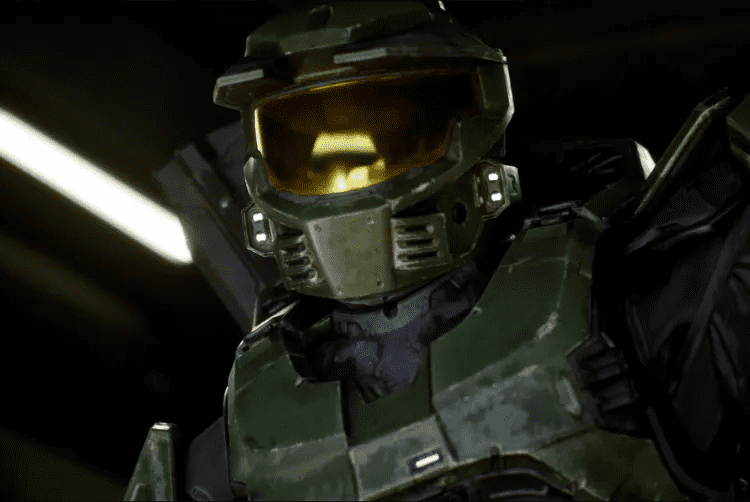
So yes, seeing Master Chief — the iconic mascot of Xbox — on a PlayStation screen is surreal. But it is also representative of an industry evolving beyond old boundaries.

As the new chapter in gaming is written, Microsoft’s agility can be its salvation. Xbox will not perhaps capture the hardware war, but in the battle for the attention of gamers, it is positioning itself to stay in the game for many a long year to come.

ADVERTISEMENT
Receive the latest news

Subscribe To Our Weekly Newsletter

Get notified about new articles