
Techfullpost

Apple Launches New Web-Based App Store

Apple Launches New Web-Based App Store

Apple has quietly rolled out a major update to its App Store experience, officially launching a fully redesigned web-based App Store that allows users to browse and discover apps across all Apple devices from a single online hub. The move, first spotted by MacRumors and 9to5Mac, marks a significant expansion of Apple’s ecosystem — bringing the App Store’s signature design and features to the browser for the first time.

Available at apps.apple.com

According to the company, it now has a modern, app-store-like interface that looks similar to the App Store on iPhones, iPads, Macs, and other products. The domain was previously used as a holding place that hosted static information about apps or redirected users to in-device App Store pages.

A Centralized Experience Across All Apple Platforms
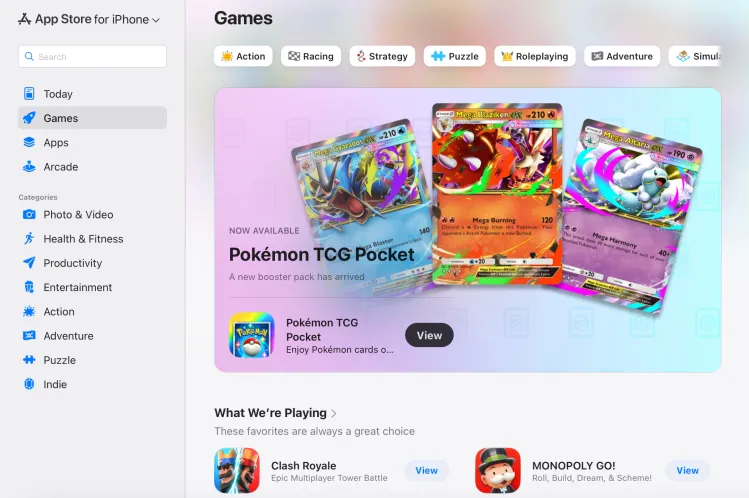
The new update allows them to easily search through apps across device categories like iPhone, iPad, Mac, Vision Pro, Apple Watch, and even Apple TV. Each section provides curated app lists, editorial recommendations, and Apple’s popular “Today” tab to show off featured apps, developer spotlights, and trending downloads.

The interface also allows users to browse applications based on their categories, such as Productivity, Entertainment, Games, Education, and Health & Fitness, and provides a much more streamlined and searchable experience than in the past.

Search, Share, and Explore — But Not Download

While this new web-based App Store does introduce better navigation and search, Apple is retaining control over where the downloads actually happen: users cannot install apps directly from the web version of the store. Instead, the website offers quick options to share listings of apps or open them directly in the native App Store app on an Apple device.

This is a design choice in concert with Apple’s long-term ecosystem strategy: making sure all app installations continue to go through its official App Store infrastructure, where the company can enforce strict privacy, payment, and security controls.

Smarter Search Portal for Developers and Users

Another welcome improvement: A prominently placed search bar finally allows users to quickly find apps by name, category, and even developer. Apple’s web app pages were previously static, unindexed, and generally inaccessible unless directly linked to a page.

Now, with an interface that is entirely searchable, this latest Web App Store serves dually as a marketing tool for developers and a place of discovery for users, maximizing app exposure to bring developers’ creations in front of larger audiences outside of Apple’s devices.

Expanding Apple’s Ecosystem Online

Apple’s extension of the App Store’s web presence also comes at a time when regulators and users are increasingly pressing for more openness and accessibility across all digital platforms. In creating this new, more interactive web presence, Apple seems to be taking steps toward greater transparency and discoverability, if still through a tightly integrated ecosystem.

The update also comes amidst Apple’s growing focus on cross-device experiences – especially as it promotes new platforms like Apple Vision Pro, which integrates apps across immersive and traditional interfaces.

Looking Ahead: Apple’s Strategy in a Changing App Landscape

The launch of the web App Store might seem like a minor revision, but it shows that Apple is taking a long-term view to elevate discovery and engagement of apps beyond its hardware. By opening the App Store to any browser, Apple enhances the user experience and reinforces its developer ecosystem by providing greater visibility and traffic to millions of applications without compromising strict app distribution policies. This latest move by Apple strikes a careful balance between innovation, control, and accessibility in a world of rapidly evolving digital ecosystems and increasing regulatory pressures. This is where the App Store, as the linchpin of the Apple experience, is now more connected than ever.


ADVERTISEMENT
RECOMMENDED
NEXT UP

Saudi Crown Prince Mohammed bin Salman has made a strategic leap into artificial intelligence with the launch of Humain, a state-backed AI company poised to transform the Kingdom’s technological capabilities. This ambitious venture represents more than just another tech startup—it’s a cornerstone of Saudi Arabia’s Vision 2030 plan to diversify its oil-dependent economy and establish itself as a global AI leader.

Inside the Humain Initiative

Infrastructure Development

  • Massive data center construction across strategic Saudi locations
  • Cloud computing capabilities to rival global hyperscalers
  • AI research facilities with cutting-edge hardware

Financial Backing

  • Funded by Saudi Arabia’s $940 billion Public Investment Fund (PIF)
  • Part of broader $40 billion AI investment plan announced earlier this year
  • Positions Saudi Arabia as the world’s largest AI investor

The Geopolitical Context

High-Profile AI Summit Coincidence

The Humain launch coincides with a major U.S.-Saudi investment forum attracting tech titans:

  • Elon Musk (Tesla, xAI, SpaceX)
  • Sam Altman (OpenAI)
  • Mark Zuckerberg (Meta)
  • President Trump’s scheduled visit to the region

Strategic Partnerships

American tech giants are already engaging with Saudi’s AI ambitions:

  • Google’s cloud partnership with Saudi Aramco
  • Salesforce’s Middle East expansion
  • Microsoft’s $2.1 billion Saudi cloud investment

Why This Matters for Global Tech

1. Shifting AI Power Centers

Saudi Arabia’s move challenges traditional tech hubs, offering:

  • Alternative funding sources beyond Silicon Valley VCs
  • Geopolitical neutrality in US-China tech tensions
  • Energy advantages for power-intensive AI operations

2. Economic Transformation

The PIF’s strategy mirrors successful sovereign wealth plays:

  • SoftBank Vision Fund model at national scale
  • Norway’s oil fund approach applied to tech
  • Singapore’s Temasek -style strategic investing

3. Technology Sovereignty

Humain addresses critical national priorities:

  • Reducing dependence on foreign tech
  • Creating high-value domestic jobs
  • Securing data localization compliance

Challenges and Considerations

Potential Roadblocks

  • Talent acquisition in competitive global market
  • Cultural adaptation for international tech workers
  • Regulatory environment for AI development

Ethical Questions

  • AI governance in authoritarian context
  • Surveillance technology concerns
  • Content moderation approaches

What’s Next for Humain?

Industry analysts predict several likely developments:

  1. Major university partnerships for AI research
  2. Acquisition of niche AI startups
  3. Joint ventures with established tech firms
  4. Saudi-specific AI applications for:
    • Arabic language processing
    • Islamic finance technology
    • Smart city implementations

The Bigger Picture

This move positions Saudi Arabia at the center of three converging trends:

  1. The AI arms race among nations
  2. The petrodollar to tech-dollar transition
  3. Middle East’s emergence as a tech hub

With Humain, MBS isn’t just investing in AI—he’s attempting to future-proof Saudi Arabia’s economy and influence in what may become the most strategically important technology sector of the 21st century.

Apple is preparing its most significant iPhone release schedule overhaul in years, according to a bombshell report from The Information. The tech giant plans to:

  • Launch its first foldable iPhone alongside the iPhone 18 Pro and “Air” models in fall 2026
  • Delay the standard iPhone 18 until spring 2027 (a first for Apple’s release calendar)
  • Introduce a slimmer “iPhone 17 Air” with a new battery case solution
  • Implement under-display Face ID in Pro models, leaving only a tiny camera cutout

This strategic shift represents Apple’s most dramatic product line reorganization since the introduction of the Plus/Max sizes, signaling a new era of smartphone innovation from Cupertino.

Inside Apple’s Foldable iPhone: Design and Specifications

The Foldable That Will Challenge Samsung’s Dominance

Apple’s first foray into foldables will feature:

Form Factor:

  • Book-style design (like Samsung Galaxy Z Fold) rather than clamshell
  • 5.7-inch external display (comparable to iPhone 13 mini)
  • Just under 8-inch internal display (slightly larger than iPad mini)

Key Innovations:

  • Revolutionary 4.5-4.8mm thickness when unfolded (thinner than current iPads)
  • Face ID implementation (no Touch ID under display)
  • Proprietary hinge mechanism promising “industry-leading durability”

Supply Chain Insights:
Renowned analyst Ming-Chi Kuo suggests Apple has been working with suppliers for over three years to perfect the foldable display technology, with LG Display reportedly taking the lead on panel production.

Why Apple Is Shaking Up Its Release Schedule

Managing an Expanding Product Portfolio

With six distinct iPhone models potentially in the lineup by 2026, Apple faces unprecedented complexity:

  1. iPhone 18 Pro Foldable (flagship innovation)
  2. iPhone 18 Pro (traditional premium)
  3. iPhone 18 Air (new slim category)
  4. iPhone 18 (standard model)
  5. iPhone 16E (budget-focused)
  6. iPhone SE (4th gen) (entry-level)

The New Release Cadence:

  • Fall 2026: Foldable, Pro, and Air models debut
  • Spring 2027: Standard iPhone 18 and 16E follow-up launch

This staggered approach helps:

  • Prevent product cannibalization
  • Maintain media buzz throughout the year
  • Allow manufacturing to scale appropriately

The iPhone 17 Air: Apple’s Thinnest Smartphone Yet

Solving the Battery Life Challenge

The Information reveals surprising details about the iPhone 17 Air:

Design Tradeoffs:

  • Ultra-thin profile comes at a cost to battery capacity
  • Internal testing shows battery life “falling short” of previous models

Innovative Solution:

  • Optional smart battery case (sold separately)
  • Case maintains slim profile while extending usage time
  • Potential for MagSafe-compatible modular battery system

Strategic Implications:
This marks Apple’s first acknowledgment that thinness may have reached practical limits for daily use, prompting creative accessory solutions.

Under-Display Face ID: The Next Step in Apple’s Bezel-Free Journey

The iPhone 18 Pro’s Nearly All-Screen Future

Apple’s display technology is taking another leap forward:

Current State:

  • Dynamic Island (iPhone 14 Pro/15 Pro)
  • Smaller pill-shaped cutout

2026 Evolution:

  • Face ID sensors move completely under display
  • Only front-facing camera remains visible
  • Tiny hole-punch in top-left corner (similar to some Android flagships)

Why This Matters:

  • Represents the final step toward a truly all-screen iPhone
  • Maintains Face ID security while maximizing display real estate
  • Potentially enables always-on display functionality

Competitive Landscape: How Apple’s Moves Stack Up

Foldable Market Readiness

While Samsung has led the foldable market since 2019, Apple’s entry could:

  • Validate the foldable category for mainstream consumers
  • Drive rapid improvements in durability standards
  • Potentially double the global foldable market size by 2027

Price Point Expectations:
Analysts predict Apple’s foldable could command a $1,999 starting price, significantly above current Android foldables but with premium materials and ecosystem integration.

What This Means for Consumers and Investors

Consumer Implications:

  • More choices across price points and form factors
  • Potential for greater differentiation between models
  • New accessory ecosystem opportunities

Investor Considerations:

  • Higher ASP (average selling price) potential with foldable
  • Possible margin pressures from new technology adoption
  • Watch for supply chain developments in 2025

The Road Ahead: Key Milestones to Watch

2024:

  • iPhone 16 series launch (potential first glimpse of direction)
  • Possible foldable prototype leaks

2025:

  • Supply chain confirmation of foldable production
  • Developer kit releases for foldable-specific software

2026:

  • Foldable iPhone announcement (likely September event)
  • iOS features specifically optimized for foldables

Conclusion: Apple’s Most Ambitious iPhone Strategy Yet

This reported roadmap represents Tim Cook’s most aggressive product strategy since taking the helm, showing Apple’s willingness to:

  1. Embrace new form factors after years of watching the foldable market
  2. Disrupt its own release calendar to better manage product complexity
  3. Push display technology boundaries with under-screen innovations
  4. Address practical limitations with creative accessory solutions

While Android manufacturers have pioneered many of these concepts, Apple’s methodical approach and ecosystem advantages could finally bring foldables and advanced display tech to the mainstream.

The coming years will prove whether this bold strategy can maintain Apple’s industry-leading position or if the company has stretched its iPhone lineup too far. One thing is certain – the smartphone landscape is about to get much more interesting.

ADVERTISEMENT
Receive the latest news

Subscribe To Our Weekly Newsletter

Get notified about new articles