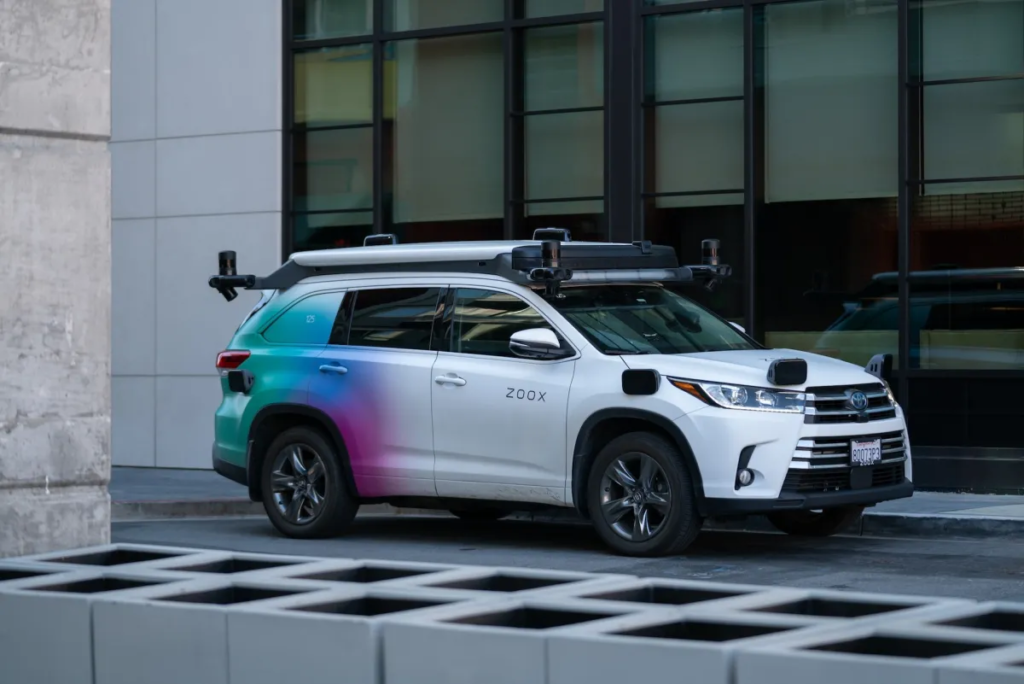
Zoox, Amazon’s autonomous car unit, is deploying a small fleet of adapted test vehicles on Los Angeles streets beginning Tuesday, a tiny but significant step as the company prepares to provide public rides in Las Vegas and San Francisco later this year.
The data-collection endeavor marks Zoox’s entry into its sixth city and provides the framework for a potential robotaxi service. Zoox, unlike rival Waymo, which offers paid robotaxi rides in Los Angeles, is still in its early phases. This deployment will send out manually driven Toyota Highlanders equipped with Zoox’s self-driving technology to collect mapping data ahead of more extensive autonomous testing in Los Angeles this summer.
Zoox is actively testing its self-driving vehicles, including the Highlander test fleet and a purpose-built robotaxis without a steering wheel or pedals, in multiple cities. Notably, Zoox has increased the regions where its purpose-built robotaxi is being tested on public highways without a human driver, including Foster City, San Francisco, and Las Vegas. Zoox recently invited employees, reporters, and other qualified guests to test the service.
The company is also doing tests in Austin, Miami, and Seattle with Highlanders driven by human safety operators.
Zoox’s expansion in California comes just a few weeks after the company issued a voluntary software recall on 258 vehicles owing to difficulties with its autonomous driving system that caused unexpected forceful braking.
Zoox’s debut into Los Angeles comes after Waymo launched a fully autonomous commercial robotaxi service in the city. Waymo is currently the only AV firm in the United States that provides a paid service in many areas, including the Bay Area, Phoenix, and Austin. The Alphabet-owned startup plans to establish a commercial service in Atlanta, Miami, and Washington, D.C. within the next two years.
JCB’s Hydrogen-Powered Hydromax Sets New World Land Speed Record at 406 MPH
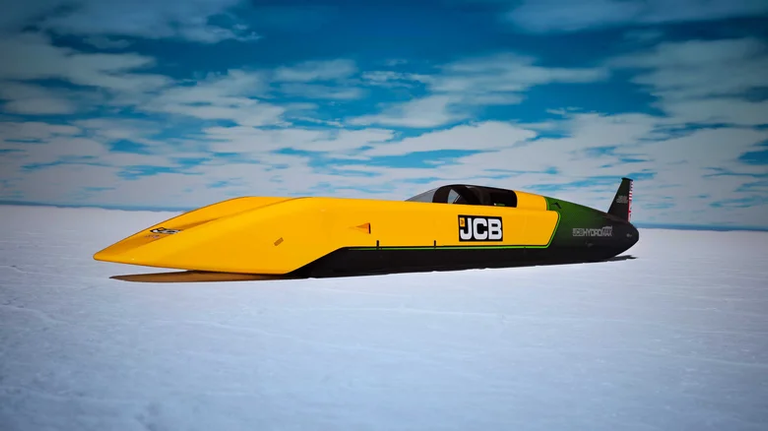
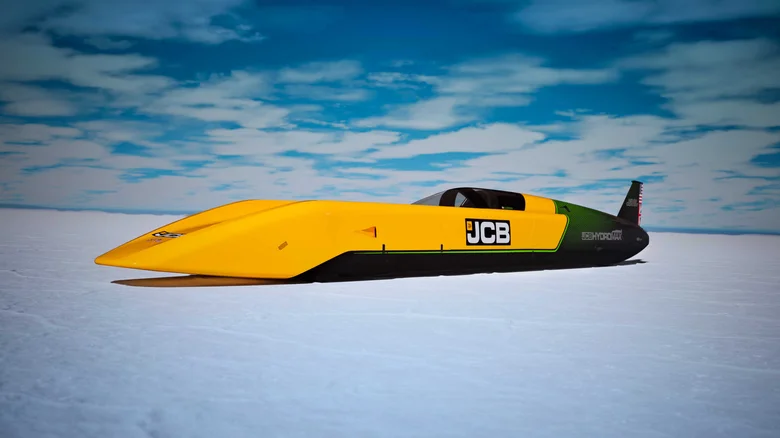
British engineering giant JCB has set a new world land speed record for a hydrogen-powered vehicle, with its Hydromax streamliner reaching an average speed of 406.320 mph (653.6 km/h) across Utah’s famous Bonneville Salt Flats.
The record was certified under FIA regulations, which require two timed runs over a one-mile course—one in each direction—with both runs completed within an hour. Hydromax recorded 400.623 mph on its first run and 412.135 mph on its second on August 11. The two speeds produced an average of 406.320 mph, establishing a new FIA hydrogen land speed record.
The achievement more than doubles the previous FIA benchmark for hydrogen-powered vehicles. That record stood at 185.5 mph, set by BMW’s H2R in 2004.
A Construction Engine Pushing Past 400 MPH
Hydromax’s achievement is even more notable because it also surpassed JCB’s own diesel land speed record. The company’s previous Dieselmax streamliner reached 350.092 mph in 2006. Unlike its diesel predecessor, however, Hydromax’s hydrogen combustion engines produce no carbon dioxide at the exhaust.
The 32-foot-long streamliner is powered by two production-based hydrogen combustion engines. Each is a 4.8-liter turbocharged four-cylinder engine, derived from technology JCB already uses in its construction equipment and generators.
Rather than developing a completely bespoke racing engine, JCB adapted technology that is closely related to the engines already supplied to its customers. The Hydromax project was completed in just over 15 months, with engineering support from Ricardo and Prodrive.
Before making its FIA record attempt, Hydromax had already demonstrated its potential at Bonneville. During Speed Week, the vehicle achieved a Southern California Timing Association-certified speed of 368.347 mph, placing it in the Blown Gas Streamliner class.
That performance paved the way for the FIA record attempt just days later—and ultimately saw JCB push hydrogen combustion beyond the 400-mph barrier.
Andy Green Behind the Wheel Again
Wing Commander Andy Green, a former Royal Air Force fighter pilot, drove Hydromax to the new record. Green already holds the outright world land speed record, having driven the Thrust SSC to 763.035 mph in Nevada’s Black Rock Desert in 1997, the only car ever to break the sound barrier on land. He also drove JCB’s Dieselmax to its 2006 diesel record.
“Bonneville is the spiritual home of the world land speed record, and JCB Hydromax has just written itself into that history,” Green said. “The car was terrific: stable, strong and fast. Setting a world land speed record with hydrogen power, twenty years after Dieselmax, is a huge privilege.”
Marketing With a Purpose
For JCB, the record serves a purpose beyond bragging rights. The company has poured roughly $130 million into developing hydrogen combustion technology as an alternative to both diesel and battery power for heavy machinery, and the engines in Hydromax are meant to demonstrate what that investment can do.
“This record was set by production-based engines, the same engines powering JCB diggers right now,” said JCB chairman Anthony Bamford. “That is the point of JCB Hydromax: it shows hydrogen works, and it works today at the highest level with zero emissions.”
The pitch matters for JCB’s core business. Battery power struggles to match the run times construction and agricultural equipment need, since diggers and generators often run six to eight hour shifts without stopping to recharge. Hydrogen combustion, unlike battery-electric systems, refuels in minutes and can plug into the same fueling infrastructure being built out for other transport uses.
The FIA has confirmed the record, working alongside ACCUS, the U.S. national sporting authority, to oversee the sporting, technical, and timing procedures at Bonneville. The organization called the achievement a milestone in the development of hydrogen technology in motorsport.
Hydromax’s run also puts a number on the table for an industry still weighing which zero-emission technology, batteries, hydrogen fuel cells, or hydrogen combustion, makes the most sense for heavy vehicles. At 406 mph, JCB has given hydrogen combustion a data point that didn’t exist a month ago.
Mercedes-Benz is stepping back from its all-digital dashboard strategy, with CEO Ola Källenius telling Autocar in July 2026 that the automaker plans to bring more physical buttons into its vehicles. The shift marks a departure from years of expanding touchscreen real estate across the brand’s interiors.
Källenius acknowledged that the industry’s push toward touchscreen-heavy cabins may have overlooked what some drivers actually need behind the wheel. Mercedes has not issued a formal announcement detailing the new approach through its official channels, and the company does not appear to be abandoning touchscreens altogether. Future models will likely combine digital displays with physical controls rather than favoring one over the other.
Consumer research backs up the reasoning behind the change. JD Power’s 2025 U.S. Multimedia Quality and Satisfaction Study found that digital-display problems increased across the industry last year. The same study found that drivers want technology that works intuitively and doesn’t pull their attention away from the road. JD Power’s conclusion pointed to a specific fix: pairing touchscreens with physical buttons improves how usable a vehicle’s controls actually are. For automakers like Mercedes, that finding suggests the years-long race toward bigger screens may have come at the expense of drivers who just want to adjust the temperature without digging through a menu.
How Mercedes got here
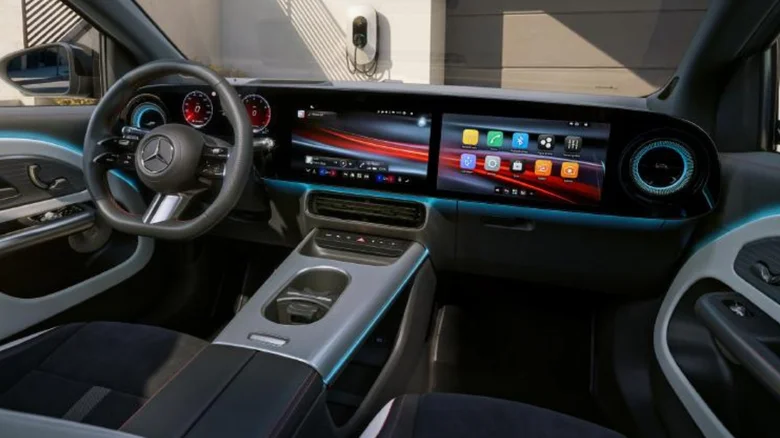
Mercedes’ recent interiors show how far the touchscreen trend went. The electric GLA SUV includes the MBUX Superscreen, a three-display setup that spans the width of the dashboard behind a single piece of glass. The design looks closer to a command console than a traditional car interior, and Mercedes has described it as part of a minimalist, technology-driven cabin concept. Other automakers have built similarly expansive infotainment systems in recent years, several of which drew criticism for making basic functions harder to reach while driving.
Other automakers are making the same move
Mercedes isn’t alone in walking back its screen-first approach. Volkswagen reintroduced physical steering wheel buttons in the Golf GTI, Tiguan, and ID.4 after years of relying on touch-sensitive controls that drivers and reviewers criticized for being difficult to use without looking down. Hyundai added physical buttons and knobs to the Santa Cruz and Palisade. Porsche has kept a mix of touchscreens and physical controls throughout its recent lineup rather than following the all-digital trend some competitors adopted.
The pattern points to an industry-wide correction. Automakers spent much of the past decade competing on screen size and digital features, treating touchscreens as a shorthand for modernity. That approach is now colliding with data showing it may have made cars harder, not easier, to operate.
The safety research behind the shift
Research from the AAA Foundation for Traffic Safety adds weight to the argument for physical controls. The organization found that infotainment systems built around touchscreens increase the amount of time drivers spend looking away from the road. Tasks that would take a fraction of a second with a physical button, such as adjusting the volume or changing the fan speed, can require multiple glances at a screen to complete when routed through a touch interface. Even simple, routine actions behind the wheel become a source of distraction when a driver has to visually locate and tap the right spot on a screen rather than reach for a button they can find by feel.
That distinction matters for automakers now facing pressure from both regulators and consumers to prioritize safety alongside design. A touchscreen might look sleek in a showroom, but the AAA Foundation’s findings suggest that appeal can come with a real cost once a vehicle is in motion.
What comes next for Mercedes
Mercedes has not specified which upcoming models will feature the revised control layout or offered a timeline for rolling out the change across its lineup. Källenius’s comments to Autocar suggest the shift will apply broadly rather than to a single vehicle, positioning Mercedes among a growing group of automakers recalibrating how much of the driving experience should live on a screen.
For now, drivers waiting on the change will need to watch for Mercedes’ next generation of interior designs to see how the automaker balances its touchscreen ambitions against the practical case for a physical button.