Techfullpost

Social Tech

Amazon increases fees, ChatGPT comes to the enterprise, and Apple announces a press conference

Apple AI team/techfullnews

Welcome to the latest edition of Week in Review (WiR), Techfullpost’ comprehensive newsletter summarizing the week’s most significant developments in the tech world. If you’ve been too swamped to keep up with the latest news, you’ve come to the right place. WiR is here to provide you with a concise recap of what you may have missed.

Teamshares: Disrupting Small Business Succession Plans

Teamshares, a New York-based startup with strong backing from venture capital, has emerged as a game-changer in the realm of small business acquisitions. Their approach involves quietly acquiring mom-and-pop shops, often at prices below market rates, but with a unique twist. Upon acquisition, Teamshares appoints a new president and allocates 10% of the company’s stock to its employees. The real game plan, according to co-founder and CEO Michael Brown, is to generate revenue through an expanding range of fintech products offered to the acquired businesses. This innovative approach capitalizes on the opportunity presented by small businesses lacking a clear succession plan.

Zepto: India’s Newest Unicorn in 2023

Zepto, an instant grocery delivery startup, has made waves by raising a remarkable $200 million in its latest funding round, elevating its valuation to a staggering $1.4 billion. This achievement stands out in an industry where many firms have faced significant challenges or failed to thrive. Zepto operates in seven Indian cities, processing a staggering 300,000 daily orders spanning everything from groceries to electronic gadgets. The company’s ambitious plans include an IPO slated for 2025.

OpenAI: ChatGPT Goes Enterprise

Building upon the viral success of ChatGPT, OpenAI is unveiling ChatGPT Enterprise, a business-focused iteration of their AI-powered chatbot application. ChatGPT Enterprise boasts “enterprise-grade” privacy and data analysis features in addition to enhanced performance and customization options, setting it apart from the standard ChatGPT. This move positions OpenAI to cater specifically to the needs of the business world, enhancing productivity and communication.

Google: BigQuery Studio for Data Analytics

Google has introduced BigQuery Studio, a groundbreaking addition to BigQuery, their fully managed serverless data warehouse. BigQuery Studio simplifies data analytics by providing a unified platform where programming languages like SQL, Python, and Spark can be used to run analytics and machine learning workloads at a massive scale, even reaching the petabyte range. Teams can seamlessly access data while enjoying enhanced controls for governance, regulation, and compliance, making it an ideal solution for enterprise-level data management.

Apple’s Upcoming Event: iPhone 15 Anticipation

Apple enthusiasts are eagerly awaiting the company’s upcoming press conference scheduled for September 12. The event will once again take place at Apple Park in Cupertino. Anticipated as the centerpiece of the event is the unveiling of the iPhone 15. Additionally, expectations include the introduction of the Apple Watch Series 9 and a sneak peek at the Vision Pro, Apple’s AR headset, set to launch in 2024.

Google Flights: Insights for Smart Travel Booking

Google Flights is enhancing the travel booking experience by rolling out a new feature that aids users in determining the optimal time to book their flights. Leveraging historical trend data, this feature provides insights into when ticket prices have historically been lowest for selected destinations on specific dates. In some instances, Google will even offer refunds if fares decrease before departure, ensuring travelers make informed decisions.

Brazilian Phone Spyware Breach

A Portuguese-language spyware known as WebDetetive has been implicated in compromising over 76,000 Android phones, primarily in South America, with a significant focus on Brazil. WebDetetive is the latest phone spyware company to fall victim to hacking. Anonymous hackers exploited security vulnerabilities to compromise WebDetetive’s servers and access user databases. This breach raises concerns about the security of personal data and privacy in the digital age.

Amazon Adjusts Shipping Fees

Amazon is modifying its shipping fee policies, increasing the minimum for free shipping to $35 for customers without a Prime membership in select regions. Previously, the minimum for free shipping stood at $25. Amazon clarifies that this change is being tested on a regional basis and that all users within a specific region will encounter the same free shipping threshold.

Babylon Health: Financial Struggles and Restructuring

Babylon Health, a London-based telehealth startup previously valued at nearly $2 billion and backed by the founders of DeepMind, has faced a turbulent financial journey. The company’s U.S. shares became worthless, leading to insolvency. This week, the UK subsidiary formally entered administration while simultaneously selling a significant portion of its assets to eMed Healthcare UK, a new subsidiary of U.S. company eMed.

EU Empowers Users to Reject Algorithmic Manipulation

Internet users in the European Union are witnessing a significant shift in their experience on mainstream social networks. Thanks to the bloc’s Digital Services Act, users on platforms like Facebook, Instagram, TikTok, and Snapchat can now easily decline “personalized” content feeds based on AI-driven algorithms. Instead, they can opt for a more straightforward news feed, displaying posts from friends in chronological order. This empowers users to take control of their online experience and opt out of algorithmic manipulation.

If you’re looking for engaging podcasts to fill your hours, TechCrunch offers several options that cover a range of topics, from the intricacies of successful leadership to the power of collective intelligence and digital asset management. These podcasts provide valuable insights and interviews with industry experts, making them perfect for the workday commute.
ADVERTISEMENT
RECOMMENDED
Social Tech

Meta Pulls Instagram Image-Generation Tool After Privacy Backlash

By George Mensah 4 min read

Meta said Friday it is shutting down an AI image-generation feature it launched only days earlier, after the tool drew sharp criticism over privacy concerns, including a formal objection from a Hollywood union.

“Our intent was to provide a useful creative tool and to give people control over whether their public content could be referenced in this way,” Meta said in a statement. “We’ve heard the feedback that this feature missed the mark, so it’s no longer available.”

A Feature Built on Public Photos

Meta, which owns Facebook and Instagram, introduced the tool, called Muse Image, on Tuesday. It marked the company’s first image-generation model to come out of Meta Superintelligence Labs. The feature was built into the Meta AI chatbot and let users generate images using photos as input, then edit the results directly through sketches drawn on top of the generated image.

The trouble was where those input photos could come from. Muse Image let users generate images using content pulled from public Instagram accounts, meaning a person’s public photos could be fed into the tool without that person taking any action to allow it. The feature also came switched on for users by default, rather than requiring anyone to opt in before their content could be used this way.

That combination, automatic activation plus access to public account content, is what triggered the backlash.

Backlash Builds Fast

Hannah Einbinder, the Emmy-winning actor known for her role on “Hacks,” posted criticism of the feature on Instagram, telling followers it had been turned on automatically and urging them to switch it off.

SAG-AFTRA, the union representing actors and other media professionals, went further. On Thursday, the union publicly urged its members and other Instagram users to opt out of the feature entirely.

“Anything other than a clear and conspicuous opt-in for these types of uses of Instagram users’ images is unacceptable, and an utter miscalculation of public sentiment regarding the obvious dangers and harms inherent in such use,” SAG-AFTRA said in its statement.

The union’s objection centered on a concern that has followed AI image tools broadly: the risk that photos of real people can be used to create digital replicas or likenesses without their direct consent, even when the source material was already public. For an organization representing performers, whose faces and images carry professional and financial value, an opt-out model rather than an opt-in one raised immediate red flags.

Meta Reverses Course

Meta’s decision to pull the feature came just three days after its launch, a fast reversal for a company that had positioned Muse Image as a flagship product from its newly formed superintelligence research group. The company did not detail how many users had engaged with the tool before shutting it down, nor did it specify whether it plans to relaunch a modified version with different consent controls in the future.

SAG-AFTRA welcomed the reversal once it was announced.

“With the dangers of nonconsensual digital replicas well known to all, a feature that encouraged that behavior is unwise. We appreciate its discontinuance. It is the responsible thing to do,” a union spokesperson said.

A Pattern Tech Companies Keep Repeating

The episode fits a pattern that has played out repeatedly as tech companies race to ship generative AI features. A company builds a tool that draws on user content by default, faces immediate criticism once users realize their material is included without a clear opt-in step, and then pulls or modifies the feature within days.

What makes this case notable is the source of the pushback. SAG-AFTRA’s involvement signals that concerns about AI and digital likeness now extend well beyond Hollywood contract negotiations and into how ordinary Instagram users’ public photos get treated by AI systems. The union spent much of 2023 and 2024 fighting for contract protections against AI-generated performances; this dispute shows those same consent principles being applied to a mainstream consumer product with no direct connection to film or television production.

For Meta, the incident lands at a sensitive moment. The company has been investing heavily in its Superintelligence Labs division and pushing to establish itself as a serious competitor in AI image and video generation, an area where it has trailed competitors like OpenAI and Google. Muse Image was meant to show that investment paying off. Instead, its rollout became a case study in what happens when a company treats public content as fair game for AI training or generation without building in a clear, upfront choice for the people whose photos are involved.

Meta has not said whether Muse Image will return in a different form, or whether the company plans to build opt-in consent mechanisms into future features drawing on user or public content. The company’s statement framed the shutdown as a response to feedback rather than an admission that the underlying design was flawed, language that leaves open the possibility of a revised version down the line.

For now, the reversal leaves Meta without an image-generation feature it had promoted as a signature launch just days earlier, and it hands SAG-AFTRA a concrete example to point to in ongoing arguments about how tech companies should handle consent when AI tools touch real people’s images.

Social Tech

Elon Musk would like you to be aware that Sam Altman received a refund from Tesla

By George Mensah 4 min read

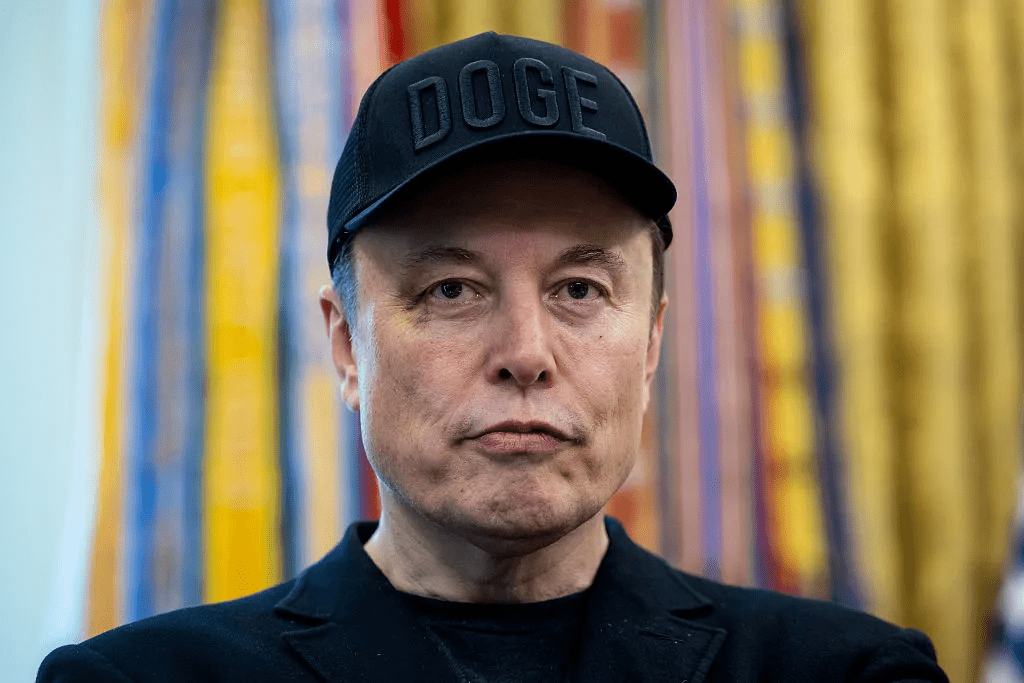
A long-standing feud between Elon Musk and Sam Altman, co-founders turned bitter rivals at the helm of OpenAI, has just erupted anew on Musk’s own social media platform, X, formerly known as Twitter. What started as a lighthearted jab over a delayed Tesla Roadster soon turned into another public clash between two of Silicon Valley’s most influential-and outspoken-tech leaders.

Altman’s “Tale in Three Acts” Strikes a Chord

The latest chapter in the saga began when OpenAI CEO Sam Altman posted what he called “a tale in three acts,” on X. It contained screenshots of his 2018 reservation for a Tesla Roadster, a follow-up email requesting a refund on his $50,000 deposit, and an automated bounce-back message.

“I really was excited for the car!” Altman wrote. “And I understand delays. But 7.5 years has felt like a long time to wait.”

Altman was likely responding to Tesla’s second-generation Roadster, first unveiled in November 2017 as the fastest production car in history. The highly anticipated car has faced years of delays in production; Musk recently promised a new version of it would arrive by the end of 2025.

Musk Fires Back: “You Stole a Nonprofit”

Musk didn’t waste any time going after Altman, responding to the post with the lacerating remark:

“You stole a nonprofit.”

The comment references Musk’s long-standing accusation that Altman “hijacked” OpenAI-which was originally founded in 2015 as a nonprofit research organization dedicated to safe and open AI development. Musk left the company in 2018, later criticizing its transition to a “capped-profit” model under the structure of OpenAI Global LLC, where the nonprofit board still retains control of the for-profit subsidiary.

In March 2024, Musk even sued OpenAI and Altman on grounds that the company had abandoned its founding mission by becoming too entwined with Microsoft and prioritizing profits over transparency. Although a court later dismissed the lawsuit, Musk has continued to publicly accuse Altman of betraying OpenAI’s original ideals.

Altman Pushes Back at Musk’s Claims

Never one to back down from a counterpunch, Altman fired back indirectly at the Tesla CEO’s accusations, implying Musk was hardly in a position to talk about fairness or competition.

He referred to Musk’s AI startup, xAI, which recently sued OpenAI and Apple, alleging that they colluded to hold down competition in the AI sector. Altman called Musk’s lawsuit “remarkable,” adding:

“Given what I heard alleged that Elon does to manipulate X to benefit himself and his own companies – and harm his competitors and people he doesn’t like.”

The comment points to increasing friction between the two entrepreneurs, who now spearhead competing efforts in artificial intelligence: Altman with OpenAI’s ChatGPT and Musk with xAI’s Grok chatbot, which is integrated into X Premium.

The Refund Controversy — and Musk’s Final Word

While Altman’s Tesla refund rekindled the feud, Musk did not waste any time in attempting to dial it back. Again responding on X, he wrote:

“And you forgot to say act 4, when that got resolved and you got a refund in less than 24 hours. But that’s your nature.”

Musk’s response suggested that Altman’s thread omitted important context-in this case, that Tesla had resolved the issue swiftly. Yet the exchange reflects how even a small customer complaint can become the latest front in a significantly broader personal and professional feud.

A Tech Feud Years in the Making

Musk and Altman have been at odds for many years. The two men were close collaborators when OpenAI was founded in 2015, united by a shared concern about the potential dangers of unchecked AI. However, philosophical and organizational disagreements soon emerged.

Musk reportedly wanted to roll OpenAI into Tesla’s AI team, a plan Altman and the board resisted. Musk left in 2018, citing conflicts of interest with Tesla’s self-driving AI effort. Since then, the relationship between the two has devolved into one of Silicon Valley’s most public rivalries.

Their differences reflect a deeper split in the tech world: Musk envisions AI as a tool best developed under private control with maximum safety constraints, while Altman is advocating for a more open and collaborative ecosystem — though his own company’s growing ties to Microsoft have raised eyebrows.

Rival Visions for the Future of AI

Today, the two men are at the helm of rival AI empires. xAI, Musk’s company, aims to create what he calls “truth-seeking AI” that avoids political or corporate bias; meanwhile, OpenAI, Altman’s company, continues to dominate the consumer space with ChatGPT, now integrated into Microsoft’s productivity software.

For all the public jabs, both men are racing toward the same goal: building the world’s most advanced artificial intelligence models. Their feud has become emblematic of the broader power struggle shaping the next era of technology, where ideology and business strategy intertwine with personal ego.

Conclusion: From Partners to Rivals What started as a friendly partnership to build safe, open artificial intelligence turned into one of the most bitter rivalries in modern tech. Musk and Altman’s latest exchange – over a car refund – is only the latest chapter in a saga emblematic of the cutthroat competition that lies at the heart of the AI revolution. Both men are forging the future of technology in their own ways, but their running clashes remind us: here in Silicon Valley, innovation and rivalry often run side by side.

ADVERTISEMENT
Receive the latest news

Subscribe To Our Weekly Newsletter

Get notified about new articles