
Techfullpost

Google releases Gemini 3, a new coding software, and sets benchmarks

Google releases Gemini 3

On Tuesday, Google officially launched Gemini 3, the newest and most powerful version of its foundation model series — one that the company says sets a new benchmark for reasoning, problem-solving, and real-time responsiveness. The model is now available immediately through the Gemini mobile app and through Google’s AI-powered Search interface, giving millions of users instant access to the upgraded system.

The launch comes just seven months after Gemini 2.5 and arrives during one of the most competitive periods in AI development. The rollout follows OpenAI’s recent announcement of GPT-5.1 and Anthropic’s release of Claude Sonnet 4.5, underscoring the breakneck pace at which frontier models are improving in 2025.

Google also confirmed that a more research-oriented version of the system, Gemini 3 Deepthink, will be launched in the coming weeks for subscribers of Google AI Ultra. That version is still undergoing intensive, multi-layered safety testing before it is made available to the public or enterprise developers.

“With Gemini 3, we’re seeing this massive jump in reasoning,” said Tulsee Doshi, head of product for the Gemini series at Google. “It’s responding with a level of depth and nuance that we haven’t seen before.”

Setting New Benchmark Records
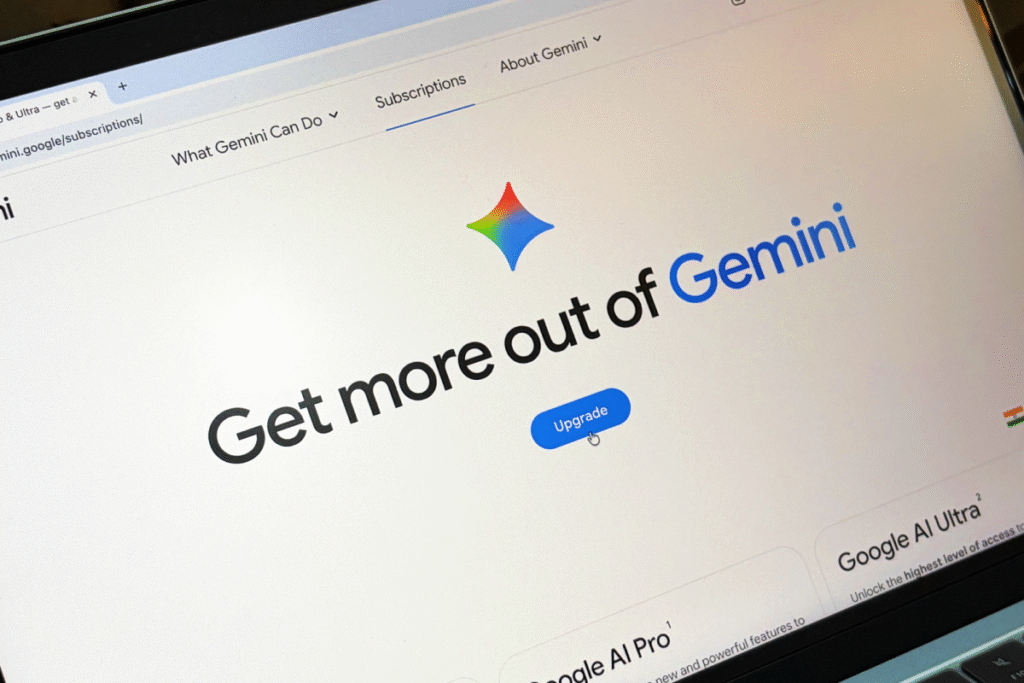
Early performance results hint at a significant leap in capability. Gemini 3 achieved a record score of 37.4 on the highly demanding benchmark called Humanity’s Last Exam-HLE, which is designed to measure broad reasoning, domain-expert knowledge, and real-world decision competency. The previous record holder, GPT-5 Pro, scored 31.64.

It also ranked first in LMArena, a human-evaluated benchmark that measures user satisfaction and the perceived helpfulness of model outputs. Google says these results reflect sustained investment in long-context reasoning, safer outputs, and more natural conversational understanding.

The Growing Gemini Ecosystem

Google announced that the Gemini app now serves more than 650 million monthly active users, a milestone that reflects the rapid pace at which the model has been adopted since its original launch. More than 13 million developers have integrated Gemini into coding, automation, and creative workflows-a signal that the model is becoming deeply embedded in the worldwide software ecosystem.

In addition to the base model, Google also announced Antigravity, a new Gemini-powered coding environment geared toward competing more directly with next-gen agentic IDEs such as Cursor 2.0 and Warp. Antigravity combines a conversational AI prompt panel with a terminal interface and a live browser pane to create one unified space for a developer where an AI agent can write, execute, and test code all in one.

“The agent can work with your editor, across your terminal, across your browser,” explained DeepMind CTO Koray Kavukcuoglu, “ensuring it helps you build your application in the best way possible.”

What Gemini 3 Brings to Users

While Google has not yet released the complete set of architecture details, early testers and developers point out a number of key upgrades:

Improved multi-step reasoning for research, coding, and analytical tasks

Improved memory and context windows to handle large documents more effectively.

More natural, conversational style with less need for prompt engineering

Stronger safety guardrails and real-time toxicity filtering

Smoother integration across Google Workspace-including Docs, Sheets, and Gmail

If approved, Deepthink’s release is expected to further develop long-form reasoning and complex analysis, likely able to go head-to-head with OpenAI’s most advanced models in scientific, legal, and engineering circles.

A Rapidly Escalating AI Race

The launch of Gemini 3 puts a point on the high-stakes race among major AI labs to create increasingly sophisticated models that are capable of autonomy, advanced reasoning, and multi-modal understanding. With Google’s latest entry now live and Deepthink on the way, analysts expect even more aggressive competition in the next few months from OpenAI, Anthropic, Meta, and smaller startups building specialized reasoning engines.

For now, Google is signaling that Gemini 3 marks a turning point. “Every generation of these models gets us closer to AI that truly supports people in deeper, more meaningful ways,” said Doshi. “This is the biggest leap yet.”

ADVERTISEMENT
RECOMMENDED
NEXT UP

Saudi Crown Prince Mohammed bin Salman has made a strategic leap into artificial intelligence with the launch of Humain, a state-backed AI company poised to transform the Kingdom’s technological capabilities. This ambitious venture represents more than just another tech startup—it’s a cornerstone of Saudi Arabia’s Vision 2030 plan to diversify its oil-dependent economy and establish itself as a global AI leader.

Inside the Humain Initiative

Infrastructure Development

  • Massive data center construction across strategic Saudi locations
  • Cloud computing capabilities to rival global hyperscalers
  • AI research facilities with cutting-edge hardware

Financial Backing

  • Funded by Saudi Arabia’s $940 billion Public Investment Fund (PIF)
  • Part of broader $40 billion AI investment plan announced earlier this year
  • Positions Saudi Arabia as the world’s largest AI investor

The Geopolitical Context

High-Profile AI Summit Coincidence

The Humain launch coincides with a major U.S.-Saudi investment forum attracting tech titans:

  • Elon Musk (Tesla, xAI, SpaceX)
  • Sam Altman (OpenAI)
  • Mark Zuckerberg (Meta)
  • President Trump’s scheduled visit to the region

Strategic Partnerships

American tech giants are already engaging with Saudi’s AI ambitions:

  • Google’s cloud partnership with Saudi Aramco
  • Salesforce’s Middle East expansion
  • Microsoft’s $2.1 billion Saudi cloud investment

Why This Matters for Global Tech

1. Shifting AI Power Centers

Saudi Arabia’s move challenges traditional tech hubs, offering:

  • Alternative funding sources beyond Silicon Valley VCs
  • Geopolitical neutrality in US-China tech tensions
  • Energy advantages for power-intensive AI operations

2. Economic Transformation

The PIF’s strategy mirrors successful sovereign wealth plays:

  • SoftBank Vision Fund model at national scale
  • Norway’s oil fund approach applied to tech
  • Singapore’s Temasek -style strategic investing

3. Technology Sovereignty

Humain addresses critical national priorities:

  • Reducing dependence on foreign tech
  • Creating high-value domestic jobs
  • Securing data localization compliance

Challenges and Considerations

Potential Roadblocks

  • Talent acquisition in competitive global market
  • Cultural adaptation for international tech workers
  • Regulatory environment for AI development

Ethical Questions

  • AI governance in authoritarian context
  • Surveillance technology concerns
  • Content moderation approaches

What’s Next for Humain?

Industry analysts predict several likely developments:

  1. Major university partnerships for AI research
  2. Acquisition of niche AI startups
  3. Joint ventures with established tech firms
  4. Saudi-specific AI applications for:
    • Arabic language processing
    • Islamic finance technology
    • Smart city implementations

The Bigger Picture

This move positions Saudi Arabia at the center of three converging trends:

  1. The AI arms race among nations
  2. The petrodollar to tech-dollar transition
  3. Middle East’s emergence as a tech hub

With Humain, MBS isn’t just investing in AI—he’s attempting to future-proof Saudi Arabia’s economy and influence in what may become the most strategically important technology sector of the 21st century.

Apple is preparing its most significant iPhone release schedule overhaul in years, according to a bombshell report from The Information. The tech giant plans to:

  • Launch its first foldable iPhone alongside the iPhone 18 Pro and “Air” models in fall 2026
  • Delay the standard iPhone 18 until spring 2027 (a first for Apple’s release calendar)
  • Introduce a slimmer “iPhone 17 Air” with a new battery case solution
  • Implement under-display Face ID in Pro models, leaving only a tiny camera cutout

This strategic shift represents Apple’s most dramatic product line reorganization since the introduction of the Plus/Max sizes, signaling a new era of smartphone innovation from Cupertino.

Inside Apple’s Foldable iPhone: Design and Specifications

The Foldable That Will Challenge Samsung’s Dominance

Apple’s first foray into foldables will feature:

Form Factor:

  • Book-style design (like Samsung Galaxy Z Fold) rather than clamshell
  • 5.7-inch external display (comparable to iPhone 13 mini)
  • Just under 8-inch internal display (slightly larger than iPad mini)

Key Innovations:

  • Revolutionary 4.5-4.8mm thickness when unfolded (thinner than current iPads)
  • Face ID implementation (no Touch ID under display)
  • Proprietary hinge mechanism promising “industry-leading durability”

Supply Chain Insights:
Renowned analyst Ming-Chi Kuo suggests Apple has been working with suppliers for over three years to perfect the foldable display technology, with LG Display reportedly taking the lead on panel production.

Why Apple Is Shaking Up Its Release Schedule

Managing an Expanding Product Portfolio

With six distinct iPhone models potentially in the lineup by 2026, Apple faces unprecedented complexity:

  1. iPhone 18 Pro Foldable (flagship innovation)
  2. iPhone 18 Pro (traditional premium)
  3. iPhone 18 Air (new slim category)
  4. iPhone 18 (standard model)
  5. iPhone 16E (budget-focused)
  6. iPhone SE (4th gen) (entry-level)

The New Release Cadence:

  • Fall 2026: Foldable, Pro, and Air models debut
  • Spring 2027: Standard iPhone 18 and 16E follow-up launch

This staggered approach helps:

  • Prevent product cannibalization
  • Maintain media buzz throughout the year
  • Allow manufacturing to scale appropriately

The iPhone 17 Air: Apple’s Thinnest Smartphone Yet

Solving the Battery Life Challenge

The Information reveals surprising details about the iPhone 17 Air:

Design Tradeoffs:

  • Ultra-thin profile comes at a cost to battery capacity
  • Internal testing shows battery life “falling short” of previous models

Innovative Solution:

  • Optional smart battery case (sold separately)
  • Case maintains slim profile while extending usage time
  • Potential for MagSafe-compatible modular battery system

Strategic Implications:
This marks Apple’s first acknowledgment that thinness may have reached practical limits for daily use, prompting creative accessory solutions.

Under-Display Face ID: The Next Step in Apple’s Bezel-Free Journey

The iPhone 18 Pro’s Nearly All-Screen Future

Apple’s display technology is taking another leap forward:

Current State:

  • Dynamic Island (iPhone 14 Pro/15 Pro)
  • Smaller pill-shaped cutout

2026 Evolution:

  • Face ID sensors move completely under display
  • Only front-facing camera remains visible
  • Tiny hole-punch in top-left corner (similar to some Android flagships)

Why This Matters:

  • Represents the final step toward a truly all-screen iPhone
  • Maintains Face ID security while maximizing display real estate
  • Potentially enables always-on display functionality

Competitive Landscape: How Apple’s Moves Stack Up

Foldable Market Readiness

While Samsung has led the foldable market since 2019, Apple’s entry could:

  • Validate the foldable category for mainstream consumers
  • Drive rapid improvements in durability standards
  • Potentially double the global foldable market size by 2027

Price Point Expectations:
Analysts predict Apple’s foldable could command a $1,999 starting price, significantly above current Android foldables but with premium materials and ecosystem integration.

What This Means for Consumers and Investors

Consumer Implications:

  • More choices across price points and form factors
  • Potential for greater differentiation between models
  • New accessory ecosystem opportunities

Investor Considerations:

  • Higher ASP (average selling price) potential with foldable
  • Possible margin pressures from new technology adoption
  • Watch for supply chain developments in 2025

The Road Ahead: Key Milestones to Watch

2024:

  • iPhone 16 series launch (potential first glimpse of direction)
  • Possible foldable prototype leaks

2025:

  • Supply chain confirmation of foldable production
  • Developer kit releases for foldable-specific software

2026:

  • Foldable iPhone announcement (likely September event)
  • iOS features specifically optimized for foldables

Conclusion: Apple’s Most Ambitious iPhone Strategy Yet

This reported roadmap represents Tim Cook’s most aggressive product strategy since taking the helm, showing Apple’s willingness to:

  1. Embrace new form factors after years of watching the foldable market
  2. Disrupt its own release calendar to better manage product complexity
  3. Push display technology boundaries with under-screen innovations
  4. Address practical limitations with creative accessory solutions

While Android manufacturers have pioneered many of these concepts, Apple’s methodical approach and ecosystem advantages could finally bring foldables and advanced display tech to the mainstream.

The coming years will prove whether this bold strategy can maintain Apple’s industry-leading position or if the company has stretched its iPhone lineup too far. One thing is certain – the smartphone landscape is about to get much more interesting.

ADVERTISEMENT
Receive the latest news

Subscribe To Our Weekly Newsletter

Get notified about new articles