Techfullpost

According to OpenAI, more than a million people discuss suicide with ChatGPT every week

openai chatgpt

OpenAI released new internal statistics shedding light on an increasing and increasingly concerning trend: More than one ChatGPT user is employing the AI chatbot to discuss severe mental illnesses — including suicidal thoughts and emotional addiction.

According to the most recent research conducted by the company, 0.15% of ChatGPT’s 800 million weekly active users engage in discussions that contain “explicit indicators of possible suicidal planning or intent.” While that number may seem low, it equates to over 1.2 million users every week.

OpenAI also revealed that a comparable share of users display “heightened emotional attachment” to ChatGPT, while hundreds of thousands of conversations show potential signs of psychosis, mania, or delusional thinking.

Although OpenAI described such interactions as “extremely rare,” the company acknowledged that their frequency — when scaled to hundreds of millions of users — represents a serious challenge for both AI safety and user well-being.

OpenAI’s Response: Building a Safer ChatGPT

The disclosure was part of OpenAI’s broader announcement on Monday outlining new initiatives to enhance ChatGPT’s mental health response systems. The company says it worked with more than 170 mental health professionals and clinicians to train and evaluate the latest version of its model, GPT-5, ensuring it responds to users in distress with more care, empathy, and appropriate resources.

According to OpenAI, GPT-5 now delivers “desirable responses” to mental health-related prompts 65% more often than earlier versions. On a key internal test focused on suicidal ideation, the latest GPT-5 model achieved 91% compliance with OpenAI’s safety standards, compared to 77% in previous iterations.

GPT-5 is also said to do better consistently over longer periods of conversation, where previous versions of AI would see protections weakened over time — a common theme highlighted by researchers in AI safety.

A Growing Ethical and Legal Concern

The revelations come amid heightened scrutiny of how AI tools interact with vulnerable users. Earlier this year, OpenAI was sued by the parents of a 16-year-old boy who reportedly discussed suicidal thoughts with ChatGPT before taking his own life. The tragic case sparked outrage and renewed debate over AI’s role in mental health support — and its potential to do harm.

Additionally, attorneys general from California and Delaware have issued formal warnings to OpenAI, demanding the company take stronger measures to protect minors and emotionally distressed users. These concerns could even impact OpenAI’s pending corporate restructuring.

Despite all of this, OpenAI CEO Sam Altman has been optimistic. Last month, he claimed in an X (previously Twitter) post that the company had “mitigated serious mental health issues in ChatGPT,” although not much was explained. Monday’s report appears to provide the evidence for that claim — but also to highlight the extent of the ongoing problem.

Mental Health and AI: A Delicate Balance

Experts have warned for some time that AI chatbots can unintentionally facilitate bad habits or delusional behaviors, especially when users become emotionally attached to them. Experiments have shown that chatbots, if too complacent or compassionate and not nuanced enough, can be designed to nudge users into dangerous psychological loops, supporting harmful thoughts instead of challenging them.

OpenAI said that its new models are created to recognize such moments and de-escalate distress or suicidal ideation conversations by directing users to real-world help. OpenAI is also introducing new metrics to measure AI performance in emotional and mental health contexts, such as emotional reliance measures and non-suicidal mental health crisis measures.

Stronger Safeguards for Younger Users

To further reduce safety concerns, OpenAI added more parental controls and an age-prediction system that would automatically flag when kids are using ChatGPT. The AI will apply stricter safety filters and content restrictions when detected, ensuring minors get responses appropriate for their age.

The company has also promised to expand its research partnerships with mental health groups in an effort to better understand how AI technologies impact user psychology over the long run — particularly through repeated, emotive exchanges.

An Ongoing Challenge

Although GPT-5 is an enormous step forward for safety in AI, nobody suggests that any model can be perfect. OpenAI even admits that “undesirable responses” remain, even with GPT-5 — and that millions of users are still employing older, less-safe models like GPT-4o, which remain available to subscribers.

That is to say, even as OpenAI improves its new technology, most of the users are still engaging with previous versions that can essentially respond in less responsible ways. The company denies it is accepting that it’s running this safety gap through system-wide releases and heightened monitoring.

The Bigger Picture

The spread of AI chatbots like ChatGPT has transformed how people gain access to advice, companionship, and even emotional support online. But it has also altered the lines between virtual support and psychological dependence.

While OpenAI is at present facing lawsuits, regulatory threats, and ethical questions, its efforts toward responsible management of mental health can help determine not only the future of ChatGPT — but the public’s trust in AI.


ADVERTISEMENT
RECOMMENDED
NEXT UP

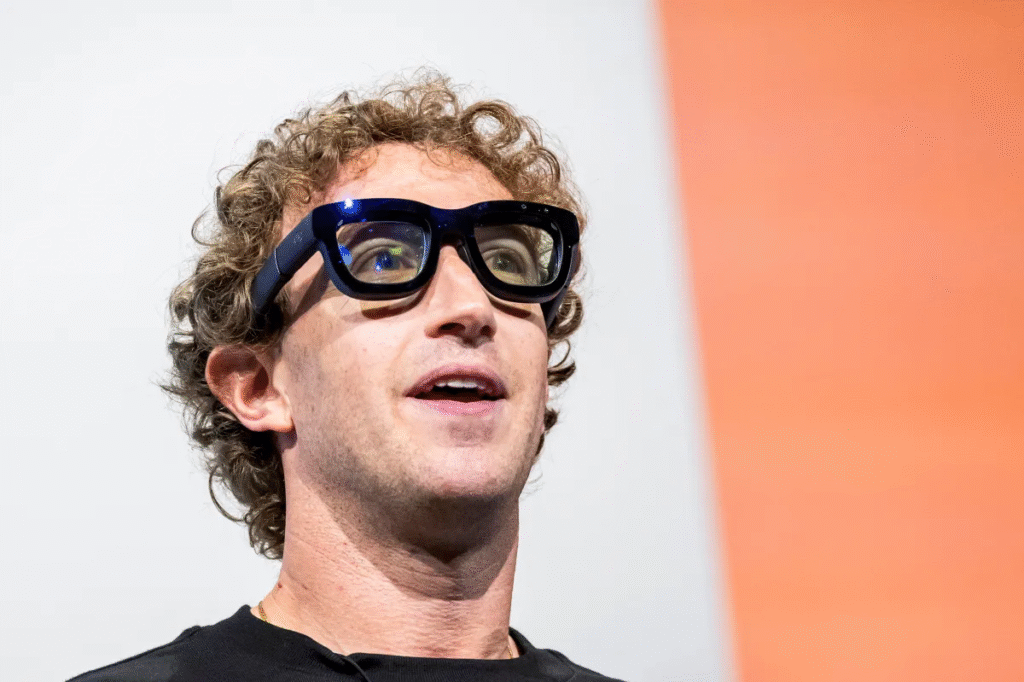
Meta is betting big, perhaps too big, on artificial intelligence. As the global race to build AI infrastructure heats up, the social media giant is investing billions into what it believes will define the next era of computing. But as Wall Street’s latest reaction shows, not everyone is buying it.

The company, whose chief executive is Mark Zuckerberg, is constructing two giant data centers in the U.S. as part of a wider AI expansion. U.S. tech companies collectively will invest as much as $600 billion in infrastructure over the next three years, according to estimates from industry insiders, with Meta as one of the biggest spenders.

But as Silicon Valley celebrates the AI boom, investors are asking one question: whether Meta’s spending spree is sustainable, let alone strategic.

Earnings Reveal Soaring Costs — and Investor Doubts

Meta’s latest quarterly report showed a sharp rise in costs: operating expenses were up $7 billion year over year and capital expenditures rose nearly $20 billion, largely driven by the acquisition of AI infrastructure and talent. The company generated $20 billion in profit for the quarter, but investors focused on the ballooning expenses — and the lack of clear AI monetization.

During the earnings call, Zuckerberg defended the aggressive spending.

“The right thing is to accelerate this — to make sure we have the compute we need for AI research and our core business,” he said. “Once we get the new frontier models from our Superintelligence Lab (MSL) online, we’ll unlock massive new opportunities.”

But the reassurance didn’t land. Meta’s stock sank 12% by Friday’s close, wiping out more than $200 billion in market value within days.

Big Spending, Small Returns (For Now)

While Meta isn’t alone in its AI splurge – Google, Microsoft, Nvidia, and OpenAI are also spending billions on computing – the key difference is in the results. Google and Nvidia are already experiencing strong revenue growth thanks to AI, while OpenAI, although much more risky, has one of the fastest-growing consumer products in history, generating around $20 billion a year.

But Meta has yet to introduce the blockbuster AI product that would seem to justify the astronomical spending.

Its flagship Meta AI assistant reportedly serves over a billion users, but this is largely a factor of its embedding across Facebook, Instagram, and WhatsApp rather than organic adoption. Analysts say it still lags far behind in functionality and brand strength compared to competitors such as ChatGPT and Claude.

Meanwhile, Meta’s Vibes video generator, which gave the company a fleeting bump in engagement, has yet to prove its commercial viability. And while the Vanguard smart glasses it introduced with Ray-Ban do hold some promise for combining AI and augmented reality, they’re still more prototype than core business driver.

Zuckerberg’s Vision: Superintelligence and the Future

Undeterred by the skepticism, Zuckerberg insists Meta’s AI ambitions are only just getting started. He said the company’s Superintelligence Lab, or MSL, is working on next-generation “frontier models” that will power classes of products entirely new.

“It’s not just Meta AI as an assistant,” Zuckerberg said. “We expect to build new models and products — things that redefine how people and businesses interact with technology.”

Yet, he didn’t provide any details or timelines-a thing that frustrated analysts, who wanted some concrete projections. The promise of “more details in the coming months” wasn’t enough to calm investor nerves.

The AI Bubble Question

A massive infrastructure build-out at Meta has revived fears that the technology industry might be inflating yet another bubble. With tens of billions of dollars pouring into GPUs, data centers, and AI labs, some analysts warn that valuations in the sector are running ahead of tangible outcomes.

Yet, others argue that Meta’s financial position gives it more room to experiment. Unlike many AI startups, Meta still has a profitable advertising empire to fall back on. Its 3 billion monthly active users across its apps provide an unmatched data advantage — if it can find a compelling AI use case.

Where Does Meta Go From Here?

The direction of the company is not determined. Fundamental strategic questions are still hanging:

Will Meta use its vast personal data ecosystem to challenge OpenAI and Anthropic directly?

Does it want to integrate AI-powered advertising and business tools for enterprises?

Or will it shift to immersive consumer products, merging AI with AR/VR in the metaverse?

For now, those answers remain elusive. One thing is for sure: Zuckerberg is playing the long game, one that could either solidify Meta’s role in the next era of computing or turn into one of Silicon Valley’s most expensive miscalculations. As the AI arms race accelerates, Meta’s challenge isn’t just to build smarter machines — it’s to convince investors, and the world, that the company still knows where it’s going.

Redmond, Washington — In a bold move to expand its artificial intelligence infrastructure, Microsoft announced a $9.7 billion deal with data-center operator IREN that would give the tech giant long-term access to Nvidia’s next-generation AI chips. The agreement underscores how deeply the AI race has become defined by access to high-performance computing power.

That investment will also translate into a five-year partnership that lets Microsoft significantly ramp up its cloud computing and AI without having to immediately build new data centers or secure additional power—two of the biggest bottlenecks constraining Microsoft’s AI expansion today.

IREN Shares Spike Following Microsoft Partnership

Following that announcement, IREN’s stock soared as much as 24.7% to a record high before finishing nearly 10% higher by Monday’s close. The news also gave a modest lift to Dell Technologies, which will be supplying AI servers and Nvidia-powered equipment to IREN as part of the collaboration.

The deal includes a $5.8 billion equipment agreement with Dell, part of which involves IREN providing Microsoft with access to systems equipped with the advanced Nvidia chips known as the GB300.

Strengthening Microsoft’s AI Muscle

The move highlights the increasing competition between tech giants like Amazon, Google, and Meta in securing computing capacity that powers generative AI tools such as ChatGPT and Copilot among other machine-learning models.

Microsoft has invested heavily in OpenAI amid mounting infrastructure constraints, as demand for AI-powered services explodes across its cloud ecosystem. Earnings reports from major tech firms last week showed that a limited supply of chips and data-center capacity remains the cap on how much the industry can capitalize fully on the boom in AI.

In return, IREN gets an immediate infrastructure boost by partnering with Microsoft without the high upfront costs associated with building new hyperscale data centers. That is also a way to stay agile as the generations are coming fast from Nvidia.

“This deal is a strategic move by Microsoft to expand capacity while maintaining its AI leadership without taking on the depreciation risks tied to fast-evolving chip hardware,” said Daniel Ives, managing director at Wedbush Securities.

IREN’s Huge Expansion Plans

IREN, whose market value has risen more than sixfold in 2025 to $16.5 billion, operates several large-scale data centers across North America, with a combined total of 2,910 megawatts.

Under the new deal, the company will deploy Nvidia’s processors in phases through 2026 at its 750-megawatt Childress, Texas campus, where it is building liquid-cooled data centers designed to deliver approximately 200 megawatts of critical IT capacity.

The prepayment by Microsoft would finance IREN’s payment for Dell equipment valued at $5.8 billion. However, the deal comes with strict performance clauses that allow Microsoft to revoke the contract if delivery timelines are not met by IREN.

Rising “Neocloud” Powerhouses

The deal also speaks to the emergence of “neocloud” providers like CoreWeave, Nebius Group, and IREN — companies that specialize in selling Nvidia GPU-powered cloud computing infrastructure. These firms have become key partners for Big Tech companies trying to scale AI operations faster than traditional data-center timelines allow.

Earlier this year, Microsoft inked a $17.4 billion deal with Nebius Group, a similar provider, for cloud infrastructure capacity. Taken together, the moves mark Microsoft’s multi-pronged strategy to secure AI infrastructure from multiple partners amid global shortages of Nvidia hardware.

A Broader AI Infrastructure Push

On the same day, AI infrastructure startup Lambda revealed a multi-billion-dollar deal with Microsoft to deploy more GPU-powered cloud infrastructure using Nvidia’s latest hardware.

To the industry analysts, these rapid investments are part of a larger race to lock in supply chains for a resource now viewed as critical as oil in the digital economy: AI computing.

“We’re seeing the dawn of a whole new AI infrastructure ecosystem,” said Sarah McKinney, an AI market strategist. “Microsoft’s deals with IREN and Nebius show that the company is securing every possible avenue to power the next wave of AI applications.”

The Growing Infrastructure Challenge of AI

High demand for AI, meanwhile, has put incredible pressure on computing resources globally. As companies scramble to find GPUs and data-center capacity, the cost of AI infrastructure has soared.

The partnership with existing operators like IREN ultimately gives Microsoft flexibility to meet surging workloads with a minimum of capital expenditure and supply chain delays. This approach allows it to further diversify its geographic footprint, reducing risks associated with power constraints or regulatory hurdles in any single region.

With this agreement, Microsoft forges its status as one of the leaders in the world’s artificial intelligence ecosystem and positions its Azure cloud as a backbone for next-generation AI applications. For IREN, the partnership represents a turning point in its transformation from a low-profile data center provider to an important player in the infrastructure powering the AI revolution. As the world’s demand for AI accelerates, one thing is clear: the race for computing power is just getting underway, and partnerships like Microsoft’s $9.7 billion IREN deal will likely define who leads in the next decade of artificial intelligence.

ADVERTISEMENT
Receive the latest news

Subscribe To Our Weekly Newsletter

Get notified about new articles