Techfullpost

Why “Grand Theft Auto 6” Took Over a Decade to Arrive

Grand theft auto/techfullnews

The gaming world has been buzzing with one question for years: When will “Grand Theft Auto 6” (GTA 6) finally be released? The wait has been so long that it’s become a running joke among fans, with memes poking fun at how we’ve seen countless other milestones—like new consoles, global events, and even entire generations of games—before getting a glimpse of GTA 6. Rockstar Games, the developer behind the iconic franchise, finally broke its silence in December 2023, announcing that GTA 6 is set to launch in fall 2025. But why has it taken over 13 years since the release of “Grand Theft Auto 5” (GTA 5) in 2013? Let’s explore the reasons behind the delay, what we know about the game so far, and why the wait might just be worth it.


The Legacy of Grand Theft Auto

The Grand Theft Auto series has been a cornerstone of the gaming industry since its debut in 1997. Known for its open-world gameplay, satirical storytelling, and groundbreaking mechanics, the franchise has consistently pushed the boundaries of what video games can achieve. “GTA 5,” released in 2013, became a cultural phenomenon, selling over 205 million copies and becoming one of the best-selling games of all time. Its online counterpart, “GTA Online,” continues to thrive, with regular updates keeping millions of players engaged.

However, as the years passed without a sequel, fans grew increasingly impatient. The gaming community’s demand for GTA 6 reached a fever pitch, fueled by rumors, leaks, and endless speculation. Rockstar’s eventual announcement in 2023 was met with both excitement and relief, but it also raised questions: Why did it take so long? Let’s break it down.


Why Has GTA 6 Taken Over a Decade to Develop?

1. The Evolution of Game Development

In the early 2000s, Rockstar released new GTA titles every few years. “GTA 3” (2001), “Vice City” (2002), and “San Andreas” (2004) came out in quick succession, followed by “GTA 4” in 2008. However, as games grew larger and more complex, development cycles lengthened. “GTA 5” took five years to develop, and the gap between it and GTA 6 has stretched to over a decade. This shift reflects the increasing demands of modern game development, which requires more resources, time, and attention to detail.

2. Rockstar’s Focus on Other Projects

Rockstar Games isn’t just about GTA. The studio has also been busy with other critically acclaimed titles, most notably the “Red Dead Redemption” series. “Red Dead Redemption 2,” released in 2018, was a massive undertaking that reportedly involved nearly 2,000 employees across multiple studios. The game’s development took eight years, diverting resources and attention away from GTA 6. Rockstar’s commitment to quality means it often focuses on one major project at a time, and “Red Dead 2” was no exception.

3. The Impact of the Pandemic

The COVID-19 pandemic disrupted industries worldwide, and game development was no exception. Rockstar, like many studios, had to adapt to remote work, which slowed progress and introduced new challenges. Additionally, the shift to next-gen consoles (PlayStation 5 and Xbox Series X|S) required developers to learn new technologies and optimize their games for advanced hardware, further extending the timeline.

4. Rockstar’s Commitment to Quality

Rockstar is known for its meticulous attention to detail and refusal to release a game until it meets its high standards. This philosophy was evident in the development of “Red Dead Redemption 2,” which set a new benchmark for open-world games. GTA 6 is expected to raise the bar even higher, with a larger, more detailed world, advanced AI, and cutting-edge graphics. As a former Rockstar employee explained, the studio wants to ensure the game is “the best it can be” before release, even if that means delaying it.


What We Know About GTA 6 So Far
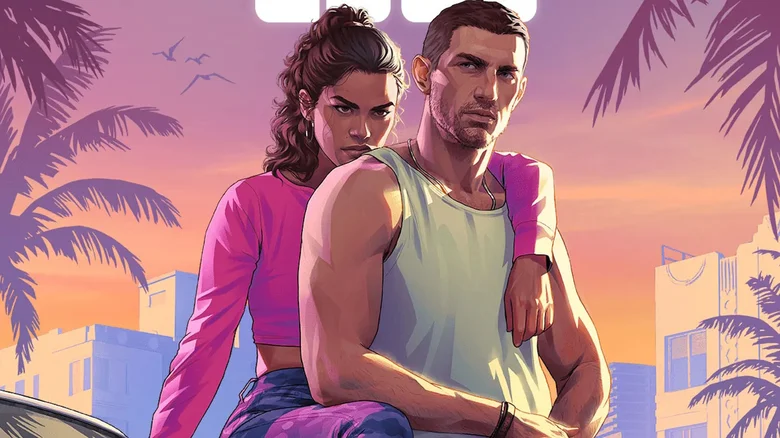
After years of secrecy, Rockstar finally unveiled the first official trailer for GTA 6 in December 2023. Here’s what we’ve learned so far:

Return to Vice City

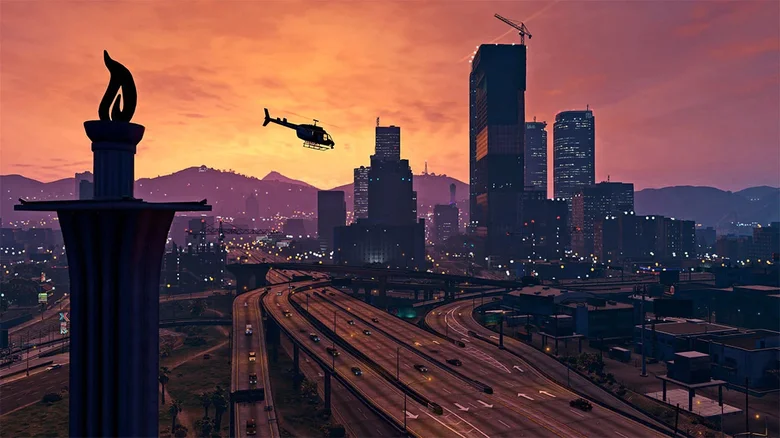
The game is set to return to Vice City, the Miami-inspired location first introduced in 2002’s “GTA: Vice City.” However, this version of Vice City is expected to be significantly larger and more detailed, with sprawling beaches, bustling urban areas, and a vibrant atmosphere.

A Groundbreaking Protagonist

For the first time in the series’ history, GTA 6 will feature a female protagonist named Lucia. The story appears to follow a Bonnie and Clyde-inspired narrative, with players alternating between Lucia and her partner, Jason. This dual-protagonist approach builds on the innovation introduced in GTA 5, which allowed players to switch between three characters.

Expanded Gameplay and Features

While details remain scarce, leaks and rumors suggest that GTA 6 will introduce new gameplay mechanics, including enhanced AI, more interactive environments, and a dynamic world that evolves based on player actions. The game is also expected to feature a mix of familiar elements—like fast cars, heists, and satire—alongside fresh innovations.

The Largest Leak in Gaming History

In 2022, GTA 6 made headlines for one of the largest video game leaks in history. Nearly 90 gameplay clips were posted online, showcasing early development footage. While Rockstar swiftly removed the leaks, the incident highlighted the immense pressure and scrutiny surrounding the game’s development.


Why the Wait Might Be Worth It

While the delay has tested fans’ patience, there are several reasons to believe GTA 6 will be worth the wait:

  • Unparalleled Detail: Rockstar’s commitment to quality ensures that GTA 6 will be a visually stunning and immersive experience.
  • Innovative Storytelling: The introduction of a female protagonist and a dual-character narrative promises to bring fresh perspectives to the series.
  • Next-Gen Technology: Built for modern consoles, GTA 6 will leverage the power of the PlayStation 5 and Xbox Series X|S to deliver groundbreaking gameplay and graphics.

The Anticipation Builds

The journey to GTA 6 has been long and filled with challenges, but the payoff could redefine the gaming landscape once again. Rockstar’s dedication to quality, combined with the franchise’s legacy of innovation, suggests that GTA 6 will be a landmark title when it finally arrives in 2025. For now, fans can only speculate and dream about what’s in store—but one thing is certain: the wait will be worth it.
ADVERTISEMENT
RECOMMENDED
NEXT UP

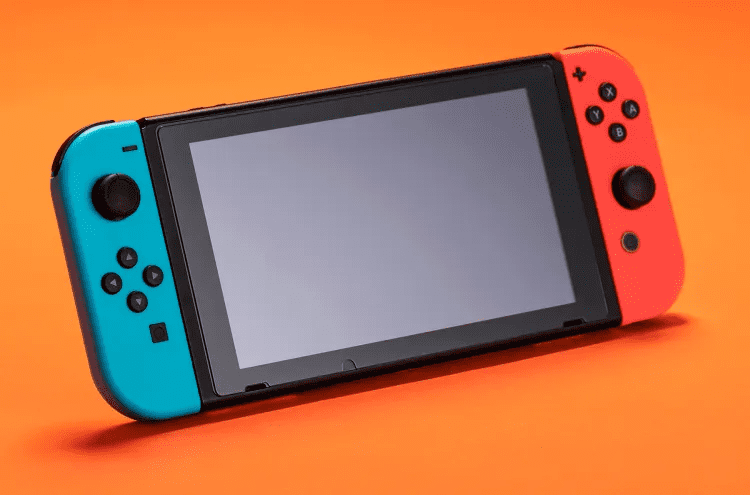
Nintendo is officially moving into a new era. In its just-posted financial results briefing, the gaming giant confirmed that it’s shifting its main development efforts to the Nintendo Switch 2, a decisive move away from the original 2017 Switch that rebooted the company’s fortunes.

“Going forward, we will shift our primary development focus to Nintendo Switch 2 and expand our business around this new platform,” Nintendo said during its briefing.

The announcement effectively signals that the Nintendo Switch’s eight-year reign is beginning to wind down, even if the company isn’t ready to retire the console completely just yet.

Switch Still in Stores, But Support Will Gradually Fade

Nintendo pointed out that it would also continue to sell the original Switch hardware for the foreseeable future, adjusting its production and marketing strategy “in line with consumer demand and business conditions.” But the writing is on the wall: as developers shift their focus, new releases for the older system will inevitably slow.

The company sought to reassure fans that various major titles were still planned for the Switch, with launches from October onwards: these may include final first-party releases or updates to existing franchises aimed at keeping the system’s large player base engaged as the next generation gains momentum.

Sell Switch 2 Off to a Strong Start

Off to an amazing start despite still having a few months into its lifecycle, the Nintendo Switch 2 has already sold over 10.36 million units worldwide since its launch back in June, according to data from Nintendo.

Notably, 84 percent of buyers were existing Switch owners — a clear sign that the new console is attracting loyal fans upgrading to the next generation rather than drawing in entirely new users. While that number still represents a fraction of the original Switch’s staggering 154 million lifetime sales, the company says it’s observing a “uniform migration” toward the newer platform.

This is in line with what has been happening in all major console transitions: early adoption is driven by the existing user base before the wider audience starts buying.

The Legacy of the Nintendo Switch

When the Nintendo Switch launched in March 2017, it marked a revolutionary hybrid console that combined handheld portability with the more traditional style of home gaming. It quickly became one of Nintendo’s most successful systems to date, revitalizing the company from underperforming sales of the Wii U and an era-defining lineup of games that included The Legend of Zelda: Breath of the Wild, Super Mario Odyssey, and Animal Crossing: New Horizons.

The versatility and affordability of the system helped it capture an immense audience worldwide, crossing over 154 million units in lifetime sales, making it the third-best-selling console in history after the PlayStation 2 and Nintendo DS.

What’s Next for the Switch 2

While Nintendo has not talked about all the technical details of Switch 2, reports and leaks indicate that it has a more powerful chipset, faster loading times, and increased graphical capabilities-all of which would draw Nintendo closer to the level of visual fidelity shown in their competitors, the PlayStation 5 and Xbox Series X.

This generational shift is pivotal for Nintendo-a balance between paying homage to a record-breaking legacy and forging ahead with innovation. While the company has managed transitions quite well in the past, with the original Switch still performing well in markets such as Japan and Europe, Nintendo faces the challenge of gradually sunsetting one of its most beloved consoles without alienating its vast player community. The message, as the Switch 2 gains even more momentum, is clear: the future of Nintendo is already here — and it’s building on the base of one of the most successful consoles ever made.

There are also rumors that the backward compatibility will be improved, allowing existing Switch owners to carry forward their digital libraries. With a larger OLED display combined with an enhanced Joy-Con design, the new console seems set to deliver performance and comfort upgrades in equal measure.

Analysts anticipate the Switch 2 will be the leader of the 2025 gaming cycle, especially with expected first-party games such as Metroid Prime 4, The Legend of Zelda sequel projects, and maybe new Mario entries already in development for the console.

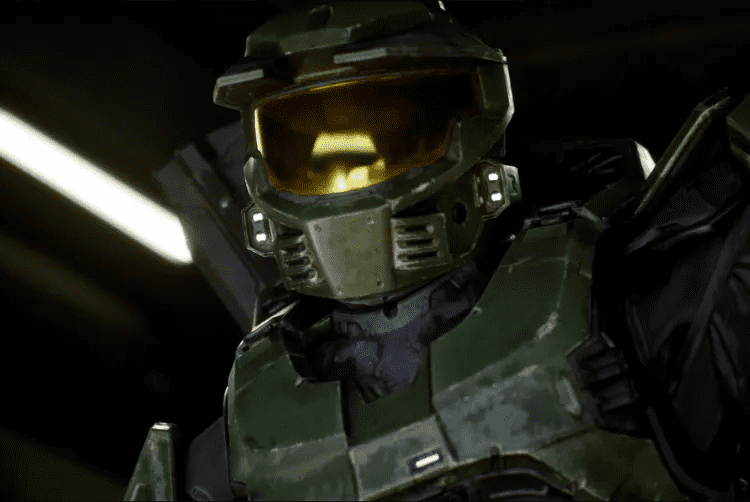
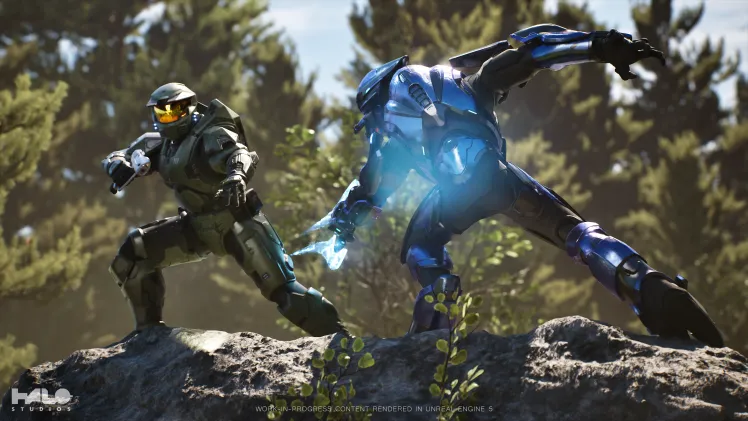
A few years ago, the idea that Halo — the game that is synonymous with Xbox’s brand name — would be making a move to a PlayStation console would have been something akin to a parallel universe. But in 2025, that extremely unlikely truth is playing itself out. What was the pinnacle of the exclusivity of Xbox is now the most glaring sign that Microsoft’s gaming division is undergoing a ginormous transformation — one driven by survival, strategy, and the changing nature of the gaming industry.

From Locked Walls to Open Doors

Xbox’s previously locked-down environment is collapsing quickly. The company has been systematically knocking down its walls of exclusivity, inviting its biggest franchises into competition. What once was an experiment with smaller titles like Grounded and Pentiment on Nintendo Switch and Hi-Fi Rush and Sea of Thieves on PlayStation 5 has turned into a risky, multi-platform gamble.

Now, Microsoft’s biggest franchises — Indiana Jones and The Great Circle, Senua’s Saga: Hellblade II, Gears of War, and soon Halo — are not just “Xbox games.” They’re trans platform, cross-device gaming experiences.

It’s not really a software change but a change on what Xbox is in 2025. As Xbox executive Sarah Bond told Mashable, “The biggest games in the world are available everywhere. The idea of locking games to one store or one device is antiquated for most people.”

And she’s right — accessibility is the way to success. Sony’s report of May sales shows that Xbox-published titles like Indiana Jones, The Elder Scrolls V: Oblivion Remastered, and Forza Horizon 5 topped the highest downloads on PlayStation 5. Even Microsoft-owned games like Call of Duty: Black Ops 6 and Minecraft top charts across platforms.

The Business Behind the Shift

The transition away from Xbox consoles is not philosophical — it’s practical. Xbox hasn’t been able to compete with PlayStation and Nintendo in console hardware sales. Subscription growth of Xbox Game Pass has crested, and the formerly bright hope of “Netflix for games” is vanishing in the face of saturation and rising cost.

Even as it is, American tariff policies are driving console costs higher, turning the earlier trend of hardware getting cheaper by the day on its head. In an era where customers are prioritizing utility over entertainment indulgences, Microsoft’s Play Anywhere and Cloud Gaming initiatives become lifelines — allowing players to experience games on devices they already own.

“We’re trying to meet people where they are,” said Matt Booty, president of Xbox Game Content and Studios, in a New York Times interview. That means making Xbox more than a console — it’s a brand that spans PCs, TVs, mobile devices, and rival systems.

But comfort for die-hards is that Xbox isn’t abandoning hardware altogether. Bond suggested that the next-gen console will be “a very premium, high-end curated experience.” As Microsoft launched its pricey ROG Ally handhelds, it’s clear that the company remains committed to keeping one foot firmly in the high-end gaming market.

Trouble Beneath the Surface

But beneath this high-flying reorganization, Xbox is in turmoil. The company has shut down a number of studios, including Arkane Austin and Tango Gameworks — the former being the developer of fan favorite Hi-Fi Rush. High-profile titles like Perfect Dark and Everwild have been quietly canceled, and Fable’s much-hyped reboot has been delayed until 2026.

Even Halo Infinite, the one that was meant to reignite the franchise, failed critically and commercially. And so, now that the original Halo franchise is being released on PlayStation in an enhanced form, the fans cannot help but wonder: is this an expansion or a white flag?

Simultaneously, The Elder Scrolls VI persists in development purgatory six years after it was first revealed, and Fallout — with renewed hype due to Amazon’s hit TV show adaptation — has not seen a significant new game release in years. Todd Howard’s promise that Fallout 5 is “eventually coming” fails to assuage the skepticism.

Internal Strains and Image Problems

A recent Bloomberg article discovered that Microsoft set its gaming division a disputed 30% profit margin target, leading to unpopular actions such as increasing Game Pass prices and shutting down various studios.

The company’s new ROG Ally handhelds, priced at $600 to $1,000, have also been panned as too pricey and half-baked. Ironically enough, during a company town hall meeting, Booty highlighted “smaller, prestige games that win awards” — the day after shutting down the studio responsible for one of the handful of games that fit that description.

Microsoft has also been criticized for its global reputation. The firm was targeted by the BDS movement for alleged ties to Israeli defense practices and was confronted by worker demonstrations over its AI transactions with the Israeli regime. Perhaps most recently, Xbox’s Halo franchise found itself embroiled in scandal when the U.S. Department of Homeland Security used its imagery in a highly criticized ICE recruitment ad — an ad that Microsoft declined to comment on.

The Future of Xbox: Platform Over Console

Despite all the madness, Halo’s PlayStation debut isn’t the death of Xbox — it’s a redefinition of what Xbox is in 2025. Old-school “console war” among Sony, Nintendo, and Microsoft is over. The real war now is in time and attention — with platforms like TikTok, Fortnite, Roblox, and YouTube battling for large slices of gamers’ free time.

Microsoft’s new strategy welcomes that reality: to survive, Xbox must succeed everywhere. And that means embracing its competitors instead of fighting them.

So yes, seeing Master Chief — the iconic mascot of Xbox — on a PlayStation screen is surreal. But it is also representative of an industry evolving beyond old boundaries.

As the new chapter in gaming is written, Microsoft’s agility can be its salvation. Xbox will not perhaps capture the hardware war, but in the battle for the attention of gamers, it is positioning itself to stay in the game for many a long year to come.

ADVERTISEMENT
Receive the latest news

Subscribe To Our Weekly Newsletter

Get notified about new articles