Techfullpost

Twitter’s New Logo Explained: What Does The X Mean?

Twitter's New Logo

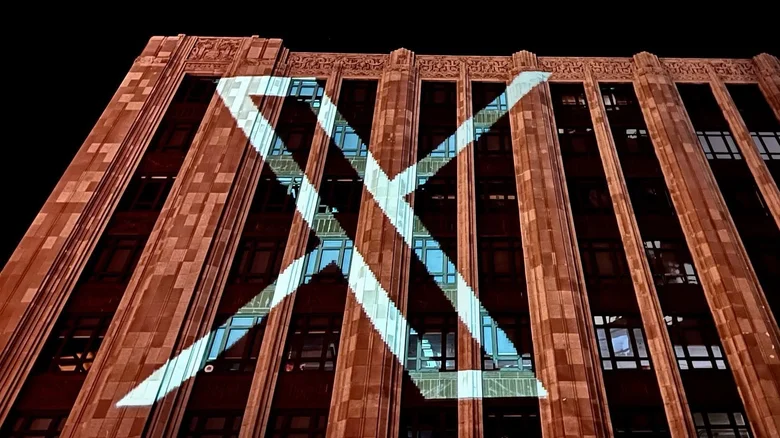
When Elon Musk acquired Twitter for a staggering $44 billion in October last year, major changes were on the horizon for the social media giant. As CEO, Musk’s decisions faced mixed reactions, with controversial moves like laying off a significant portion of the workforce and introducing the paid Blue Subscription service sparking substantial pushback. Now, in yet another bold move, Musk has bid farewell to the platform’s iconic blue bird logo, replacing it with the enigmatic letter X.

Beyond a mere logo change, the rebranding encompasses a shift in the platform’s identity, with Twitter itself being renamed as X. Visitors to X.com will presently be redirected to Twitter.com, but Musk envisions X.com eventually becoming the primary domain for the service. This decision drew criticism from many who viewed Twitter’s blue bird logo as its most cherished and recognizable symbol.

Musk, however, has personal reasons for embracing the letter X. He has previously expressed sentimental attachment to the domain X.com, attributing significant value to it. But what exactly does this rebranding signify for the future of the platform, and what does the letter X represent to Musk?

The transformation of Twitter into X signifies a transition into a new era for the platform. While no immediate feature upgrades accompanied the change, this symbolic gesture indicates that the social media app is moving closer to becoming something more than just a microblogging platform. Newly appointed CEO, Linda Yaccarino, sees this rebranding as an opportunity for the platform to make a second significant impression on its users.

This shift has deeper implications, as X has been a longstanding dream of Elon Musk’s. The tech entrepreneur’s vision for X is to create an all-encompassing “everything app,” often likened to China’s WeChat, offering diverse functionalities such as seamless online transactions, rent payments, and appointment scheduling.

Interestingly, the letter X holds significant historical relevance for Musk. One of his earliest ventures, co-founding an online banking platform in 1999, was originally named X before evolving into the globally recognized PayPal. Since then, Musk has maintained a fondness for incorporating the letter X into his projects, evident in names like SpaceX and the Tesla Model X. Even his youngest son bears the name X.

As for the specific reason behind choosing X as the symbol for the new platform, it remains unclear. Perhaps Musk’s decision is rooted in nostalgia, reminiscent of his early days in business, or maybe he simply finds the letter’s sound and aura appealing. Only time will tell whether this daring rebranding will be the catalyst for a groundbreaking transformation or if it will be remembered as just another footnote in the decline of Twitter.

In any case, with Elon Musk at the helm, the world eagerly watches to witness the unfolding of Twitter’s metamorphosis into X and the realization of Musk’s vision for an all-encompassing digital ecosystem. As the platform takes on a new identity, it holds the promise of reshaping social media and online interactions in unprecedented ways.

ADVERTISEMENT
RECOMMENDED
NEXT UP

Meta is pushing deeper into AI territory with new AI-editing tools in Instagram Stories, where users can edit images and videos simply by typing in what they want to modify. From hair color to special effects, the feature upends the possibilities of creators and regular users alike to personalize their content.

Text Prompts Meet Visual Creativity

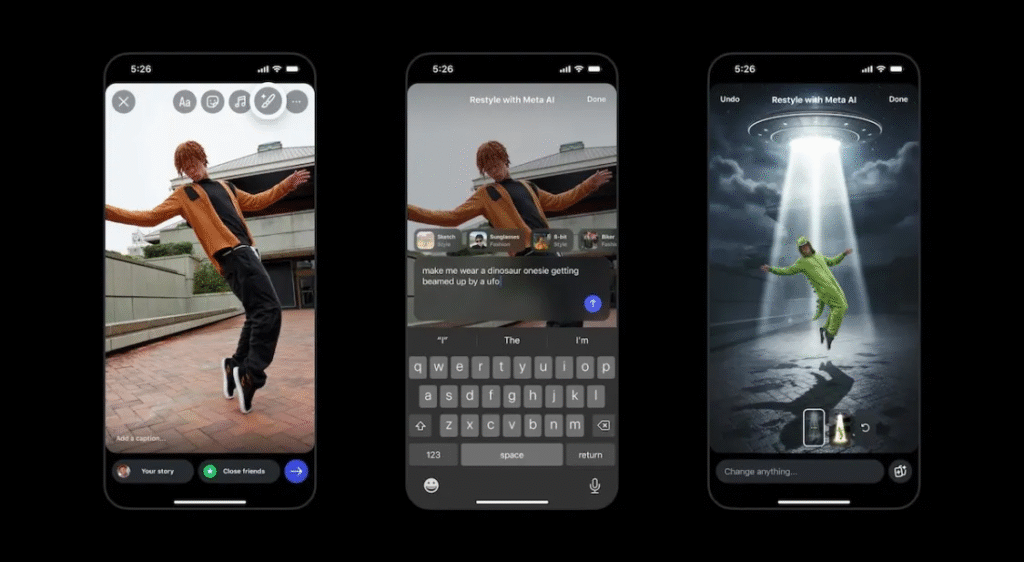
Until now, Instagram’s AI editing tools were primarily accessible through Meta AI’s chatbot, which required users to interact via direct messages. With this latest integration, however, AI editing becomes native to Stories, allowing anyone to make instant visual edits using plain language commands.

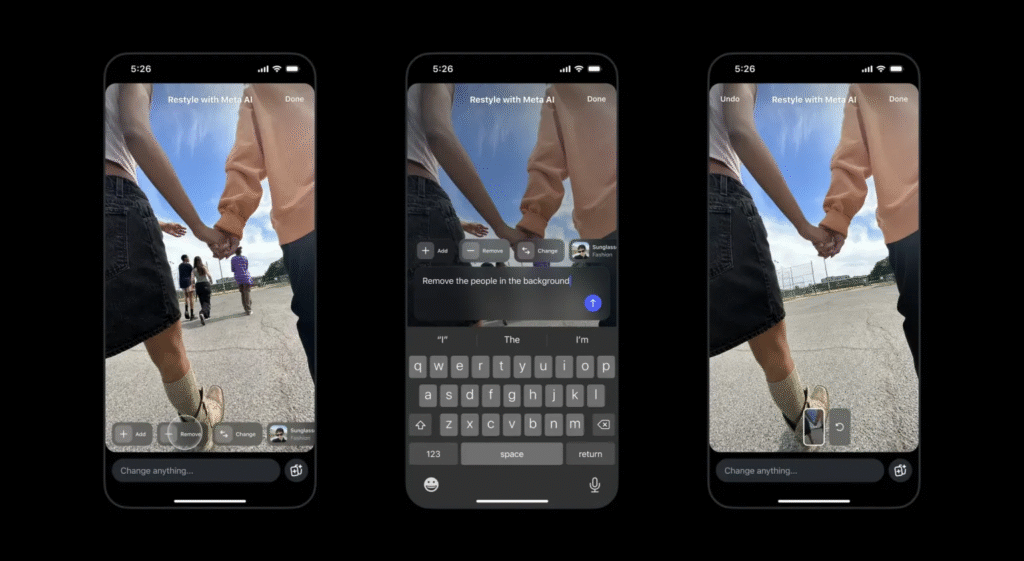
These new edit features come under the “Restyle” menu that can be accessed using the paintbrush icon in Instagram Stories. One can type commands such as “give me a sunset background,” “remove the person in the corner,” or “color my hair pink.” The AI carries out the edit one wants within seconds.

Meta suggests that users only have three primary actions to select from — Add, Remove, or Change — while specifying what they’d like to alter. The AI will automatically add objects, alter appearances, or completely restyle the photo based on what they’ve described.

Preset Effects and Dynamic Video Edits

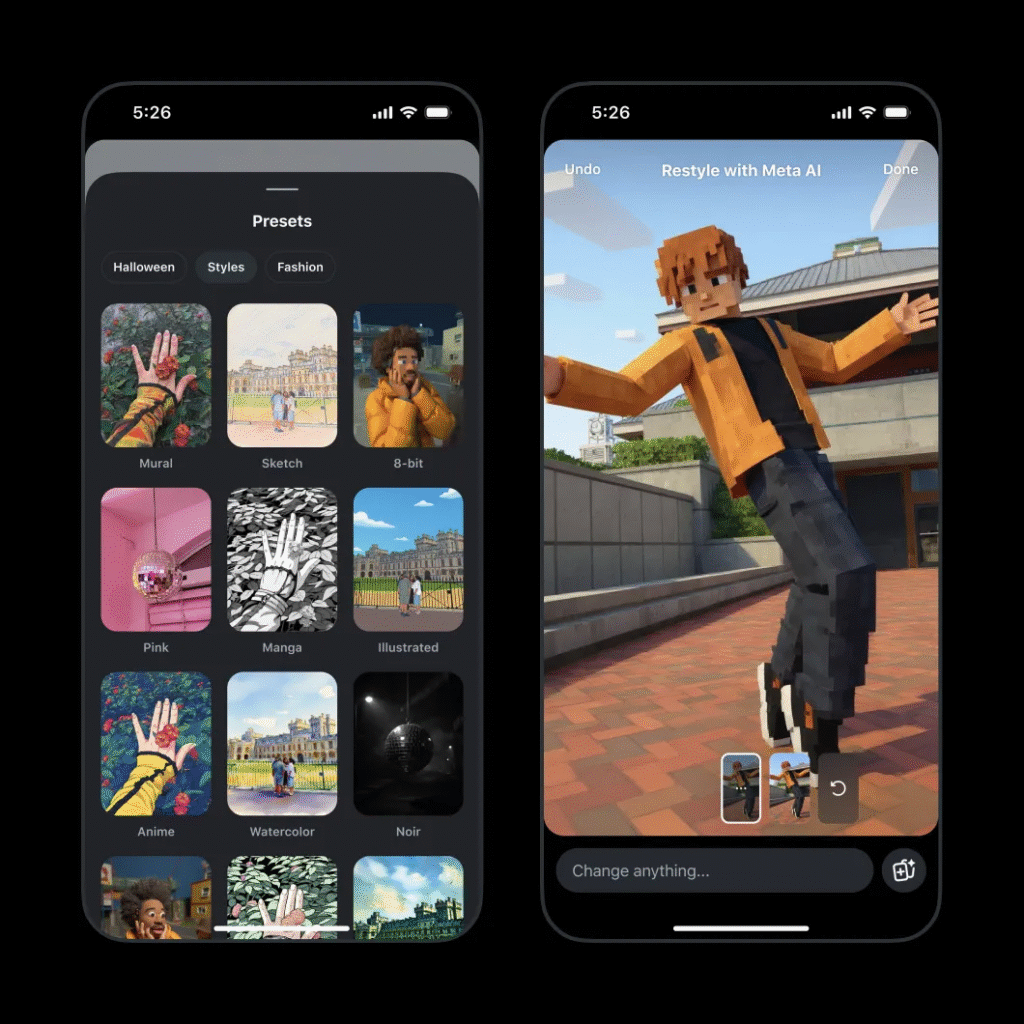
In addition to custom prompts, Instagram also has pre-select AI effects that can beautify or stylize posts. Filters like sunglasses, a denim jacket, or even a watercolor art effect can be applied.

On video content, the feature does even better — creators are able to superimpose atmospheric effects like falling snow, glowing embers, or cinematic lighting, which makes Stories appear more polished and professional without the necessity of using editing apps.

Privacy and AI Usage Terms

While the new features enable creativity, they come with privacy implications. Being used to introduce users to Meta’s Terms of Service for AI, which allow the company to “analyze photos and videos, including facial data, to make AI better.” According to Meta, it allows its systems to “summarize image contents, edit images, and generate new content based on the image.”

Critics have also had concerns regarding the ways in which such data might be used to train Meta’s broader AI models, though the company has sworn to remain committed to responsible innovation and transparency.

Meta’s Expanding AI Push

The release of AI editing software is just part of Meta’s overall strategy to roll out artificial intelligence on every platform it has, from Facebook and Instagram to WhatsApp. Recently, Meta began beta-testing a “Write with Meta AI” feature, which helps users compose intelligent or engaging comments under Instagram posts.

Meanwhile, Meta’s separate Meta AI app — with its chatbot and new “Vibes” AI-generated video stream — has been picking up steam. According to Similarweb estimates, iOS and Android daily active users rose from 775,000 to 2.7 million over a four-week span as of October 17.

Protecting Younger Users

As a response to increasing complaints from regulators and parents, Meta has also added new parental tools for its AI features. Parents may now shut off chats with AI characters and filter topics that their teens have with the chatbot to provide a safer online environment.

With these new instruments, Instagram is not only emerging as a social network but a creative platform fueled by generative AI. With Meta, OpenAI, and Google competing for leadership, this launch shows how AI is becoming more a part of the social fabric of our era — blurring the line between creativity, technology, and self-expression.

Meta is rolling out red carpet treatment for AI startups with its new Llama for Startups initiative—offering cash, technical support, and exclusive access to its AI engineering team. But beneath the generous facade lies a fierce battle for dominance in the trillion-dollar generative AI market.

What Startups Get From Meta’s Program

  • 💰 **Up to 36,000∗∗(36,000∗∗(6K/month for 6 months) in cloud credits
  • 🤝 Direct engineering support from Meta’s Llama team
  • 🔧 Early access to custom Llama model fine-tuning tools
  • 🌐 Networking with other AI-first startups

Eligibility requirements are surprisingly accessible:

  • U.S.-based incorporation
  • Less than $10M in total funding
  • At least one developer on payroll
  • Building generative AI products

Deadline to apply: May 30, 2024

Why Meta Needs Startups More Than Ever

Despite 1 billion+ Llama downloads, Meta faces mounting pressure:

🔥 Competitive Threats

  • Google’s Gemini and Anthropic’s Claude dominate enterprise adoption
  • OpenAI’s GPT-4o leads in multimodal capabilities
  • Mistral, DeepSeek, and Alibaba’s Qwen are winning open-source favor

🚨 Recent Llama Stumbles

  • Llama 4 Behemoth delayed due to underperformance (WSJ)
  • Benchmark cheating allegations on LM Arena leaderboard
  • Public vs. “optimized” model discrepancies eroding trust

💸 Meta’s Make-or-Break AI Bet

  • Projecting 2B−2B−3B AI revenue in 2025
  • Banking on 460B−460B−1.4T by 2035 (yes, trillion)
  • Spending $900M+ annually just on GenAI R&D

The Hidden Strategy Behind the Startup Play

This isn’t just altruism—it’s a three-pronged chess move:

  1. Lock-In Future Customers
    Startups that build on Llama today become enterprise buyers tomorrow.
  2. Crowdsource Innovation
    Early adopters essentially beta-test new Llama capabilities for free.
  3. Combat Open-Source Defections
    With alternatives like Mistral gaining traction, Meta needs to make Llama indispensable.

What’s Really at Stake?

Meta’s playing a long infrastructure game:

  • 60B−60B−80B earmarked for 2025 data centers
  • Revenue-sharing deals with cloud providers hosting Llama
  • Future Llama API monetization (Zuck hinted at ads/subscriptions)

For startups, the calculus is simple:
✅ Free money and support in a cash-strapped AI winter
❌ Risk of vendor lock-in as Llama evolves

Should Your Startup Apply?

The case for jumping in:

  • If you’re already using Llama, this is free acceleration
  • Early access could provide competitive edge
  • Meta’s engineering insights are gold dust for product refinement

Reasons to hesitate:

  • $36K doesn’t go far with today’s GPU costs
  • Potential IP concerns working closely with a tech giant
  • Llama’s long-term roadmap remains uncertain

The Bottom Line

Meta’s throwing a Hail Mary to cement Llama as the open-weight model of choice. For scrappy AI startups, it’s a rare chance to piggyback on Meta’s war chest—just don’t mistake it for a long-term partnership.

ADVERTISEMENT
Receive the latest news

Subscribe To Our Weekly Newsletter

Get notified about new articles