
Techfullpost

Regarding climate change, why is Bill Gates tone policing?

why is Bill Gates tone policing

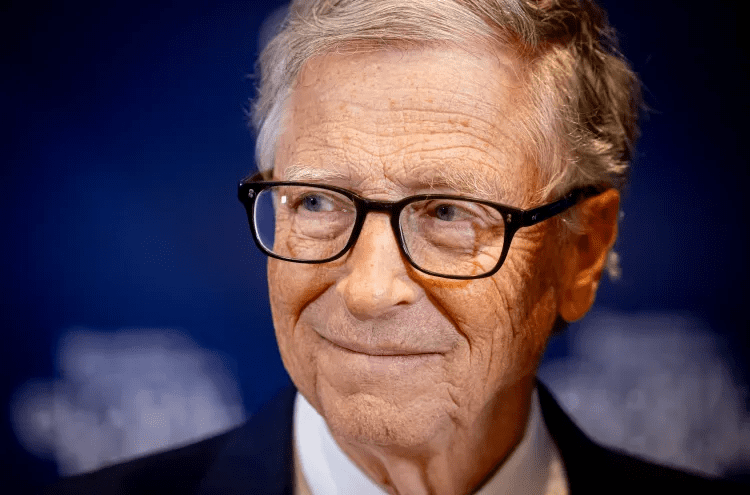
Why is Bill Gates tone policing, Microsoft co-founder and billionaire philanthropist Bill Gates is calling for a more optimistic strategy for confronting climate change, stating the world has already made tremendous progress and now must focus on improving lives by ending disease and hunger. In his latest memo, published Tuesday in anticipation of next month’s UN Climate Summit, Gates says it’s time to move beyond “doom and gloom” narratives — and not surprisingly, he sees artificial intelligence (AI) at the center of the next climate push.

why is Bill Gates tone policing?

But his message — one that was meant to be optimistic — has created a mixed reaction, with climate activists accusing him of downplaying the severity of the crisis and misunderstanding the condition of those living on the periphery of climate disasters.

Gates Calls for a Shift in Climate Strategy
image 17

In his “Three Tough Truths About Climate Change” blog entry, Gates argues that the “doomsday thinking” of the environmental movement is counterproductive. He believes it is leading governments and institutions to focus too intensely on reducing emissions in the short term, without action on more comprehensive strategies that would make life improved in a warmer world.

“Too many of the climate establishment are fixated on near-term emissions targets,” Gates wrote. “It’s diverting resources from what we can do best to make life better in a warming world.”

Gates maintains that while climate change is a risky threat, it will not trigger the “end of civilization.” Instead, he says, there must be a mix of reducing emissions and long-term development targets — namely in agriculture, health, and education.

Critics Allegue Gates Is “Dangerously Misguided”

Not everybody agrees with Gates’ view. Grassroots campaigners and environmental experts have outragedly condemned his memo as misguided and disrespectful of the plight of climate-impacted communities.

“He is seriously mistaken and misleading,” replied Stacy Malkan, co-founder of the nonprofit group U.S. Right to Know. “This kind of rhetoric risks pointing climate action in the wrong direction.”

Various critics argue that by deflecting criticism from emissions, Gates is giving important polluters a “free pass.” His reliance on technology-led solutions — such as AI-farmed crops — also fuels concerns about widening inequality and corporate control of the food supply.

AI: Solution or Two-Edged Sword?

Ironically, while Gates is an advocate for AI as solution, AI itself is exacerbating the climate problem. Microsoft, where Gates co-founded and remains extremely influential, made a commitment in 2020 to becoming carbon negative by 2030. The power-guzzling data centers that support complex AI models like ChatGPT, however, caused the company’s emissions to soar over the past few years.

Gates himself, however, remains upbeat about the benefits of AI, insisting that “the advantages outweigh the environmental costs.” In his memo, he pictures farmers using AI software to get personalized tips on planting and fertilizing crops, and health workers in developing countries using AI-enabled devices to enhance maternal care and disease prevention.

But ground officials argue that such perceptions underplay complex problems. Gabriel Manyangadze, manager of climate and food justice at the Southern African Faith Communities’ Environment Institute, says while AI gives important information, it won’t solve core issues.

“AI may give that information, but it may not assist when it comes to action,” he says. “Farmers can’t sow seeds without water.”

Manyangadze’s organization, and several others, have called for reparations from the Gates Foundation, accusing it of pushing African farmers into industrialized, corporate-controlled food systems based on expensive fertilizers and proprietary seeds — typically resulting in debt and dependency.

Overriding Climate Justice and Local Solutions

Critics continue that Gates’ paradigm also ignores the social and economic inequalities that make certain communities far more susceptible than others.

Although Gates recognizes that the poor stand to lose most from climate change, he believes they are unlikely to consider it their “biggest threat” since hunger and disease constitute greater direct threats. For people experiencing climate-driven disasters, however, the nexus between these crises is apparent.

When there’s a typhoon, you can’t fish. You can’t work in the fields,” a 17-year-old Filipino girl told reporters following Super Typhoon Haiyan in 2013 — one that displaced millions and killed thousands. Her story, alongside others, illustrates how climate change worsens poverty, migration, and even human trafficking.

“Health and Prosperity” as Climate Defense

In his three “truths,” Gates proposes that:

Climate change will not end civilization.

Temperature isn’t the optimum measure of climate advancement.

Prosperity and health are the best protectors against climate change.

He mentions the UN Human Development Index (HDI) as a better gauge of a country’s resilience in the face of climate risks, stating that improving healthcare and agriculture productivity can make countries more resilient to climate risks.

Gates’ foundation has spent billions on such initiatives, undercutting the cost of vaccine delivery, farm reform, and disease eradication programs. Critics argue that this makes climate adaptation a technocratic process — one driven by billionaire philanthropy, not bottom-up empowerment.

The Missing Piece: Accountability

Climate campaigners remind us that technological optimism should not replace responsibility. The call for “climate reparations” — compensating developing nations for the damage caused by industrialized emitters — remains one of the most urgent demands leading up to the next UN climate talks.

“Food and climate futures must be decided by the people who feed their communities, not billionaire gamblers who place bets on the next patented techno-fix,” said Loren Cardeli, strategy coordinator for A Growing Culture, a food sovereignty group.

Gates’ appeal to drive the “green premium” — the extra cost of clean technology — to zero is admirable. But it is naive, say critics. True climate justice, they say, involves confronting the perpetrators, investing in indigenous solutions, and addressing the roots of injustice — and not creating more gadgets and software.

A Divisive Vision of Hope

Bill Gates’ latest memo is just a statement of his long-standing faith that innovation will solve the world’s greatest challenges. But as climate disasters intensify — from African droughts to Caribbean hurricanes — some are questioning whether optimism unrestrained by responsibility is enough.

The world doesn’t need less alarm, its critics say — it needs more inclusive, people-driven action with a dash of pragmatism to balance out optimism.

With the UN climate negotiations approaching, one question lingers in the air:
Can the world be saved by philanthropy and technology — or will they, as some warn, simply reshape the crisis in the image of the people who can afford to ignore its most destructive impacts?


ADVERTISEMENT
RECOMMENDED
NEXT UP

OpenAI has formally replied to a wrongful-death lawsuit filed by the family of 16-year-old Adam Raine, contending that the tragedy was due to what it called the teen’s “misuse” and “unauthorized use” of ChatGPT – and not from the chatbot’s design or behavior.

The legal response, first reported by NBC News, marks the company’s first detailed rebuttal since the lawsuit was filed in August in California Superior Court. The case has drawn nationwide attention because it centers on a difficult and deeply emotional question: What responsibility do AI developers have when their products are used in sensitive or dangerous ways by minors?

OpenAI Cites Terms of Use and Section 230 Protections

In its court filing, OpenAI said Raine’s death was the result of actions outside the intended scope of the platform, pointing to several violations of its terms of use. Those terms restrict access by minors without parental consent and prohibit using the system for discussions involving self-harm.

The company also invoked Section 230 of the Communications Decency Act, a long-standing legal shield that limits liability for online platforms when it comes to user interactions and user-generated content. OpenAI argued that the family’s claims are barred under that federal protection.

Company: ChatGPT Kept Telling Him to Get Help

image 12

According to reporting from NBC News and Bloomberg, OpenAI told the court that ChatGPT repeatedly encouraged Raine to reach out to crisis-support resources, such as helplines, mental-health professionals, and trusted adults. The company said these reminders appeared more than 100 times throughout his months-long conversations.

“A full reading of his chat history shows that his death, while devastating, was not caused by ChatGPT,” said OpenAI, insisting that the AI system didn’t encourage dangerous actions and was never designed to provide support in high-risk emotional situations.

Family Says Responsibility Lies With OpenAI’s Product Design

The Raine family, on the contrary, believes that the teenager became increasingly dependent on the chatbot, which they argue evolved from a helpful academic tool to an emotional one, actually worsening his distress.

Their lawsuit alleges that “intentional design choices” at the time of the rollout of GPT-4o, one of OpenAI’s most advanced models, made for an environment that could mislead and manipulate vulnerable users. They also say the company failed to build appropriate safeguards to protect minors.

The complaint points out that GPT-4o’s release helped fuel OpenAI’s valuation jump from $86 billion to around $300 billion. It accuses the company of putting rapid product growth ahead of safety.

OpenAI Says Excerpts from Family Lack Context

In a Tuesday blog post, OpenAI addressed the public controversy for the first time since the lawsuit gained national headlines. The company said it would defend itself “with respect for the complexity and human impact” surrounding the case, noting that some excerpts in the family’s complaint were taken from longer messages that “require more context.”

The full transcripts were filed under seal with the court by OpenAI, meaning they are not publicly available.

New Safeguards Rolled Out After Lawsuit

The day after the lawsuit was filed, OpenAI announced the introduction of parental controls on its platform-a feature many safety experts had been urging for months. Since then, the company has rolled out additional safeguards aimed at helping protect teens when conversations get emotionally sensitive.

These changes include stronger detection of crisis-related language and more consistent redirection to appropriate help resources.

A Landmark Case for the AI Industry

The lawsuit comes at a time when regulators, lawmakers, and parents are increasingly concerned about how AI interacts with young users. With more teens turning to chatbots for help with everything from academics to companionship, experts say the case could set an important legal precedent about the responsibilities of AI developers. Both sides are preparing for what could be one of the first major court battles testing AI liability, youth safety and the limits of Section 230 in the age of advanced artificial intelligence.

The Trump administration has officially disbanded the Department of Government Efficiency-an experimental, Musk-backed federal cost-cutting initiative-months before its expected mandate was set to expire. The abrupt dissolution brings an end to one of Trump’s most controversial government reform projects.

According to a Reuters report published over the weekend, DOGE has effectively gone out of business-a demise many sources called the end of a high-profile effort led by billionaire entrepreneur Elon Musk and a team of advisers drawn largely from his private-sector companies that had set out to overhaul federal spending, eliminate what the administration called “rampant waste,” and cut the federal workforce.

A Short-Lived Experiment in Government “Efficiency”

Created through an executive order by former President Donald Trump back in January, the project was intended to run nearly two years, positioning Musk as the unofficial head of a sweeping attempt to reshape federal operations using Silicon Valley–style efficiency models.

However, by early November, the unit had already dissolved.

“DOGE doesn’t exist,” Scott Kupor, director of the U.S. Office of Personnel Management, or OPM, which oversees federal hiring and HR policies, told staff Wednesday in a virtual meeting. His comments marked the end of a months-long effort that already had drawn intense criticism from lawmakers, federal unions and government watchdogs.

Kupor explained further on X that, although DOGE does not have any “centralized leadership” at the U.S. Digital Service anymore, the administration still adheres to its core principles of streamlining government processes, cutting unnecessary bureaucracy and reducing regulatory hurdles.

Internal Confusion and Public Denials

image 9

The sudden collapse of DOGE sent shockwaves within the federal workforce. Amy Gleason, named this year as the acting administrator of DOGE, took to Twitter in response to stories of the unit’s demise, posting a meme — an homage to the viral “Doge” dog — captioned “I’m alive,” which suggested internal communication regarding the unit’s status was fractured or unclear.

Despite these contradictions, sources say DOGE’s central operations have been inactive for weeks.

Claims of Billions Saved — But Critics Dispute the Math

During its short life, DOGE often boasted that its aggressive cuts had saved taxpayers “billions of dollars.” Those figures, though, were both unverified and inflated, lawmakers and policy experts say. Critics maintain the initiative caused much more harm than good by tearing down vital government services without proper impact analysis or measurable savings.

Perhaps the most controversial move attributed to DOGE was its association with shuttering the U.S. Agency for International Development, a major global humanitarian relief organization. That decision left millions around the world without access to crucial aid programs and international partners who blamed the decision for exacerbating global crises including famine and the spread of diseases.

Security Concerns and Data Risks

DOGE also faced accusations of egregious data security failures. During the course of its operations, staff were said to have accessed highly sensitive federal databases containing personal information on millions of Americans. A number of watchdog groups warned that the DOGE personnel-many of whom had minimal to zero government clearance-were a serious cybersecurity risk, exposing federal systems to foreign adversaries or internal misuse.

Musk’s Exit and Growing Legal Fears Among DOGE Staff

Elon Musk left the project this year amid a highly publicised falling-out with President Trump, which further destabilised leadership of DOGE.

Reports from Politico show that a number of former DOGE staffers are concerned about potential future criminal exposure. Apparently, without protection from Musk or the possibility of presidential pardons, some believe that they might be held responsible for things they did during the operation of DOGE.

Where DOGE Staffers Are Now

According to Reuters, several former DOGE employees have moved to other federal agencies while others have left government altogether. One of DOGE’s most recognizable staffers, Edward Coristine — who became a viral figure online under the nickname “Big Balls” — announced on X in June that he was “officially out” of DOGE. The long-term impact of DOGE’s brief overhaul has yet to be seen, but analysts say its explosion illuminates ongoing hurdles in combining private-sector disruption culture with the structure and protections needed at the federal level of government.

ADVERTISEMENT
Receive the latest news

Subscribe To Our Weekly Newsletter

Get notified about new articles