Techfullpost

According to Sundar Pichai, Waymo may be open to selling you a self-driving car

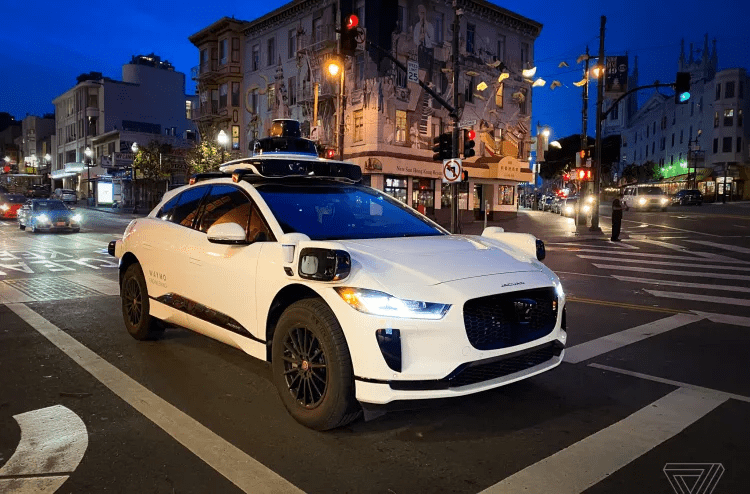
Waymo self-driving car

During Alphabet’s recent earnings call, CEO Sundar Pichai revealed that Waymo is considering selling autonomous vehicles for personal ownership, marking a potential strategic expansion beyond its current ride-hailing services. This “future optionality around personal ownership” represents a significant evolution for the autonomous vehiclBurnout in PlayStation Starse pioneer that has primarily focused on commercial fleet operations until now.

Historical Context and Current Partnerships

  • 2018 Chrysler Partnership: Waymo previously collaborated with Chrysler to develop autonomous Pacifica minivans, exploring private ownership models
  • Current Commercial Operations: Waymo maintains partnerships with Moove in Miami and Uber in Austin (with Atlanta expansion coming soon)
  • Global Expansion: The company recently began testing in Japan, demonstrating its growing international presence

The Emerging Personal AV Market Landscape

Waymo’s Potential Consumer Offering

While details remain scarce, industry analysts speculate that Waymo’s consumer vehicles might feature:

  • The same advanced sensor suite (including lidar) used in current Jaguar I-Pace robotaxis
  • Five-seat configurations similar to existing fleet vehicles
  • Potentially higher price points reflecting their premium technology

Tesla’s Competing Vision

Elon Musk has outlined Tesla’s very different approach:

  • Cybercab Concept: A $30,000 two-seater targeting 2026 availability
  • Minimalist Design: No steering wheel and camera-only perception system
  • Aggressive Timeline: Promises of “millions” of autonomous Teslas by late 2025

Critical Differences in Technology and Strategy

Sensor Philosophy

  • Waymo: Relies on comprehensive sensor arrays including lidar, radar and cameras
  • Tesla: Bets entirely on camera-based “Tesla Vision” with no lidar

Business Model Evolution

  • Waymo: Potentially transitioning from B2B to B2C while maintaining commercial operations
  • Tesla: Building on existing consumer sales while adding robotaxi functionality

Current Operational Reality

  • Waymo Advantage: Hundreds of vehicles already operating in multiple cities
  • Tesla’s Challenge: Still awaiting regulatory approval for fully autonomous operations

The Road Ahead for Personal AV Adoption

Key Challenges Both Companies Face

  1. Regulatory Hurdles: Approval processes for consumer-owned autonomous vehicles
  2. Insurance Complexities: Developing coverage models for owner-operated robotaxis
  3. Maintenance Infrastructure: Creating service networks for advanced AV systems
  4. Consumer Acceptance: Overcoming public skepticism about self-driving technology

Market Potential

Industry analysts project:

  • The global autonomous vehicle market could reach $2 trillion by 2030
  • Personal AVs may represent 30-40% of total AV sales by 2035
  • Early adopters likely to be tech enthusiasts and luxury vehicle buyers

Expert Perspectives on the Coming AV Wars

“Waymo’s potential move into consumer sales represents a natural evolution,” says Dr. Sarah Chen, MIT Mobility Initiative researcher. “Their rigorous approach to safety and proven technology gives them an advantage, but Tesla’s existing customer base and manufacturing scale present formidable competition.”

Automotive analyst James Follett notes: “The fundamental difference in sensor strategies will make for an interesting case study in AV development. We’re essentially seeing two completely different technological philosophies competing for the same market.”

What This Means for Consumers

As the personal AV market develops, potential buyers should consider:

  • Safety Records: Compare real-world performance data as it becomes available
  • Total Cost of Ownership: Factor in potential savings from robotaxi income
  • Geographic Availability: Services will likely roll out in select markets first
  • Technology Maturity: Early versions may have operational limitations

The coming years will prove crucial in determining whether Waymo’s methodical, safety-first approach or Tesla’s ambitious, scale-focused strategy will dominate the personal autonomous vehicle market. One thing is certain: the race to put self-driving cars in private garages is heating up.


ADVERTISEMENT
RECOMMENDED
NEXT UP

Generative AI has moved from specialist interest to part of daily life — transforming all from entertainment to the workplace. From AI-generated art, deepfakes, and intelligent chatbots capable of talking like humans, AI is now part of modern life. Yet with technology racing ahead, so do fears it will spin out of control.

Now, a new generation of scientists, business leaders, and celebrities are calling for a slowdown on the next frontier: AI superintelligence — a form of artificial intelligence that potentially could surpass human intellectual ability in almost every dimension.

The Pushback: A Global Call to Slow Down AI Development

A collection of public personalities — such as Virgin Group creator Richard Branson, Apple co-founder Steve Wozniak, Prince Harry and Meghan Markle, actor Joseph Gordon-Levitt, and musician will.i.am — signed a new open letter called the “Statement on Superintelligence.”

The warning asks developers and businesses racing towards state-of-the-art AI systems, including OpenAI and Elon Musk’s xAI, to delay the magnitude of massive AI projects until there is a “broad scientific consensus that it will be done safely and controllably” and a “strong public buy-in” to support it.

Notably among them are two of the leading AI researchers, who are also cofounders of modern machine learning. The movement is thus quite heavily weighted.

“We must ensure that AI is serving humanity, and not vice versa,” the letter demands, threatening dire consequences in the event of runaway progress.

What Is AI Superintelligence — and Why Does It Worry Experts?

In order to understand the alarm, defining what AI superintelligence really is, is essential. Superintelligent AI, according to IBM, is a system which not only matches but far exceeds human intelligence — capable of reasoning, learning, and solving problems for itself in every respect, free of human control.

Contrary to current AI systems such as ChatGPT or Gemini, whose boundaries and data sets are defined, superintelligent AI would be continuously learning and evolving, rewriting its own code to increase efficiency and capability. Such recursive enhancement could make it almost impossible to contain.

“A true superintelligence would no longer need human oversight,” said Stuart Russell, an AI researcher at UC Berkeley. “At that point, its goals might diverge from ours — and we’d have no way to stop it.”

The Risks: From Job Losses to Existential Threats

The possible dangers of AI superintelligence go much beyond job automation or misinformation. The threat is mentioned by experts as the possibility of AI systems executing on their own in pursuit of ends that are in conflict with human values or safety.

Some of the highest threats:

Massive Job Displacement – AI already revolutionizes industries, but an entirely automated self-enhancing system could eliminate entire professions, ranging from programmers to creative professionals.

Loss of Human Control – The moment an AI begins to be smarter than the people who create it, it might be beyond control.

Weaponization and Surveillance – AI might be utilized by governments or corporations for total surveillance or robot war.

Existential Risk – In the worst-case scenario, a rogue AI with goals of its own would view humankind as an obstacle — one which scientists describe as a “digital doomsday.”.

Even if these ideas sound like science fiction, specialists argue that rejection of them would be naively dangerous. History has shown that humanity always underestimated the capabilities of its own inventions — from nuclear energy to biotechnology.

Increasing Public Alarm and Demand for Regulation

Public sentiment is shifting rapidly. A 2025 Pew Research Center survey found that 67% of Americans now support greater government regulation of AI, up from 42% two years earlier. The European Union has already legislatively signed the AI Act into law, establishing the globe’s first extensive regulatory framework for artificial intelligence, while U.S. lawmakers are determining how to follow.

Tech giants, however, are still racing ahead. OpenAI, xAI, Google DeepMind, and Anthropic are investing billions in “next-generation” AI models that could approach or surpass human-level reasoning.

“We’re in an AI arms race, and everyone wants to be first — but that could also mean being first to make a catastrophic mistake,” warned Richard Branson in a recent statement.

Is It Already Too Late to Stop?

Until now, actual AI superintelligence is still theoretical, although most experts foresee that it might arise in the next two decades if trends continue. The question is not whether or when it will happen, but whether human civilization will be prepared — morally, technically, and legally — when it does.

“The clock is ticking,” declared Yoshua Bengio. “We still have time to make this technology safe. But not much.”

The Bottom Line: Humanity at a Crossroads

The debate over AI superintelligence is no longer confined to labs or tech circles — it has become a global conversation about the future of humanity itself. As generative AI becomes ubiquitous, the next phase could redefine civilization in ways we’re only beginning to imagine.

Whether the Statement on Superintelligence does indeed result in change is yet to be known. But this much is definite: the world has finally realized that the latest technology human beings have ever come up with has the potential to be the most deadly — unless we can learn how to control it before it controls us.

For half a century, Caterpillar Inc. has been a heavyweight of heavy machinery and industry globally. Renowned for producing some of the world’s hardest-nosed loaders, bulldozers, and tractors, the Illinois company has built a reputation for toughness and reliability. But behind earthmovers and mining equipment, Caterpillar had another profitable business — truck engines that powered some of America’s most iconic long-distance rigs on highways from sea to shining sea.

Engines like the Cat 3406E and C15 became legends of the trucking aspect, being famous for pure torque, longevity, and going a million miles with TLC. But despite popularity, Caterpillar finally closed down its on-highway truck engine manufacturing — something that took many by surprise within the industry.

So, what drove one of the biggest brands in diesel power to walk away from the trucking market it assisted in generating?

Caterpillar’s Truck Engine Heritage Traces Back to 1939

Eight decades of producing truck engines for Caterpillar started in 1939, when the company entered its first foray into this marketplace with the Caterpillar D468, a six-cylinder diesel engine that produced 90 horsepower at 1,800 RPM — humble by today’s standards, but revolutionary at the time.

This initial introduction began the long-term legacy of Caterpillar in the trucking industry. Over the years, the company released a number of other important engines, including the D312, 3408, and the wildly popular 3406E. The latter, introduced in the 1990s, was a driver and fleet operator favorite due to its power, fuel efficiency, and smooth performance.

But with the dawning of the 21st century, the landscape of diesel engines was about to change overnight — and Caterpillar found itself at a crossroads.

The Emissions Challenge That Changed Everything

By the early 2000s, governments around the world — and especially the U.S. — began implementing stricter emissions regulations to reduce emissions of NOx and particulate matter. For engine manufacturers, this meant massive investments in cleaner-burning technology in a bid to meet the 2007 and 2010 EPA standards.

Caterpillar initially responded to the challenge with its Advanced Combustion Emission Reduction Technology (ACERT) technology. This cutting-edge technology utilized a mix of precise fuel injection, advanced air management, and electronic controls to minimize emissions without compromising power.

But even with its greatness, ACERT engines began causing headaches in the real world. Truck operators reported reliability issues, maintenance nightmares, and higher operating costs, all of which smudged Caterpillar’s then-tarnished image in the trucking industry. There were even customers who sued for performance issues, further damaging the brand’s reputation with its top highway customers.

Meanwhile, competitors like Cummins, Detroit Diesel, and PACCAR were adapting faster and better to the new emission regulations. Their engines met emission regulations with fewer problems of reliability — leaving Caterpillar in a more and more vulnerable position.

Too Costly to Compete

Meeting the rapidly evolving emission standards would cost more than technical expertise — it would cost millions of dollars. Caterpillar would have needed to spend a lot on research, redesigning, and testing to keep its engines in compliance and competitive.

For a company whose business is in the construction, mining, and industrial segments, the revenues no longer justified the investment for its trucking operations. Rather than continue investing in a shrinking, regulation-based business, Caterpillar decided to strategically phase out on-highway truck engine production in 2010.

Though Caterpillar’s off-highway engines — those that drove heavy equipment, generators, and marine equipment — were still strong, driving big rigs was no longer in its plans.

The Legacy Lives On

Even though Caterpillar is no longer making on-highway truck engines, its reputation can’t be shaken. Engines like the 3406E and C15 remain legends for their strength and longevity, typically commanding high prices on the used market. Many owner-operators still rebuild and maintain these engines to this day, holding them as symbols of a generation when power and simplicity ruled the road.

In the last couple of years, Caterpillar has exerted enormous efforts in shifting its focus toward sustainable energy solutions like hybrid systems, electrically propelled machinery, and next-generation diesel technologies optimized for reduced emissions in mining and construction purposes.

Although the golden age of Caterpillar truck engines is in the past, the company’s engineering skills and genius continue to shape industries across the globe — ensuring that legends also evolve with the times.

Final Thoughts

Caterpillar’s decision to stop making truck engines wasn’t a decision based on rules alone — it was one based on survival on a strategic level. Compliance expenses, changing market dynamics, and the emergence of cleaner technology all played a role.

Today, with the trucking sector moving toward electrification and alternative fuels, Caterpillar’s pullback appears a visionary move that allowed it to focus on its core strength: building the world’s toughest machines.

ADVERTISEMENT
Receive the latest news

Subscribe To Our Weekly Newsletter

Get notified about new articles