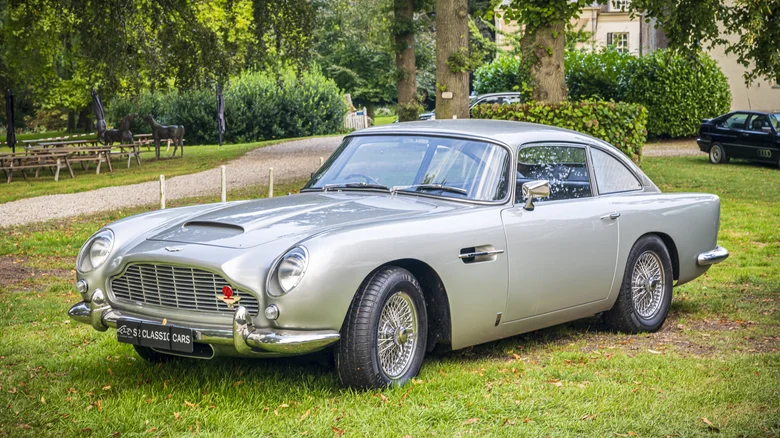
The 1963 Aston Martin DB5 remains one of the most recognizable cars ever built, largely because of its association with James Bond. Aston Martin itself calls the DB5 the “most famous car in the world” and the “most beautiful Aston Martin ever made.” Those are strong statements from the manufacturer, but the car’s design backs them up. The large, refined grille and chrome accents give it a look that still turns heads more than six decades after its debut.
Looks aside, the real question is whether the DB5 delivered performance to match its reputation. For 1963, the answer was yes. The car reached 60 miles per hour in 7.1 seconds and hit a top speed of 142 mph, numbers that placed it among the quicker production cars of its day.
A Faster Predecessor
What’s surprising is that the DB5 wasn’t actually faster than the model it replaced. The DB4 GT, a lighter trim of the earlier DB4, could top 150 mph, making it one of the fastest cars available at the time. Aston Martin built the DB5 with more weight than its predecessor, which meant engineers had to compensate elsewhere to keep performance competitive.
Engine and Design Changes
That compensation came in the form of a larger engine. The DB5 used a straight-six engine bored out to 4.0 liters, up from the DB4’s displacement, specifically to offset the added weight. The DOHC engine produced 286 horsepower and 280 lb-ft of torque at 4,500 rpm, a gain of 42 horsepower over the DB4. Aston Martin also paired the new engine with an upgraded five-speed manual gearbox, giving drivers more control over how that power reached the road.
The combination worked. Even without claiming the outright speed record among Aston Martins of the era, the DB5 offered a balance of power, handling, and comfort that made it a standout grand tourer.
How Goldfinger Changed Everything
Speed wasn’t what made the DB5 a legend. That came down to a single film. When the DB5 appeared in “Goldfinger” in 1964, it introduced moviegoers to a version of the car equipped with machine guns, tire slashers, a rotating license plate, and an ejector seat. The gadgets turned a well-engineered sports car into a cultural symbol, and the film cemented an association between Aston Martin and Bond that continues in the franchise today.
Despite the gadgets, the DB5 in “Goldfinger” still had to function as a real car on screen. It needed enough speed and handling to make chase scenes convincing, and it delivered, outrunning Goldfinger’s henchmen in the kind of sequence that became a template for spy films afterward.
What the Original Prototype Is Worth Today
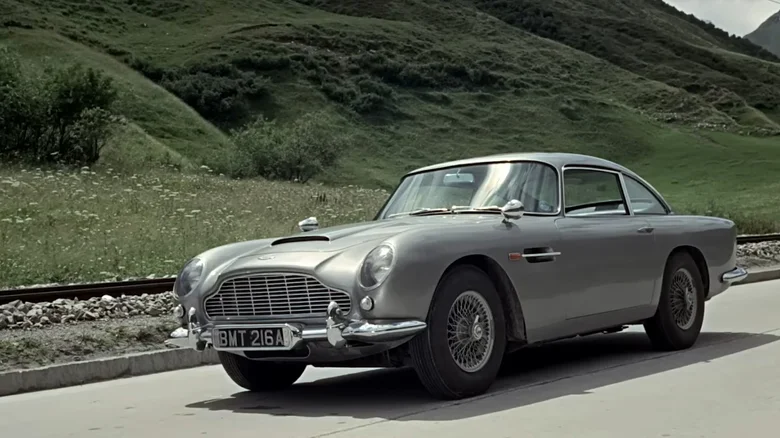
The value of that connection to Bond shows up clearly in the collector market. The original DB5 prototype used in the films, which went on to appear in eight Bond movies total, sold for $4.6 million in 2010. That price reflects not just the car’s engineering or rarity, but the specific cultural weight of its film history. Few production cars carry that kind of premium purely because of a movie role.
A Car That Earned Its Reputation
The DB5’s legacy rests on more than one strength. It combined genuine engineering improvements, including a larger engine and better transmission, with a design that Aston Martin and enthusiasts alike still consider among the best the brand has produced. Then the Bond films added a layer of cultural recognition that few cars from any era have matched.
It didn’t need to beat the DB4 GT’s top speed to become the car people picture when they think of Aston Martin. The DB5 proved that a well-rounded sports car, backed by strong engineering and the right cultural moment, can outlast faster, more powerful rivals in terms of lasting recognition. Over 60 years later, it still does.