Techfullpost

Apple sues Openai over trade secrets in escalating hardware fight

Apple trade secrets OpenAI

Apple filed a lawsuit against OpenAI on Friday, accusing the ChatGPT maker and two former Apple employees of stealing trade secrets to speed up its move into consumer hardware. The suit marks a sharp turn in a relationship that has grown increasingly tense.

The complaint, filed in the U.S. District Court for the Northern District of California, claims OpenAI ran a coordinated effort to obtain and use Apple’s confidential information through former staff, hiring practices and supplier ties. Apple says this helped OpenAI push into the hardware business faster than it could have on its own.

OpenAI pushed back in a statement. “We have no interest in other companies’ trade secrets,” the company said. “We remain focused on building innovative technology that empowers people everywhere.”

At stake is control over what future AI devices will look like, and whether they’ll rely on apps and operating systems the way phones do now. If OpenAI succeeds in building a device that competes for consumer attention, it could cut into iPhone sales. Analysts say OpenAI is already working on a phone or some other physical product.

The lawsuit lands just days after OpenAI beat back a legal challenge from Elon Musk’s xAI, so the company is fighting on two fronts.

Paolo Pescatore, an analyst at PP Foresight, said the dispute reflects how much the two companies’ interests have diverged. “Apple sees OpenAI moving from partner to potential rival, while OpenAI is trying to reduce its dependence on the iPhone and build a direct relationship with consumers,” he said. “Even if the allegations are not proven, the lawsuit could delay OpenAI’s hardware ambitions and further weaken what is already becoming an increasingly fragile partnership.”

Two former employees named

image

The lawsuit names Chang Liu, a former senior system electrical engineer at Apple, and Tang Yew Tan, who served as vice president of product design for the iPhone and Apple Watch before leaving. Neither responded to requests for comment.

Apple alleges Liu never returned a company laptop and later exploited an authentication bug to get into Apple’s internal network, where he downloaded dozens of confidential hardware files.

Tan, who now leads hardware at OpenAI, worked on the iPhone for most of his 24 years at Apple, according to his LinkedIn profile. Apple claims Tan spent his final months at the company emailing himself information about Apple’s suppliers and internal industry summaries, calling it a methodical effort to benefit OpenAI before he left.

Apple also alleges Tan told colleagues to bring Apple parts to job interviews at OpenAI for “show and tell” sessions. In one instance cited in the filing, an OpenAI job candidate reportedly said he “didn’t even know we could take those from the office.”

The suit names OpenAI Foundation, OpenAI Group PBC and io Products, the hardware startup OpenAI acquired, as additional defendants.

Apple says it tried to raise the issue first

According to the complaint, Apple wrote to OpenAI in February to flag concerns that its confidential information was reaching the company, and asked to discuss it. Apple says it never got a response.

More than 400 former Apple employees now work at OpenAI, the filing states, and Apple acknowledges that some of them naturally carry knowledge of its trade secrets. But the company argues that doesn’t give OpenAI license to use that information.

“That OpenAI now employs people who were once entrusted with Apple’s trade secrets does not entitle OpenAI to use that information to jumpstart its hardware efforts,” Apple wrote in the complaint.

The filing also claims OpenAI employees approached Apple suppliers for confidential details, and in one case got a supplier to carry out a proprietary metal-finishing technique, believing OpenAI had Apple’s permission to use it.

Legal experts weigh in

Mark Lemley, a professor at Stanford Law School, said Apple’s complaint “has the potential to be a very big case.” He noted that some of what Apple describes, like OpenAI hiring hundreds of former Apple staff, isn’t illegal under California law, which generally allows employees to move freely to competitors.

“But if Apple’s claims that the employees took confidential documents with them, and that OpenAI is using those documents, are true, that is a problem for OpenAI,” Lemley said.

Camilla Hrdy, a law professor at Rutgers Law School, said the case is likely to get complicated because most past trade secret disputes involving AI have centered on software, not hardware.

“These trade secret lawsuits are frequently brought in the tech space, and we usually learn much, much more as the case develops,” Hrdy said. “OpenAI is not a defendant that can’t afford to defend itself.”

A partnership under strain

A person familiar with the matter told Reuters in May that OpenAI had been weighing legal options against Apple of its own, including notifying Apple of a possible breach of contract without necessarily filing a full lawsuit.

The two companies had been working together as recently as 2024, when Apple folded OpenAI’s ChatGPT into its Apple Intelligence system, giving Siri and other apps access to it. Under that partnership, iPhone users can get ChatGPT answers through Siri and sign up for ChatGPT memberships directly from their phone’s settings menu.

Apple rolled out a long-delayed overhaul of Siri last month, two years after first promising the upgrades and repeatedly pushing back the timeline.

OpenAI, meanwhile, has been building out its own hardware ambitions. Last year, it bought io Products, a startup founded by former Apple design chief Jony Ive, in a deal worth $6.5 billion. Ive is not named as a defendant in Apple’s lawsuit.

ADVERTISEMENT
RECOMMENDED
NEXT UP

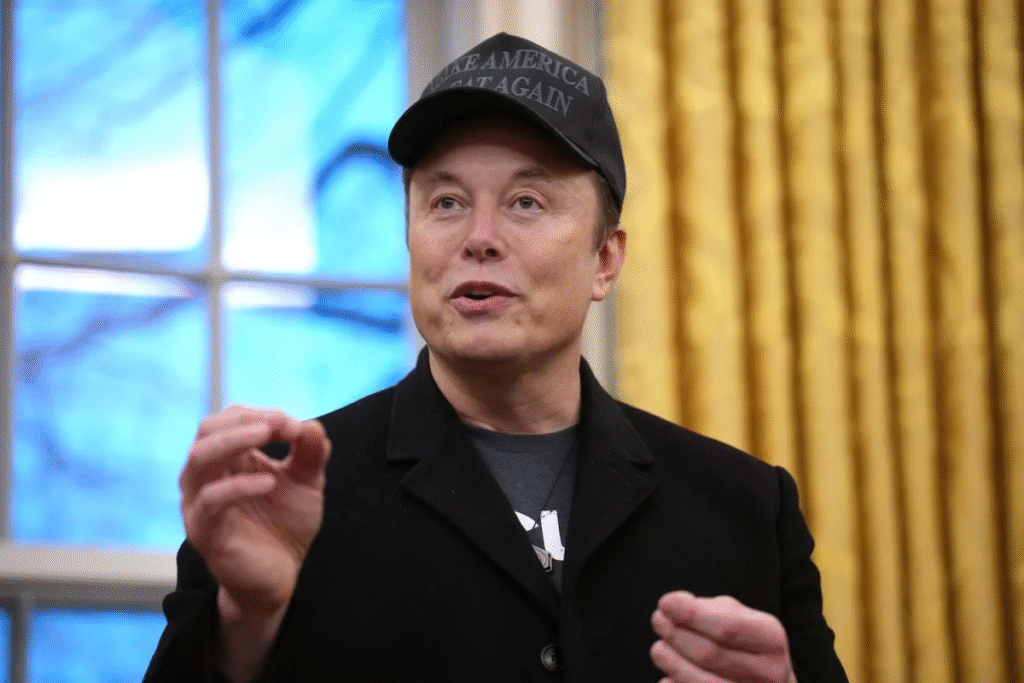
The Trump administration has officially disbanded the Department of Government Efficiency-an experimental, Musk-backed federal cost-cutting initiative-months before its expected mandate was set to expire. The abrupt dissolution brings an end to one of Trump’s most controversial government reform projects.

According to a Reuters report published over the weekend, DOGE has effectively gone out of business-a demise many sources called the end of a high-profile effort led by billionaire entrepreneur Elon Musk and a team of advisers drawn largely from his private-sector companies that had set out to overhaul federal spending, eliminate what the administration called “rampant waste,” and cut the federal workforce.

A Short-Lived Experiment in Government “Efficiency”

Created through an executive order by former President Donald Trump back in January, the project was intended to run nearly two years, positioning Musk as the unofficial head of a sweeping attempt to reshape federal operations using Silicon Valley–style efficiency models.

However, by early November, the unit had already dissolved.

“DOGE doesn’t exist,” Scott Kupor, director of the U.S. Office of Personnel Management, or OPM, which oversees federal hiring and HR policies, told staff Wednesday in a virtual meeting. His comments marked the end of a months-long effort that already had drawn intense criticism from lawmakers, federal unions and government watchdogs.

Kupor explained further on X that, although DOGE does not have any “centralized leadership” at the U.S. Digital Service anymore, the administration still adheres to its core principles of streamlining government processes, cutting unnecessary bureaucracy and reducing regulatory hurdles.

Internal Confusion and Public Denials

image 9

The sudden collapse of DOGE sent shockwaves within the federal workforce. Amy Gleason, named this year as the acting administrator of DOGE, took to Twitter in response to stories of the unit’s demise, posting a meme — an homage to the viral “Doge” dog — captioned “I’m alive,” which suggested internal communication regarding the unit’s status was fractured or unclear.

Despite these contradictions, sources say DOGE’s central operations have been inactive for weeks.

Claims of Billions Saved — But Critics Dispute the Math

During its short life, DOGE often boasted that its aggressive cuts had saved taxpayers “billions of dollars.” Those figures, though, were both unverified and inflated, lawmakers and policy experts say. Critics maintain the initiative caused much more harm than good by tearing down vital government services without proper impact analysis or measurable savings.

Perhaps the most controversial move attributed to DOGE was its association with shuttering the U.S. Agency for International Development, a major global humanitarian relief organization. That decision left millions around the world without access to crucial aid programs and international partners who blamed the decision for exacerbating global crises including famine and the spread of diseases.

Security Concerns and Data Risks

DOGE also faced accusations of egregious data security failures. During the course of its operations, staff were said to have accessed highly sensitive federal databases containing personal information on millions of Americans. A number of watchdog groups warned that the DOGE personnel-many of whom had minimal to zero government clearance-were a serious cybersecurity risk, exposing federal systems to foreign adversaries or internal misuse.

Musk’s Exit and Growing Legal Fears Among DOGE Staff

Elon Musk left the project this year amid a highly publicised falling-out with President Trump, which further destabilised leadership of DOGE.

Reports from Politico show that a number of former DOGE staffers are concerned about potential future criminal exposure. Apparently, without protection from Musk or the possibility of presidential pardons, some believe that they might be held responsible for things they did during the operation of DOGE.

Where DOGE Staffers Are Now

According to Reuters, several former DOGE employees have moved to other federal agencies while others have left government altogether. One of DOGE’s most recognizable staffers, Edward Coristine — who became a viral figure online under the nickname “Big Balls” — announced on X in June that he was “officially out” of DOGE. The long-term impact of DOGE’s brief overhaul has yet to be seen, but analysts say its explosion illuminates ongoing hurdles in combining private-sector disruption culture with the structure and protections needed at the federal level of government.

Meta is betting big, perhaps too big, on artificial intelligence. As the global race to build AI infrastructure heats up, the social media giant is investing billions into what it believes will define the next era of computing. But as Wall Street’s latest reaction shows, not everyone is buying it.

The company, whose chief executive is Mark Zuckerberg, is constructing two giant data centers in the U.S. as part of a wider AI expansion. U.S. tech companies collectively will invest as much as $600 billion in infrastructure over the next three years, according to estimates from industry insiders, with Meta as one of the biggest spenders.

But as Silicon Valley celebrates the AI boom, investors are asking one question: whether Meta’s spending spree is sustainable, let alone strategic.

Earnings Reveal Soaring Costs — and Investor Doubts

Meta’s latest quarterly report showed a sharp rise in costs: operating expenses were up $7 billion year over year and capital expenditures rose nearly $20 billion, largely driven by the acquisition of AI infrastructure and talent. The company generated $20 billion in profit for the quarter, but investors focused on the ballooning expenses — and the lack of clear AI monetization.

During the earnings call, Zuckerberg defended the aggressive spending.

“The right thing is to accelerate this — to make sure we have the compute we need for AI research and our core business,” he said. “Once we get the new frontier models from our Superintelligence Lab (MSL) online, we’ll unlock massive new opportunities.”

But the reassurance didn’t land. Meta’s stock sank 12% by Friday’s close, wiping out more than $200 billion in market value within days.

Big Spending, Small Returns (For Now)

While Meta isn’t alone in its AI splurge – Google, Microsoft, Nvidia, and OpenAI are also spending billions on computing – the key difference is in the results. Google and Nvidia are already experiencing strong revenue growth thanks to AI, while OpenAI, although much more risky, has one of the fastest-growing consumer products in history, generating around $20 billion a year.

But Meta has yet to introduce the blockbuster AI product that would seem to justify the astronomical spending.

Its flagship Meta AI assistant reportedly serves over a billion users, but this is largely a factor of its embedding across Facebook, Instagram, and WhatsApp rather than organic adoption. Analysts say it still lags far behind in functionality and brand strength compared to competitors such as ChatGPT and Claude.

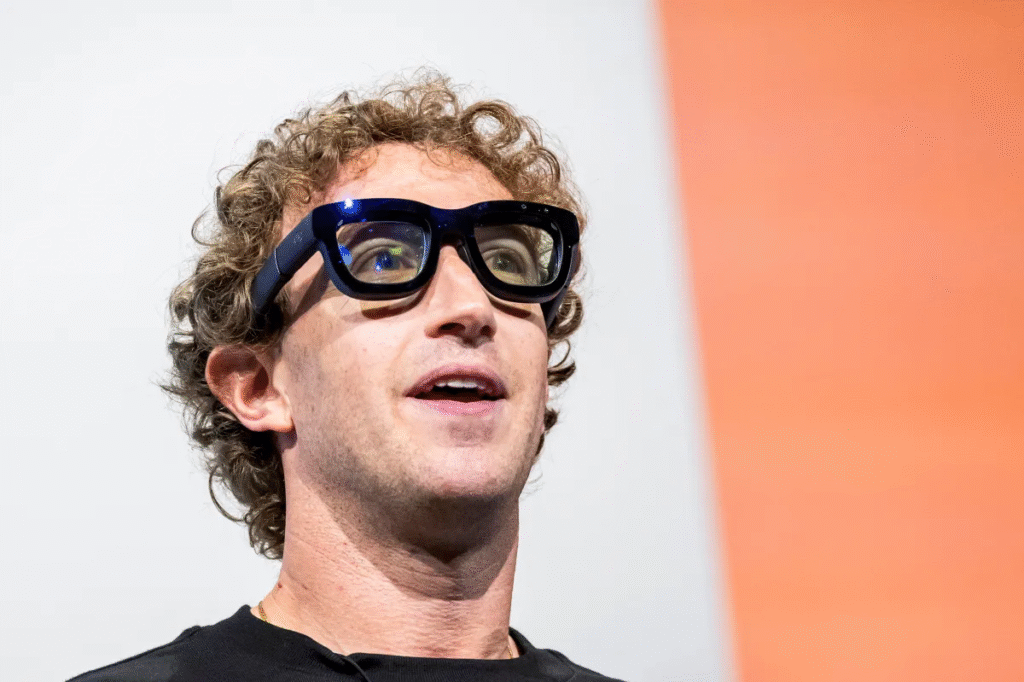
Meanwhile, Meta’s Vibes video generator, which gave the company a fleeting bump in engagement, has yet to prove its commercial viability. And while the Vanguard smart glasses it introduced with Ray-Ban do hold some promise for combining AI and augmented reality, they’re still more prototype than core business driver.

Zuckerberg’s Vision: Superintelligence and the Future

image 3

Undeterred by the skepticism, Zuckerberg insists Meta’s AI ambitions are only just getting started. He said the company’s Superintelligence Lab, or MSL, is working on next-generation “frontier models” that will power classes of products entirely new.

“It’s not just Meta AI as an assistant,” Zuckerberg said. “We expect to build new models and products — things that redefine how people and businesses interact with technology.”

Yet, he didn’t provide any details or timelines-a thing that frustrated analysts, who wanted some concrete projections. The promise of “more details in the coming months” wasn’t enough to calm investor nerves.

The AI Bubble Question

A massive infrastructure build-out at Meta has revived fears that the technology industry might be inflating yet another bubble. With tens of billions of dollars pouring into GPUs, data centers, and AI labs, some analysts warn that valuations in the sector are running ahead of tangible outcomes.

Yet, others argue that Meta’s financial position gives it more room to experiment. Unlike many AI startups, Meta still has a profitable advertising empire to fall back on. Its 3 billion monthly active users across its apps provide an unmatched data advantage — if it can find a compelling AI use case.

Where Does Meta Go From Here?

The direction of the company is not determined. Fundamental strategic questions are still hanging:

Will Meta use its vast personal data ecosystem to challenge OpenAI and Anthropic directly?

Does it want to integrate AI-powered advertising and business tools for enterprises?

Or will it shift to immersive consumer products, merging AI with AR/VR in the metaverse?

For now, those answers remain elusive. One thing is for sure: Zuckerberg is playing the long game, one that could either solidify Meta’s role in the next era of computing or turn into one of Silicon Valley’s most expensive miscalculations. As the AI arms race accelerates, Meta’s challenge isn’t just to build smarter machines — it’s to convince investors, and the world, that the company still knows where it’s going.

ADVERTISEMENT
Receive the latest news

Subscribe To Our Weekly Newsletter

Get notified about new articles