Techfullpost

Tesla Secures Ride-Hail Permit in California: A Step Closer to Its Robotaxi Dream

Tesla Secures Ride-Hail Permit

In a significant move toward realizing its ambitious robotaxi vision, Tesla has been granted a ride-hail permit by the California Public Utilities Commission (CPUC). This permit marks a crucial first step for the electric vehicle (EV) giant to launch a robotaxi service in California, a state at the forefront of autonomous vehicle innovation. While this development is a milestone, it also highlights the challenges and regulatory hurdles Tesla must overcome to bring its driverless ride-hailing service to the public.

What Does the CPUC Permit Mean for Tesla?

The CPUC has approved Tesla’s application to become a Transportation Charter-Party Carrier (TCP), a classification that allows the company to operate a fleet of vehicles for passenger services. Initially, this permit enables Tesla to transport its own employees in Tesla vehicles on a pre-arranged basis. However, the ultimate goal is to expand this service to the general public, though Tesla must notify the CPUC before making that transition.

It’s important to note that this permit is distinct from those held by ride-hailing giants like Uber and Lyft, which operate as Transportation Network Companies (TNCs). Unlike TNCs, which connect independent drivers with passengers via apps, Tesla’s TCP permit allows it to operate its own fleet with employed drivers—at least for now.

The Road to Robotaxis: Regulatory and Technological Challenges

While the TCP permit is a significant achievement, Tesla still has a long way to go before it can launch a fully autonomous ride-hailing service. Here are the key hurdles the company must address:

  1. Autonomous Vehicle Testing Permits
    To operate driverless vehicles commercially, Tesla must participate in CPUC’s Autonomous Vehicle Passenger Service Program. Additionally, the company needs permission from the California Department of Motor Vehicles (DMV) to test fully autonomous vehicles on public roads—a step it has yet to take.
  2. Technological Readiness
    Tesla’s autonomous driving technology, known as Full Self-Driving (FSD), has faced scrutiny over its reliance on a camera-only sensor suite. Unlike competitors that use a combination of cameras, radar, and lidar, Tesla’s approach has raised questions about its safety and reliability. Critics argue that the lack of redundant safety systems could pose risks, especially in complex driving scenarios.
  3. Public Trust and Regulatory Compliance
    Elon Musk has repeatedly promised that fully autonomous vehicles are just around the corner, only to miss self-imposed deadlines. These delays have led to skepticism about Tesla’s ability to deliver on its robotaxi promises. Building public trust and ensuring compliance with evolving regulations will be critical for Tesla’s success.

Tesla’s Current Progress and Future Plans

image 112

Despite these challenges, Tesla is making strides toward its robotaxi goals. During an earnings call earlier this year, Elon Musk revealed that the company plans to begin testing driverless operations in Texas this summer. He also mentioned that Tesla has been conducting internal tests with employees in the Bay Area, using safety drivers to monitor the vehicles.

Musk’s vision for Tesla’s robotaxi service is ambitious: he envisions a future where Tesla owners can add their vehicles to a shared autonomous fleet, generating income when the cars are not in use. This concept, often referred to as the “Tesla Network,” could revolutionize the transportation industry by reducing the need for private car ownership and lowering the cost of mobility.

Implications for the Ride-Hailing Industry

Tesla’s entry into the ride-hailing market could disrupt the dominance of companies like Uber and Lyft. By leveraging its vertically integrated ecosystem—combining vehicle manufacturing, software development, and energy solutions—Tesla has the potential to offer a more seamless and cost-effective service. However, its success will depend on its ability to address regulatory, technological, and safety concerns.

For consumers, a Tesla robotaxi service could mean greater convenience, lower costs, and access to cutting-edge technology. For the broader transportation industry, it could accelerate the adoption of autonomous vehicles and pave the way for new business models.

Conclusion: A Promising Yet Challenging Path Ahead

Tesla’s acquisition of a ride-hail permit from the CPUC is a significant milestone in its journey toward launching a robotaxi service. However, the company faces substantial challenges, including regulatory approvals, technological advancements, and the need to build public trust. As Tesla continues to test and refine its autonomous driving technology, the world will be watching closely to see if it can turn its robotaxi vision into reality.

For now, the permit allows Tesla to lay the groundwork for its ride-hailing ambitions, but the road to fully autonomous, commercial robotaxis remains complex and uncertain. As the industry evolves, Tesla’s progress will serve as a bellwether for the future of autonomous transportation.

ADVERTISEMENT
RECOMMENDED
NEXT UP

The Chevrolet Silverado 1500 remains one of America’s most popular full-size trucks, competing head-to-head with the heavy hitters: the Ford F-150, Ram 1500, and Toyota Tundra. As Chevy’s best-selling vehicle, the Silverado offers a wide mix of engines, three cab configurations, multiple bed lengths, and a long list of customizable features. There’s even an all-electric Silverado for buyers looking to ditch gasoline entirely.

But perhaps the most exciting part of the Silverado range is its wide variety of off-road-focused trims; from basic work-ready models to premium, adventure-ready machines, Chevrolet has created options for nearly every budget and terrain.

Where the ZR2 Sits in the Lineup

image 16

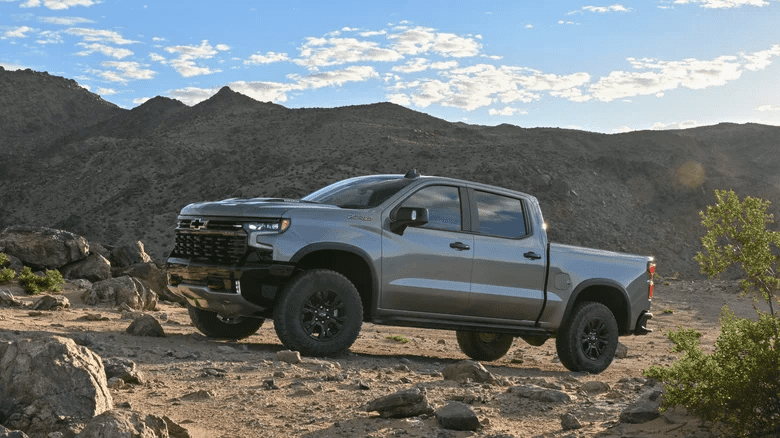
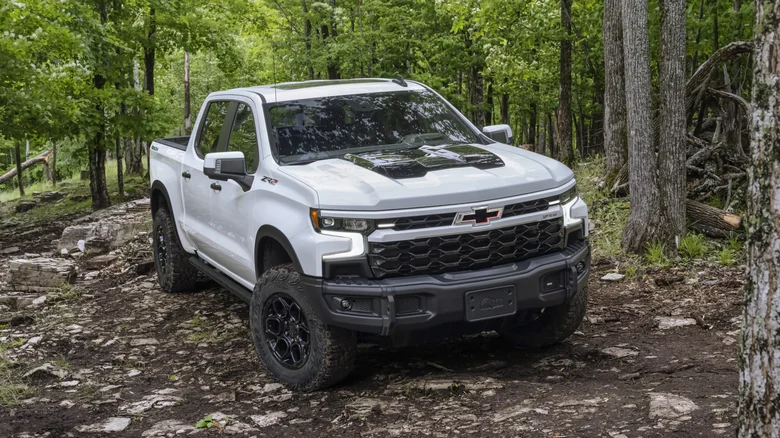
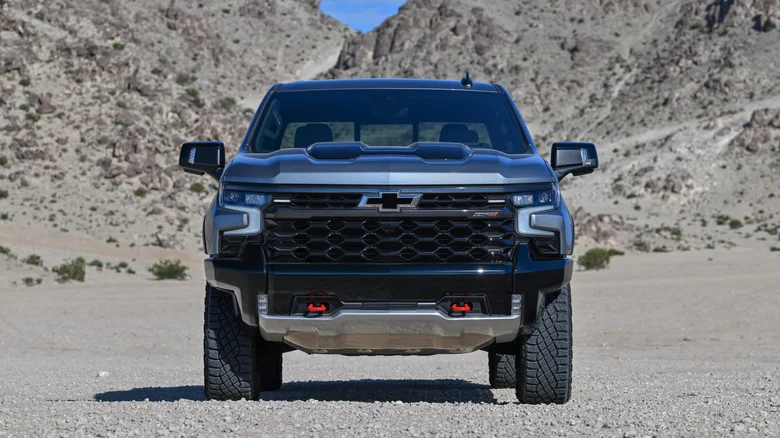
At the top of the off-road hierarchy is the Silverado ZR2-the brand’s most trail-capable gas-powered variant. While not quite as extreme as the Ford F-150 Raptor or Ram RHO, the ZR2 nonetheless delivers serious off-road performance courtesy of hardware specifically engineered for rocky, muddy, and uneven conditions.

Pricing for the 2026 ZR2 begins at $74,690 including the $2,595 destination fee. For that premium price, buyers get:

A 2-inch factory lift

Multimatic DSSV dampers featuring exceptional off-road control

High-clearance bumpers

Aluminum skid plates

33-inch mud-terrain tires

Exterior design that is muscular and clearly sets it apart from lower trims

The ZR2 is a powerhouse—but it’s also a major investment.

Why the Trail Boss Models Stand Out for Budget-Conscious Off-Roaders

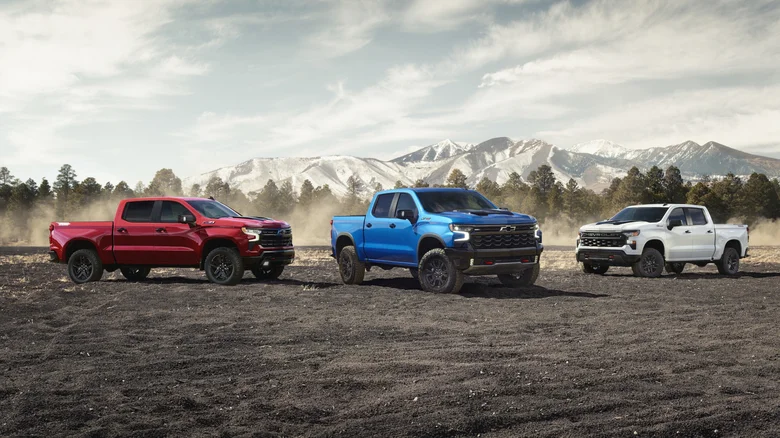
Lower in the lineup sit a pair of trims that promise formidable capability at a friendlier price: the LT Trail Boss and Custom Trail Boss.

These trims don’t have the extreme engineering of the ZR2, but in the real world of off-roading-mud trails, forest roads, campsites, and mild rock sections-they do far better than many buyers expect.

Price Breakdown

2026 Silverado ZR2: $74,690

2026 LT Trail Boss: $62,195

2026 Custom Trail Boss: $55,395

The Custom Trail Boss is nearly $20,000 cheaper than the ZR2 and $7,000 below the LT Trail Boss. For drivers who enjoy personalizing their trucks with aftermarket upgrades, the Trail Boss trims leave a lot of room in the budget.

What You Get With the Custom Trail Boss

image 13

For being on the more budget-friendly end of off-road trims, the Custom Trail Boss is relatively well-equipped:

Standard Equipment Includes:

2-inch suspension lift with the Z71 off-road package

Underbody skid plates (oil pan, transfer case, differential)

Red tow hooks for recovery situations

Hill Descent Control

18-inch black wheels with Goodyear mud-terrain tires

Four-wheel drive standard

A 7-inch infotainment system with wireless Apple CarPlay and Android Auto

Engine & Performance

Standard power for both the Custom Trail Boss and LT Trail Boss is Chevy’s TurboMax 2.7-liter four-cylinder, which churns out:

305 horsepower

430 lb-ft of torque

8-speed automatic transmission

This engine has great low-end torque, perfect for off-road crawls and rough terrain.

Where It Falls Short

The Custom Trail Boss foregoes many comfort and tech features, such as:

Heated seats

Wireless smartphone charging

360-degree camera system

Larger 13.4-inch touchscreen

These can be found on the LT Trail Boss, for those buyers willing to invest a little more.

Methodology: Why the Trail Boss Trims Make More Sense for Most Drivers

image 14

But after considerable hands-on testing and experience with the lineup on off-road terrain, most drivers clearly don’t need a full ZR2 package. The ZR2 shines in extreme situations of deep ruts, high-speed desert runs, or technical rock crawling, but full-size truck owners generally want:

The capable 4×4

Enough ground clearance for uneven trails

Strong towing capacity

A price that doesn’t sink their budget

And that is where the Trail Boss trims shine.

How Trail Boss Stacks Up Against Competitors

Across the market,

The Ford Raptor is better suited to more desert-style off-roading.

The Ram RHO prioritizes high-speed terrain and aggressive performance.

image 15

But for everyday adventurers-those pulling a camper, driving muddy access roads, or exploring forest trails-the Silverado LT Trail Boss and Custom Trail Boss offer power, capability, and value.

Bottom Line The ZR2 is a great machine for hardcore off-road enthusiasts, but the price keeps it out of reach for most buyers. The LT and Custom Trail Boss trims strike the perfect balance between trail capability, comfort, and affordability. For most drivers looking for adventure without overspending, the Trail Boss models represent the best blend of rugged performance and real-world usability.

The Mazda CX-5 has been one of Mazda’s most influential models since its debut in 2012. Now entering its third generation with the 2026 model year, this compact SUV remains at the heart of the brand’s global success. Over 4.5 million units have been sold worldwide, of which 1.6 million were purchased in the United States, thus easily making it one of Mazda’s most successful nameplates.

But for many shoppers, especially in the used market, one major question remains: How well does the Mazda CX-5 hold its value over time?

Depreciation Breakdown: How Much Value Does a Mazda CX-5 Lose?

image 7

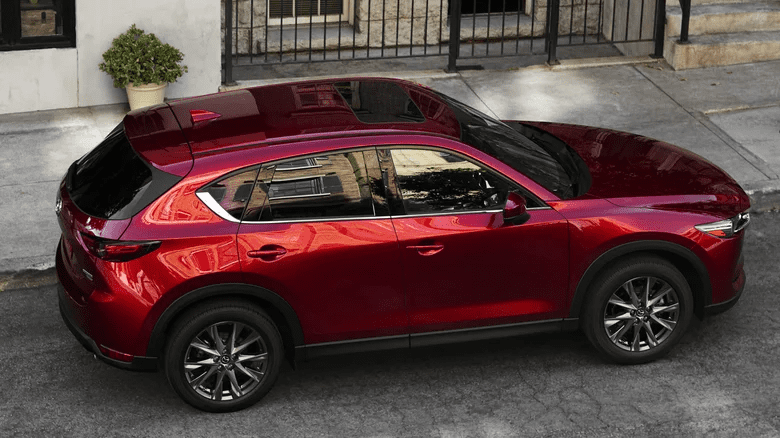
The resale value largely depends on the level of depreciation-the natural decline in a vehicle’s worth as time and mileage pile up. While CarEdge data indicates that the CX-5 holds its value relatively well for its class, it still depreciates more quickly than many of its top competitors.

Two-Year-Old Mazda CX-5

Average Depreciation: $12,963

Value Retained: 66.57%

Estimated Resale Value: $25,815

Mileage Assumption: 27,000 miles total (13,500 per year)

Five-Year-Old Mazda CX-5

Average Depreciation: $16,217

Value Retained: 58.18%

Estimated Resale Value: $22,561

Mileage Assumption: 67,500 miles total

These numbers suggest that while the CX-5 retains decent value, it nevertheless surrenders a significant portion of its value within the first five-year period, which is typically where most vehicles lose their value the fastest.

What Influences Depreciation Beyond Age and Mileage?

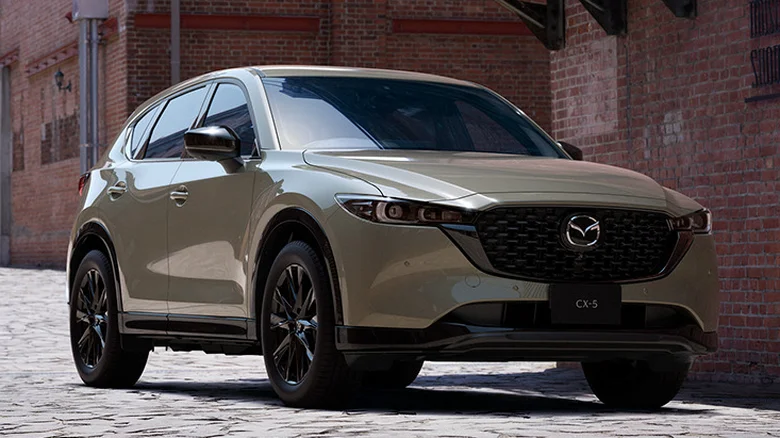
image 8

While time and mileage are the primary drivers of depreciation, several other factors play a major role in how much a used CX-5 is worth:

  1. History of maintenance

The better choice will always be a well-maintained CX-5.

Consistent oil changes

Scheduled services according to Mazda’s recommendations

Proper care for brakes, tires, and fluids

Complete service records can help your vehicle sell more quickly and bring a better sale price.

  1. Type of Driving

A car that does a lot of highway driving is often easier on the vehicle than constant stop-and-go city driving. A CX-5 that has spent its entire life doing long road trips might show less wear than one used to commute daily.

  1. History of Accidents

Clean CarFax or AutoCheck reports greatly increase resale value.

  1. Trim Level and Features

Higher trims, such as the Grand Touring or Signature, especially those with premium packages, will generally retain value better than their base-model brethren.

How the CX-5 Stacks Up Against Its Rivals

The compact SUV segment is highly competitive, with vehicles like the Toyota RAV4, Honda CR-V, and Subaru Forester always ranking near the very top in resale value. Here’s how the CX-5 compares:

After 2 Years

Toyota RAV4: 83.52% retained

Honda CR-V: 78.77%

Subaru Forester: 77.20%

Mazda CX-5: 66.57%

After 5 Years

Toyota RAV4: 69.42% retained

Honda CR-V: 67.01%

Subaru Forester: 65.98%

Mazda CX-5: 58.18%

These figures indicate that the CX-5 depreciates more quickly than its most popular rivals. For buyers, this is actually a good thing – used CX-5 models usually sell for less than similarly-equipped RAV4s or CR-Vs.

For sellers, though, the lower resale value means they may not recover as much of their investment when it’s time to move on.

The Bottom Line: Who Benefits Most?

Buyers: Buyers benefit by paying lower used prices because of higher depreciation.

Sellers: See resale returns lower than that of CR-V and RAV4 owners.

Simply stated, high depreciation works in the buyer’s favor, while strong resale value benefits the seller. Knowing which side you’re on helps you make the smartest financial decision.

Looking Ahead: The 2026 Mazda CX-5

Mazda is getting ready to introduce the highly anticipated third-generation CX-5 for the 2026 model year. Early reports indicate that

Refined design inspired by the CX-60 and CX-70

Updated safety and entertainment technology

More efficient powertrains

Improved handling and comfort These upgrades might be worth considering for shoppers who are torn between buying used or waiting for the latest model.

ADVERTISEMENT
Receive the latest news

Subscribe To Our Weekly Newsletter

Get notified about new articles