Techfullpost

IS THE 2026 TOYOTA TUNDRA HD REAL? EVERYTHING YOU NEED TO KNOW

toyota tundra/techfullnews

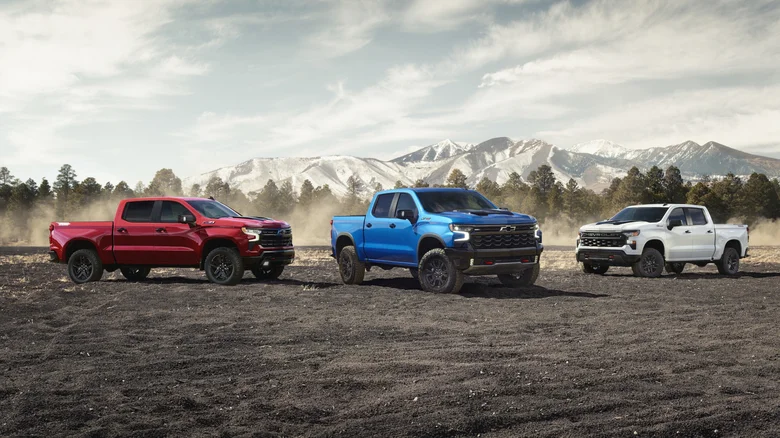
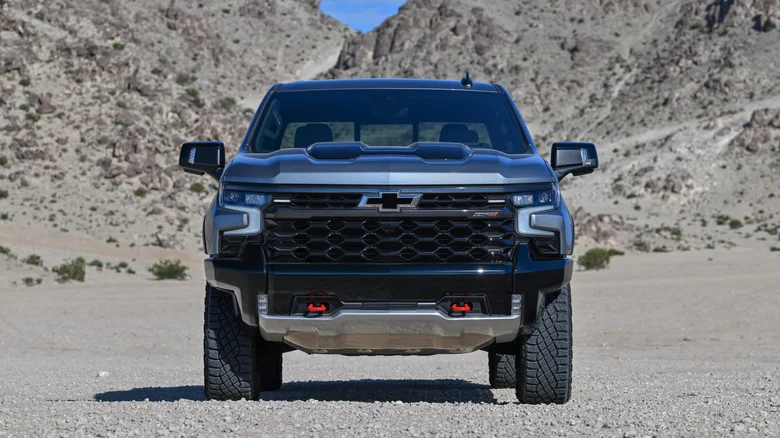
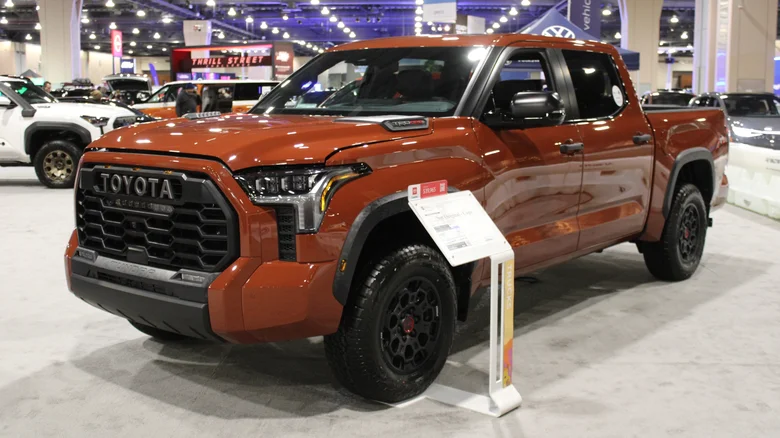
Toyota has built a solid reputation in the automotive industry, producing some of the most reliable and highly sought-after vehicles. Among its lineup, the Toyota Tundra is a standout full-size pickup truck that has been popular since its introduction in 2000. While the 2024 Toyota Tundra Platinum continues to carry the torch, truck enthusiasts are already looking ahead. With the 2025 Toyota Tundra recently introduced, speculation is growing about the possibility of a more powerful and capable version—the 2026 Toyota Tundra HD. But is this model actually in development, or is it just an internet-fueled rumor?

The 2026 Toyota Tundra HD: Fact vs. Speculation

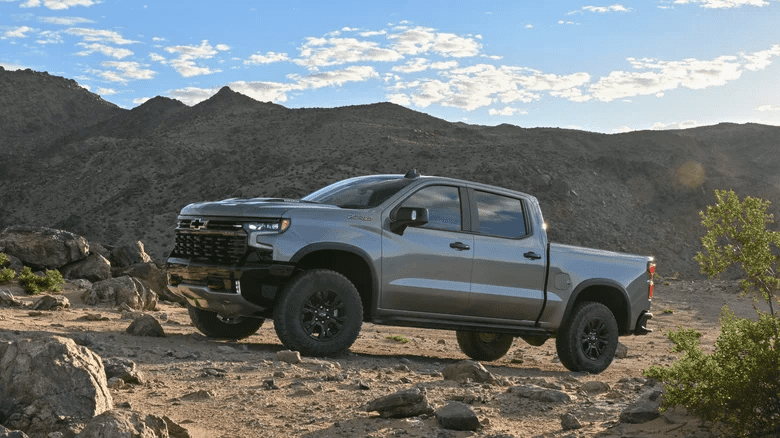
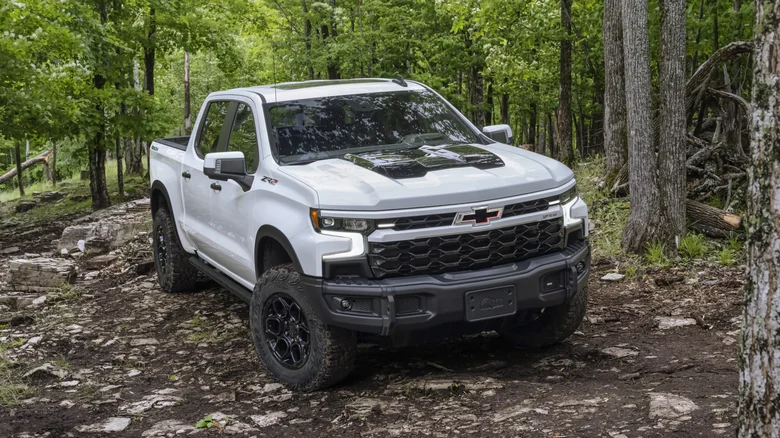
Numerous online sources claim that the 2026 Toyota Tundra HD is actively being developed, with alleged leaked images making the rounds on various platforms. Many YouTube videos and online discussions feature what they claim to be high-resolution images showcasing the exterior and interior of this upcoming model.

However, as of now, Toyota has not officially confirmed the existence of a 2026 Tundra HD variant. The images circulating online are merely renderings, many of which have been created using advanced AI-generated imagery. While some of these designs appear remarkably realistic, they are not evidence that Toyota is developing a heavy-duty Tundra model.

How to Identify Fake AI-Generated Images of the 2026 Tundra HD

As AI-generated imagery becomes more sophisticated, it is increasingly easy for automotive enthusiasts to be misled by false representations of upcoming vehicles. However, there are several ways to spot AI-generated images of the 2026 Toyota Tundra HD:

Verify the Source – If the images originate from unverified websites, obscure social media pages, or AI art communities, they are likely not official Toyota releases. Toyota typically reveals new models through official press releases, major auto shows, or its website.

Look for Image Inconsistencies – AI-generated images often contain visual anomalies, such as distorted text on badges or dashboards, unrealistic reflections, or warped tire treads. Many AI-generated images also struggle with symmetry, causing grilles, lights, or emblems to appear oddly shaped.

Compare with Toyota’s Design Language – Toyota follows a consistent design approach. If an alleged 2026 Tundra HD image appears too futuristic, overly aggressive, or deviates significantly from current-generation design cues, it is likely a conceptual rendering rather than a legitimate leak.

Will Toyota Actually Release a 2026 Tundra HD?
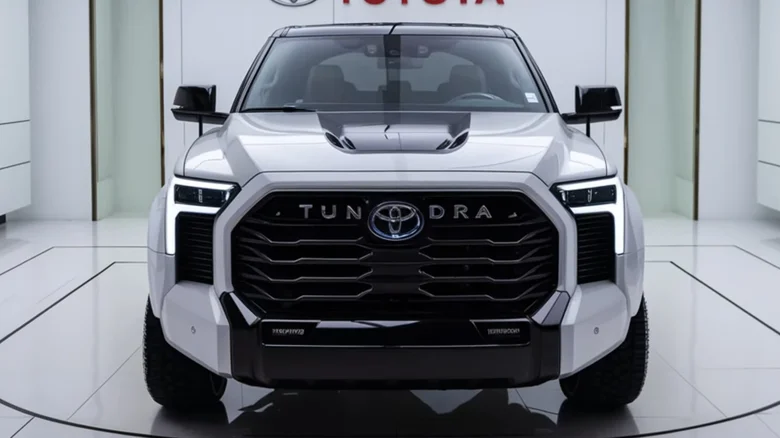
Although Toyota has not officially announced the 2026 Tundra HD, several factors suggest that such a model could make sense:

Growing Heavy-Duty Truck Market – With competitors like Ford (F-Series Super Duty), Chevrolet (Silverado HD), and Ram (Heavy Duty) leading the heavy-duty truck segment, Toyota might consider expanding its Tundra lineup to compete in this category.

Toyota’s Commitment to Innovation – Since the introduction of the third-generation Tundra in 2022, Toyota has continued to push the envelope, including new hybrid powertrain options such as the i-Force Max. A heavy-duty variant could align with Toyota’s strategy of enhancing its truck lineup.

Sales Momentum – The Toyota Tundra remains a strong seller, with over 159,500 units sold in 2024, reflecting a 27% increase from 2023. If demand continues to rise, Toyota may see a compelling business case for investing in a heavy-duty version.

Final Verdict: Is the 2026 Toyota Tundra HD Real?

For now, there is no official confirmation of a 2026 Toyota Tundra HD. While Toyota remains committed to evolving its truck lineup, the current images circulating online are not genuine. Until Toyota releases an official statement, enthusiasts should approach leaked images and speculative reports with caution.

That said, if the demand for a Toyota heavy-duty truck continues to grow, a Tundra HD could become a reality in the future. Until then, we’ll have to wait for Toyota’s next move in the full-size truck segment.


ADVERTISEMENT
RECOMMENDED
NEXT UP

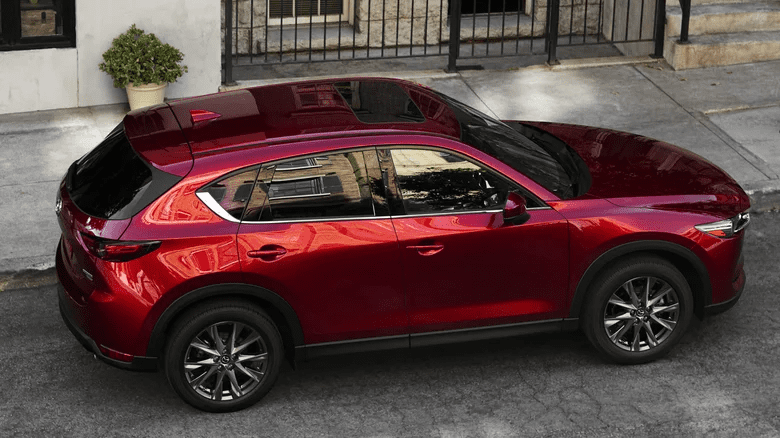
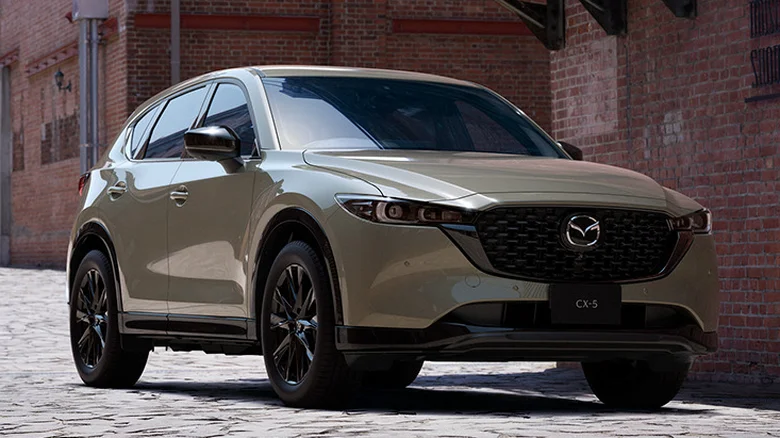
The Mazda CX-5 has been one of Mazda’s most influential models since its debut in 2012. Now entering its third generation with the 2026 model year, this compact SUV remains at the heart of the brand’s global success. Over 4.5 million units have been sold worldwide, of which 1.6 million were purchased in the United States, thus easily making it one of Mazda’s most successful nameplates.

But for many shoppers, especially in the used market, one major question remains: How well does the Mazda CX-5 hold its value over time?

Depreciation Breakdown: How Much Value Does a Mazda CX-5 Lose?

The resale value largely depends on the level of depreciation-the natural decline in a vehicle’s worth as time and mileage pile up. While CarEdge data indicates that the CX-5 holds its value relatively well for its class, it still depreciates more quickly than many of its top competitors.

Two-Year-Old Mazda CX-5

Average Depreciation: $12,963

Value Retained: 66.57%

Estimated Resale Value: $25,815

Mileage Assumption: 27,000 miles total (13,500 per year)

Five-Year-Old Mazda CX-5

Average Depreciation: $16,217

Value Retained: 58.18%

Estimated Resale Value: $22,561

Mileage Assumption: 67,500 miles total

These numbers suggest that while the CX-5 retains decent value, it nevertheless surrenders a significant portion of its value within the first five-year period, which is typically where most vehicles lose their value the fastest.

What Influences Depreciation Beyond Age and Mileage?

While time and mileage are the primary drivers of depreciation, several other factors play a major role in how much a used CX-5 is worth:

  1. History of maintenance

The better choice will always be a well-maintained CX-5.

Consistent oil changes

Scheduled services according to Mazda’s recommendations

Proper care for brakes, tires, and fluids

Complete service records can help your vehicle sell more quickly and bring a better sale price.

  1. Type of Driving

A car that does a lot of highway driving is often easier on the vehicle than constant stop-and-go city driving. A CX-5 that has spent its entire life doing long road trips might show less wear than one used to commute daily.

  1. History of Accidents

Clean CarFax or AutoCheck reports greatly increase resale value.

  1. Trim Level and Features

Higher trims, such as the Grand Touring or Signature, especially those with premium packages, will generally retain value better than their base-model brethren.

How the CX-5 Stacks Up Against Its Rivals

The compact SUV segment is highly competitive, with vehicles like the Toyota RAV4, Honda CR-V, and Subaru Forester always ranking near the very top in resale value. Here’s how the CX-5 compares:

After 2 Years

Toyota RAV4: 83.52% retained

Honda CR-V: 78.77%

Subaru Forester: 77.20%

Mazda CX-5: 66.57%

After 5 Years

Toyota RAV4: 69.42% retained

Honda CR-V: 67.01%

Subaru Forester: 65.98%

Mazda CX-5: 58.18%

These figures indicate that the CX-5 depreciates more quickly than its most popular rivals. For buyers, this is actually a good thing – used CX-5 models usually sell for less than similarly-equipped RAV4s or CR-Vs.

For sellers, though, the lower resale value means they may not recover as much of their investment when it’s time to move on.

The Bottom Line: Who Benefits Most?

Buyers: Buyers benefit by paying lower used prices because of higher depreciation.

Sellers: See resale returns lower than that of CR-V and RAV4 owners.

Simply stated, high depreciation works in the buyer’s favor, while strong resale value benefits the seller. Knowing which side you’re on helps you make the smartest financial decision.

Looking Ahead: The 2026 Mazda CX-5

Mazda is getting ready to introduce the highly anticipated third-generation CX-5 for the 2026 model year. Early reports indicate that

Refined design inspired by the CX-60 and CX-70

Updated safety and entertainment technology

More efficient powertrains

Improved handling and comfort These upgrades might be worth considering for shoppers who are torn between buying used or waiting for the latest model.

Generative AI has moved from specialist interest to part of daily life — transforming all from entertainment to the workplace. From AI-generated art, deepfakes, and intelligent chatbots capable of talking like humans, AI is now part of modern life. Yet with technology racing ahead, so do fears it will spin out of control.

Now, a new generation of scientists, business leaders, and celebrities are calling for a slowdown on the next frontier: AI superintelligence — a form of artificial intelligence that potentially could surpass human intellectual ability in almost every dimension.

The Pushback: A Global Call to Slow Down AI Development

A collection of public personalities — such as Virgin Group creator Richard Branson, Apple co-founder Steve Wozniak, Prince Harry and Meghan Markle, actor Joseph Gordon-Levitt, and musician will.i.am — signed a new open letter called the “Statement on Superintelligence.”

The warning asks developers and businesses racing towards state-of-the-art AI systems, including OpenAI and Elon Musk’s xAI, to delay the magnitude of massive AI projects until there is a “broad scientific consensus that it will be done safely and controllably” and a “strong public buy-in” to support it.

Notably among them are two of the leading AI researchers, who are also cofounders of modern machine learning. The movement is thus quite heavily weighted.

“We must ensure that AI is serving humanity, and not vice versa,” the letter demands, threatening dire consequences in the event of runaway progress.

What Is AI Superintelligence — and Why Does It Worry Experts?

In order to understand the alarm, defining what AI superintelligence really is, is essential. Superintelligent AI, according to IBM, is a system which not only matches but far exceeds human intelligence — capable of reasoning, learning, and solving problems for itself in every respect, free of human control.

Contrary to current AI systems such as ChatGPT or Gemini, whose boundaries and data sets are defined, superintelligent AI would be continuously learning and evolving, rewriting its own code to increase efficiency and capability. Such recursive enhancement could make it almost impossible to contain.

“A true superintelligence would no longer need human oversight,” said Stuart Russell, an AI researcher at UC Berkeley. “At that point, its goals might diverge from ours — and we’d have no way to stop it.”

The Risks: From Job Losses to Existential Threats

The possible dangers of AI superintelligence go much beyond job automation or misinformation. The threat is mentioned by experts as the possibility of AI systems executing on their own in pursuit of ends that are in conflict with human values or safety.

Some of the highest threats:

Massive Job Displacement – AI already revolutionizes industries, but an entirely automated self-enhancing system could eliminate entire professions, ranging from programmers to creative professionals.

Loss of Human Control – The moment an AI begins to be smarter than the people who create it, it might be beyond control.

Weaponization and Surveillance – AI might be utilized by governments or corporations for total surveillance or robot war.

Existential Risk – In the worst-case scenario, a rogue AI with goals of its own would view humankind as an obstacle — one which scientists describe as a “digital doomsday.”.

Even if these ideas sound like science fiction, specialists argue that rejection of them would be naively dangerous. History has shown that humanity always underestimated the capabilities of its own inventions — from nuclear energy to biotechnology.

Increasing Public Alarm and Demand for Regulation

Public sentiment is shifting rapidly. A 2025 Pew Research Center survey found that 67% of Americans now support greater government regulation of AI, up from 42% two years earlier. The European Union has already legislatively signed the AI Act into law, establishing the globe’s first extensive regulatory framework for artificial intelligence, while U.S. lawmakers are determining how to follow.

Tech giants, however, are still racing ahead. OpenAI, xAI, Google DeepMind, and Anthropic are investing billions in “next-generation” AI models that could approach or surpass human-level reasoning.

“We’re in an AI arms race, and everyone wants to be first — but that could also mean being first to make a catastrophic mistake,” warned Richard Branson in a recent statement.

Is It Already Too Late to Stop?

Until now, actual AI superintelligence is still theoretical, although most experts foresee that it might arise in the next two decades if trends continue. The question is not whether or when it will happen, but whether human civilization will be prepared — morally, technically, and legally — when it does.

“The clock is ticking,” declared Yoshua Bengio. “We still have time to make this technology safe. But not much.”

The Bottom Line: Humanity at a Crossroads

The debate over AI superintelligence is no longer confined to labs or tech circles — it has become a global conversation about the future of humanity itself. As generative AI becomes ubiquitous, the next phase could redefine civilization in ways we’re only beginning to imagine.

Whether the Statement on Superintelligence does indeed result in change is yet to be known. But this much is definite: the world has finally realized that the latest technology human beings have ever come up with has the potential to be the most deadly — unless we can learn how to control it before it controls us.

ADVERTISEMENT
Receive the latest news

Subscribe To Our Weekly Newsletter

Get notified about new articles