Techfullpost

Mind-Blowing Satellite Secrets Revealed: XRISM and Moon Sniper’s Epic Mission

Satellite Secrets Revealed

A groundbreaking satellite aimed at revolutionizing our understanding of celestial objects, and a lunar lander known as the “Moon Sniper,” embarked on a momentous journey on Wednesday night.

The Japanese Space Agency (JAXA) launch, after several weather-related delays, took place aboard an H-IIA rocket from the Tanegashima Space Center at 7:42 p.m. ET on Wednesday or 8:42 a.m. Japan Standard Time on Thursday.
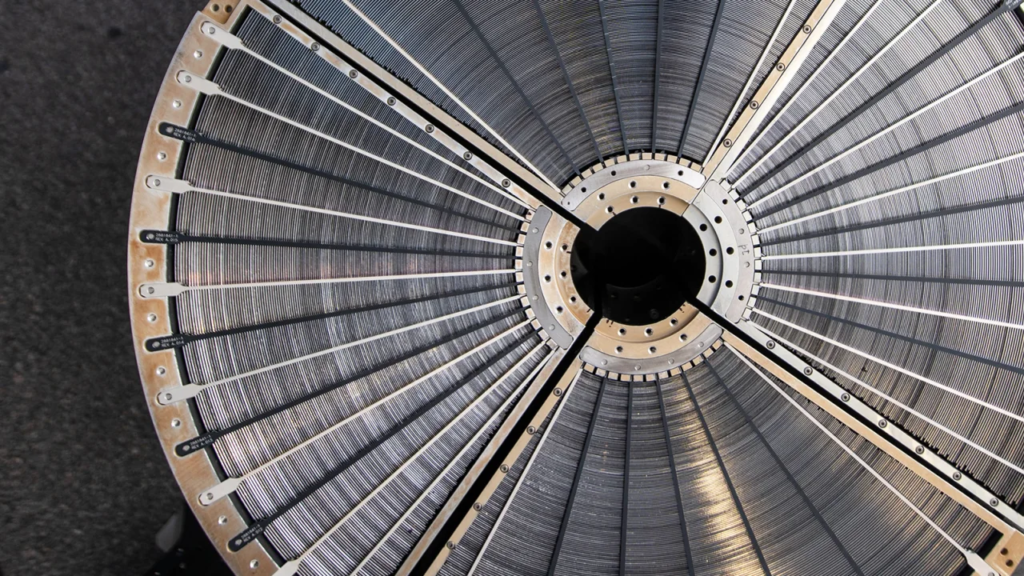
image 31

The event was streamed live on JAXA’s YouTube channel, providing viewers with broadcasts in both English and Japanese.

The satellite, officially named XRISM (pronounced “crism”), short for X-Ray Imaging and Spectroscopy Mission, is a collaborative endeavor between JAXA and NASA, with contributions from the European Space Agency and Canadian Space Agency.

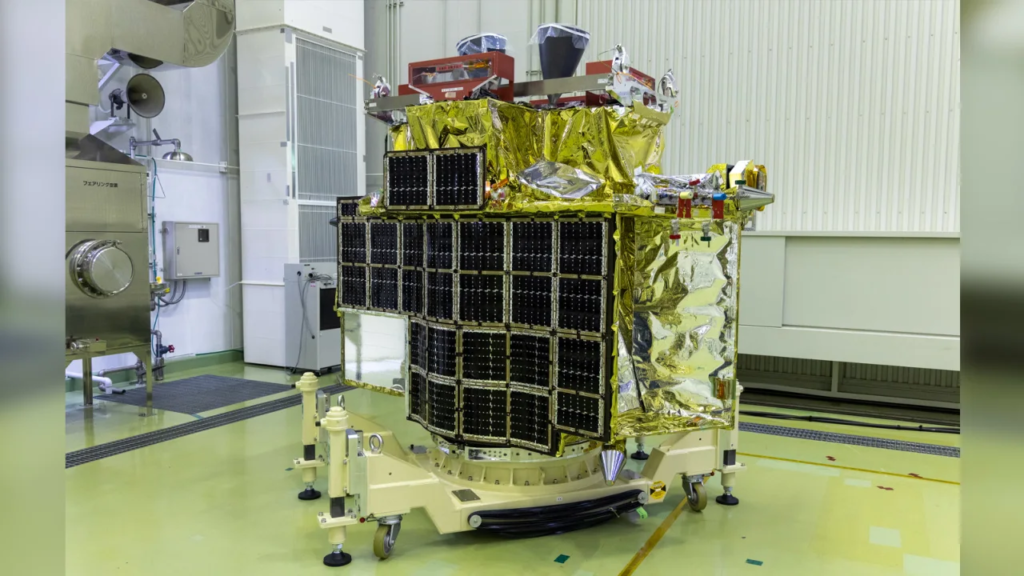
Accompanying XRISM is JAXA’s SLIM, or Smart Lander for Investigating Moon. This compact lunar lander is engineered to demonstrate an extremely precise landing within 100 meters (328 feet), as opposed to the typical kilometer range, utilizing high-precision landing technology. This remarkable precision earned the mission its moniker, “Moon Sniper.”

According to NASA, the satellite and its two instruments will focus on observing the universe’s hottest regions, largest structures, and objects with the most substantial gravitational forces. XRISM’s primary function is to detect X-ray light, a wavelength that is invisible to the human eye.

X-rays are emitted by some of the most energetic objects and events in the cosmos, which is why astronomers are eager to study them.

The satellite is equipped with thousands of curved, nested mirrors specifically designed for detecting X-rays, in contrast to other wavelengths of light. Upon reaching orbit, XRISM will require several months of calibration. The mission is designed to operate for three years.
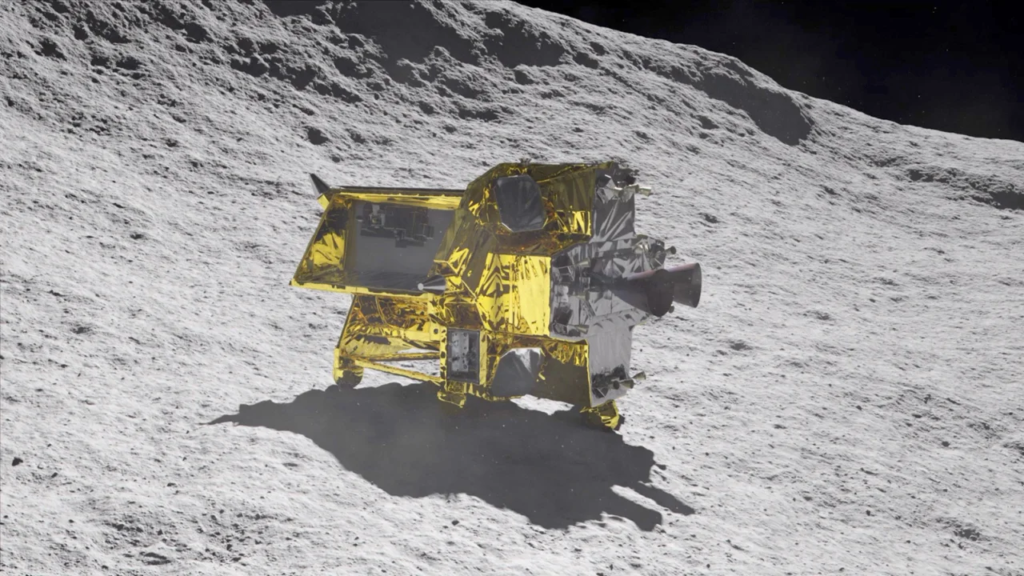
image 32

XRISM is capable of detecting X-rays with energies ranging from 400 to 12,000 electron volts, significantly beyond the energy levels of visible light, which typically ranges from 2 to 3 electron volts, according to NASA. This broad range of detection will enable the study of cosmic phenomena across the universe.

The satellite houses two instruments: Resolve and Xtend. Resolve tracks minute temperature fluctuations to determine the source, composition, motion, and physical state of X-rays. Resolve operates at a chilling temperature of minus 459.58 degrees Fahrenheit (minus 273.10 degrees Celsius), approximately 50 times colder than deep space, thanks to a container of liquid helium.

This instrument will enable astronomers to unlock the mysteries of cosmic phenomena, including the chemical details of hot gas within galactic clusters.

Meanwhile, Xtend provides XRISM with one of the most extensive fields of view on an X-ray satellite.

“The spectra XRISM collects will be the most detailed we’ve ever seen for some of the phenomena we’ll observe,” said Brian Williams, NASA’s XRISM project scientist at Goddard. “The mission will provide us with insights into some of the most difficult places to study, like the internal structures of neutron stars and near-light-speed particle jets powered by black holes in active galaxies.”

In parallel, SLIM will employ its own propulsion system to embark on a journey toward the moon. The spacecraft will reach lunar orbit approximately three to four months after launch, orbit the moon for one month, and then begin its descent, aiming for a soft landing within four to six months after launch. If the lander achieves its goal, it will also conduct a brief study of the lunar surface.
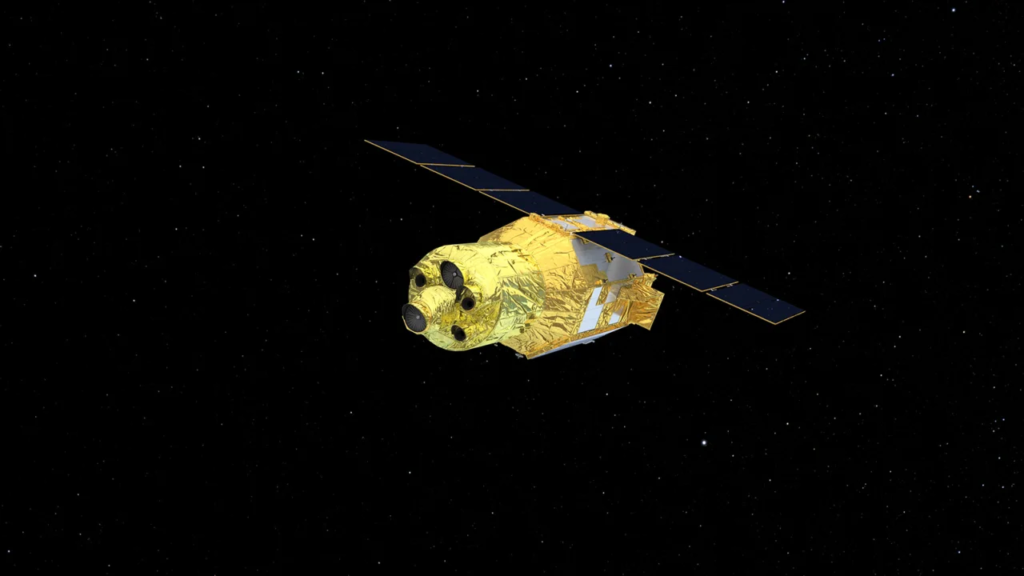
image 33

Unlike recent lunar lander missions that have targeted the moon’s south pole, SLIM has set its sights on a location near a small lunar impact crater called Shioli, near the Sea of Nectar. Here, it will investigate rock compositions that could help scientists uncover the moon’s origins. The chosen landing site is just south of the Sea of Tranquility, where Apollo 11 made its historic landing near the moon’s equator in 1969.

Achieving precise landings on the moon is a significant goal for JAXA and other space agencies, particularly in resource-rich areas such as the lunar south pole, where permanently shadowed regions contain water ice, and numerous hazards like craters and rocks must be navigated. Future missions will require pinpoint landings to avoid these obstacles.

Moreover, SLIM’s lightweight design holds promise for agencies planning more frequent missions and exploring the moons of other planets, such as Mars. If SLIM achieves its objectives, JAXA believes it will revolutionize missions from “landing where we can” to “landing where we want.”

ADVERTISEMENT
RECOMMENDED
NEXT UP

Apple filed a lawsuit against OpenAI on Friday, accusing the ChatGPT maker and two former Apple employees of stealing trade secrets to speed up its move into consumer hardware. The suit marks a sharp turn in a relationship that has grown increasingly tense.

The complaint, filed in the U.S. District Court for the Northern District of California, claims OpenAI ran a coordinated effort to obtain and use Apple’s confidential information through former staff, hiring practices and supplier ties. Apple says this helped OpenAI push into the hardware business faster than it could have on its own.

OpenAI pushed back in a statement. “We have no interest in other companies’ trade secrets,” the company said. “We remain focused on building innovative technology that empowers people everywhere.”

At stake is control over what future AI devices will look like, and whether they’ll rely on apps and operating systems the way phones do now. If OpenAI succeeds in building a device that competes for consumer attention, it could cut into iPhone sales. Analysts say OpenAI is already working on a phone or some other physical product.

The lawsuit lands just days after OpenAI beat back a legal challenge from Elon Musk’s xAI, so the company is fighting on two fronts.

Paolo Pescatore, an analyst at PP Foresight, said the dispute reflects how much the two companies’ interests have diverged. “Apple sees OpenAI moving from partner to potential rival, while OpenAI is trying to reduce its dependence on the iPhone and build a direct relationship with consumers,” he said. “Even if the allegations are not proven, the lawsuit could delay OpenAI’s hardware ambitions and further weaken what is already becoming an increasingly fragile partnership.”

Two former employees named

image

The lawsuit names Chang Liu, a former senior system electrical engineer at Apple, and Tang Yew Tan, who served as vice president of product design for the iPhone and Apple Watch before leaving. Neither responded to requests for comment.

Apple alleges Liu never returned a company laptop and later exploited an authentication bug to get into Apple’s internal network, where he downloaded dozens of confidential hardware files.

Tan, who now leads hardware at OpenAI, worked on the iPhone for most of his 24 years at Apple, according to his LinkedIn profile. Apple claims Tan spent his final months at the company emailing himself information about Apple’s suppliers and internal industry summaries, calling it a methodical effort to benefit OpenAI before he left.

Apple also alleges Tan told colleagues to bring Apple parts to job interviews at OpenAI for “show and tell” sessions. In one instance cited in the filing, an OpenAI job candidate reportedly said he “didn’t even know we could take those from the office.”

The suit names OpenAI Foundation, OpenAI Group PBC and io Products, the hardware startup OpenAI acquired, as additional defendants.

Apple says it tried to raise the issue first

According to the complaint, Apple wrote to OpenAI in February to flag concerns that its confidential information was reaching the company, and asked to discuss it. Apple says it never got a response.

More than 400 former Apple employees now work at OpenAI, the filing states, and Apple acknowledges that some of them naturally carry knowledge of its trade secrets. But the company argues that doesn’t give OpenAI license to use that information.

“That OpenAI now employs people who were once entrusted with Apple’s trade secrets does not entitle OpenAI to use that information to jumpstart its hardware efforts,” Apple wrote in the complaint.

The filing also claims OpenAI employees approached Apple suppliers for confidential details, and in one case got a supplier to carry out a proprietary metal-finishing technique, believing OpenAI had Apple’s permission to use it.

Legal experts weigh in

Mark Lemley, a professor at Stanford Law School, said Apple’s complaint “has the potential to be a very big case.” He noted that some of what Apple describes, like OpenAI hiring hundreds of former Apple staff, isn’t illegal under California law, which generally allows employees to move freely to competitors.

“But if Apple’s claims that the employees took confidential documents with them, and that OpenAI is using those documents, are true, that is a problem for OpenAI,” Lemley said.

Camilla Hrdy, a law professor at Rutgers Law School, said the case is likely to get complicated because most past trade secret disputes involving AI have centered on software, not hardware.

“These trade secret lawsuits are frequently brought in the tech space, and we usually learn much, much more as the case develops,” Hrdy said. “OpenAI is not a defendant that can’t afford to defend itself.”

A partnership under strain

A person familiar with the matter told Reuters in May that OpenAI had been weighing legal options against Apple of its own, including notifying Apple of a possible breach of contract without necessarily filing a full lawsuit.

The two companies had been working together as recently as 2024, when Apple folded OpenAI’s ChatGPT into its Apple Intelligence system, giving Siri and other apps access to it. Under that partnership, iPhone users can get ChatGPT answers through Siri and sign up for ChatGPT memberships directly from their phone’s settings menu.

Apple rolled out a long-delayed overhaul of Siri last month, two years after first promising the upgrades and repeatedly pushing back the timeline.

OpenAI, meanwhile, has been building out its own hardware ambitions. Last year, it bought io Products, a startup founded by former Apple design chief Jony Ive, in a deal worth $6.5 billion. Ive is not named as a defendant in Apple’s lawsuit.

OpenAI has formally replied to a wrongful-death lawsuit filed by the family of 16-year-old Adam Raine, contending that the tragedy was due to what it called the teen’s “misuse” and “unauthorized use” of ChatGPT – and not from the chatbot’s design or behavior.

The legal response, first reported by NBC News, marks the company’s first detailed rebuttal since the lawsuit was filed in August in California Superior Court. The case has drawn nationwide attention because it centers on a difficult and deeply emotional question: What responsibility do AI developers have when their products are used in sensitive or dangerous ways by minors?

OpenAI Cites Terms of Use and Section 230 Protections

In its court filing, OpenAI said Raine’s death was the result of actions outside the intended scope of the platform, pointing to several violations of its terms of use. Those terms restrict access by minors without parental consent and prohibit using the system for discussions involving self-harm.

The company also invoked Section 230 of the Communications Decency Act, a long-standing legal shield that limits liability for online platforms when it comes to user interactions and user-generated content. OpenAI argued that the family’s claims are barred under that federal protection.

Company: ChatGPT Kept Telling Him to Get Help

image 12

According to reporting from NBC News and Bloomberg, OpenAI told the court that ChatGPT repeatedly encouraged Raine to reach out to crisis-support resources, such as helplines, mental-health professionals, and trusted adults. The company said these reminders appeared more than 100 times throughout his months-long conversations.

“A full reading of his chat history shows that his death, while devastating, was not caused by ChatGPT,” said OpenAI, insisting that the AI system didn’t encourage dangerous actions and was never designed to provide support in high-risk emotional situations.

Family Says Responsibility Lies With OpenAI’s Product Design

The Raine family, on the contrary, believes that the teenager became increasingly dependent on the chatbot, which they argue evolved from a helpful academic tool to an emotional one, actually worsening his distress.

Their lawsuit alleges that “intentional design choices” at the time of the rollout of GPT-4o, one of OpenAI’s most advanced models, made for an environment that could mislead and manipulate vulnerable users. They also say the company failed to build appropriate safeguards to protect minors.

The complaint points out that GPT-4o’s release helped fuel OpenAI’s valuation jump from $86 billion to around $300 billion. It accuses the company of putting rapid product growth ahead of safety.

OpenAI Says Excerpts from Family Lack Context

In a Tuesday blog post, OpenAI addressed the public controversy for the first time since the lawsuit gained national headlines. The company said it would defend itself “with respect for the complexity and human impact” surrounding the case, noting that some excerpts in the family’s complaint were taken from longer messages that “require more context.”

The full transcripts were filed under seal with the court by OpenAI, meaning they are not publicly available.

New Safeguards Rolled Out After Lawsuit

The day after the lawsuit was filed, OpenAI announced the introduction of parental controls on its platform-a feature many safety experts had been urging for months. Since then, the company has rolled out additional safeguards aimed at helping protect teens when conversations get emotionally sensitive.

These changes include stronger detection of crisis-related language and more consistent redirection to appropriate help resources.

A Landmark Case for the AI Industry

The lawsuit comes at a time when regulators, lawmakers, and parents are increasingly concerned about how AI interacts with young users. With more teens turning to chatbots for help with everything from academics to companionship, experts say the case could set an important legal precedent about the responsibilities of AI developers. Both sides are preparing for what could be one of the first major court battles testing AI liability, youth safety and the limits of Section 230 in the age of advanced artificial intelligence.

ADVERTISEMENT
Receive the latest news

Subscribe To Our Weekly Newsletter

Get notified about new articles