Techfullpost

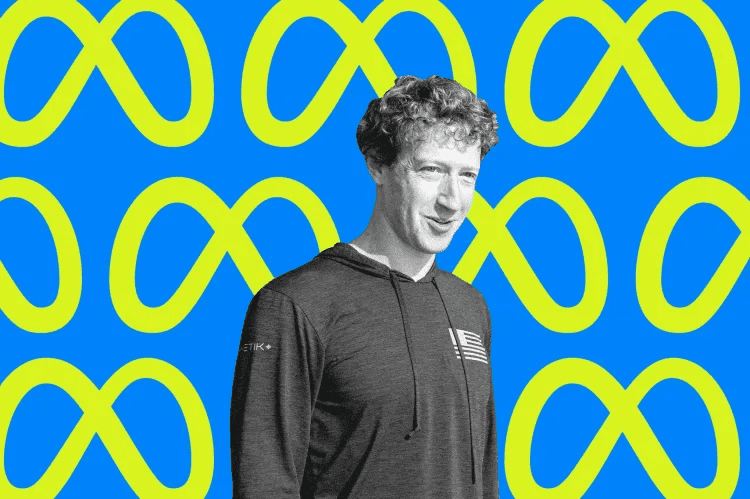
Mark Zuckerberg just declared war on the advertising sector as a whole

Mark Zuckerberg just declared war

In a startling revelation during his interview with Stratechery, Mark Zuckerberg unveiled Meta’s radical vision for AI-powered advertising that could dismantle the entire traditional ad ecosystem. The Meta CEO described a future where:

  1. Businesses simply state their objectives and connect their bank account
  2. No creative assets, targeting parameters, or measurement tools are needed
  3. Meta’s AI handles everything from ad creation to placement to optimization
  4. Clients merely “read the results we spit out”

This vision of fully automated, AI-driven advertising represents what industry analysts are calling the most significant disruption to marketing since the dawn of digital advertising.

Deconstructing Meta’s “Infinite Creative” Ecosystem

The Four Pillars of Meta’s AI Advertising Machine

  1. Automated Content Generation
    • AI creates unlimited variations of photos, videos, and copy
    • Dynamic adaptation to platform-specific formats (Reels, Stories, Feed)
    • Real-time cultural and trend integration
  2. Self-Optimizing Campaigns
    • Continuous A/B testing at unprecedented scale
    • Instant creative iteration based on performance
    • Predictive modeling of emerging audience preferences
  3. Closed-Loop Commerce
    • Direct integration with business bank accounts
    • Seamless checkout experiences within Meta’s ecosystem
    • Automated budget allocation across highest-performing channels
  4. Black Box Analytics
    • Simplified reporting (“just read the results”)
    • Proprietary attribution models
    • Reduced transparency into methodology

Industry Backlash: Why Ad Agencies Are Pushing Back

The Trust Crisis in Platform-Controlled Advertising

Major advertising executives responded to Zuckerberg’s comments with surprising vitriol:

“Brand safety is just the tip of the iceberg,” said the CEO of a top-5 global ad agency who requested anonymity. “When platforms control both the creative and the measurement, we’re entering dangerous territory reminiscent of the ad fraud scandals of the 2010s.”

Key concerns from industry leaders include:

  • Conflict of Interest: Platforms grading their own homework
  • Brand Safety Risks: AI-generated content appearing alongside controversial material
  • Loss of Creative Control: Brands surrendering their visual identity to algorithms
  • Measurement Opaqueness: Reduced ability to verify platform-reported results

The Existential Threat to Traditional Agencies

Meta’s vision particularly threatens:

  1. Creative Agencies (WPP, Publicis, Ogilvy)
  2. Media Buyers (GroupM, Omnicom Media Group)
  3. Ad Tech Middlemen (Trade Desk, LiveRamp)

As one media executive starkly put it: “This isn’t evolution—it’s extermination. They’re coming for everyone between the brand and the consumer.”

The Small Business Opportunity: Democratizing Sophisticated Advertising

While agencies panic, Meta’s AI tools could revolutionize marketing for:

  1. Local Businesses: Restaurants, retailers, service providers
  2. Direct-to-Consumer Brands: Emerging e-commerce players
  3. Solopreneurs: Creators and micro-businesses

Potential Benefits:

  • Elimination of $10,000+ monthly agency retainers
  • Access to sophisticated tools previously only available to big brands
  • Level playing field against larger competitors
  • Real-time optimization without marketing expertise

The Technical Challenges Ahead

Hurdles Meta Must Overcome

  1. Creative Quality Control
    • Preventing “uncanny valley” AI content
    • Maintaining brand consistency across assets
  2. Algorithmic Bias
    • Ensuring fair representation in AI-generated visuals
    • Preventing inadvertent stereotype reinforcement
  3. Measurement Trust
    • Developing third-party verification options
    • Providing sufficient transparency for skeptical brands
  4. Platform Fatigue
    • Avoiding ad overload as creation costs approach zero
    • Maintaining user experience with proliferating AI content

The Broader Implications for Digital Advertising

How Other Platforms Might Respond

  1. Google: Likely to accelerate its own AI ad tools
  2. Amazon: Could integrate similar solutions for e-commerce ads
  3. TikTok: May leverage its creative heritage for hybrid approaches
  4. Apple: Potential privacy-focused counterofferings

The Future of Marketing Careers

Emerging roles may include:

  • AI Campaign Supervisors
  • Brand Safety Auditors
  • Creative Prompt Engineers
  • Ethical AI Specialists

Declining roles likely include:

  • Junior copywriters
  • Basic media buyers
  • Production coordinators
  • Some analytics positions

Ethical Considerations and Regulatory Risks

Potential Flashpoints

  1. Disclosure Requirements
    • Will AI-generated ads need special labeling?
    • FTC and EU may mandate transparency
  2. Deepfake Concerns
    • Use of synthetic influencers and spokespeople
    • Potential for misleading product representations
  3. Antitrust Scrutiny
    • Increased platform control over ad ecosystem
    • Potential restrictions on self-preferencing

Preparing for the AI Advertising Future: A Strategic Guide

image 11

For Brands:

  1. Audit Your Creative Assets
    • Build comprehensive brand guidelines for AI training
    • Secure rights to all existing marketing materials
  2. Develop In-House AI Expertise
    • Train teams on prompt engineering
    • Establish creative review processes for AI outputs
  3. Diversify Your Mix
    • Reduce over-reliance on any single platform
    • Invest in owned channels (email, website, retail)

For Agencies:

  1. Pivot to High-Value Services
    • Focus on strategy over execution
    • Develop proprietary AI tools
  2. Become Verification Experts
    • Offer third-party measurement of platform claims
    • Specialize in brand safety audits
  3. Embrace Hybrid Models
    • Combine human creativity with AI scale
    • Develop “AI art director” roles

The Bottom Line: Advertising’s AI Inflection Point

Zuckerberg’s comments reveal more than just Meta’s product roadmap—they expose the fundamental tension between platforms and the traditional advertising ecosystem. As AI democratizes ad creation and optimization, we’re witnessing:

  1. The Commoditization of Creative
    • From scarce resource to infinite commodity
  2. The Centralization of Power
    • Platforms consolidating control over the entire funnel
  3. The Transformation of Marketing
    • From art-meets-science to pure data science

The coming years will determine whether Meta’s vision leads to unprecedented efficiency or dangerous concentration of power—and whether the $700 billion advertising industry will go quietly into that algorithmic night.

ADVERTISEMENT
RECOMMENDED
NEXT UP

TikTok is taking its cultural influence to the next level: The short-form video platform announced Monday that it will host its first-ever TikTok Awards show in the United States, marking a major step in its evolution from a social media app into a full-fledged entertainment powerhouse.

The show – featuring categories like “Creator of the Year,” “Video of the Year,” “Muse of the Year,” and “Breakthrough Artist of the Year” – will be held on December 18 at the Hollywood Palladium in Los Angeles. Fans everywhere will be able to watch the extravaganza live via the TikTok app and on Tubi, with on-demand viewing available on Tubi the following day.

Unlike Instagram’s recently launched “Ring” awards, TikTok’s event embraces a classic Hollywood-style ceremony, replete with a red carpet, live performances, and an in-person audience filled with hundreds of top creators.

image 2

Voting will take place via the ‘Favorite of 2025’ voting portal within the app, starting November 18, making this a truly community-driven celebration, highlighting creators who have shaped culture on TikTok in 2025.

Celebrating Creativity Across Cultures

Although this marks TikTok’s first awards show in the U.S., the company has already hosted successful versions in Germany, Mexico, Korea, and other countries — each designed to recognize local talent and viral content. Hosting a major event in Los Angeles underlines the growing role of TikTok in the global entertainment ecosystem, becoming the bridge between traditional media and digital creativity.

Meet the Nominees

Standout nominees for “Creator of the Year” include viral sensations adamw, alixearle, brookemonk_, keith_lee125, and kristy.sarah, who have each gained millions of followers through their respective uses of relatable humor, lifestyle content, and creative storytelling.

Then there’s the “Breakthrough Artist of the Year” category, which includes alexwarren, katseyeworld, laufey, ravynlenae, and sombr-all rising musical talents whose sounds have defined TikTok’s ever-changing musical landscape.

The other notable categories are “Storyteller of the Year,” “TikTok for Good Award,” “MVP of the Year,” “Okay Slay Award,” and “TikTok LIVE Creator of the Year.” The full list of nominees can be found on the official announcement post of TikTok.

Beyond an App: A Cultural Powerhouse

TikTok’s foray into the awards circuit signals its ambition to establish itself as a cultural tastemaker, not just a social platform. According to the company, the event will put a spotlight on creators across fashion, beauty, sports, film, and entertainment, highlighting the diversity and innovation that define the TikTok community.

“The trophies up on stage will beam a colorful glow upon the creators defining this new era of culture,” TikTok said in its announcement, adding that the awards will celebrate creativity in all its forms, from viral trends to artistic innovation. With its first U.S. awards show, TikTok is sending a clear message: it’s no longer just about short videos; it’s a central stage for the next generation of entertainment, artistry, and cultural influence.

Meta is pushing deeper into AI territory with new AI-editing tools in Instagram Stories, where users can edit images and videos simply by typing in what they want to modify. From hair color to special effects, the feature upends the possibilities of creators and regular users alike to personalize their content. Instagram Stories Meta AI editing tools

Text Prompts Meet Visual Creativity

image 14

Until now, Instagram’s AI editing tools were primarily accessible through Meta AI’s chatbot, which required users to interact via direct messages. With this latest integration, however, AI editing becomes native to Stories, allowing anyone to make instant visual edits using plain language commands.

These new edit features come under the “Restyle” menu that can be accessed using the paintbrush icon in Instagram Stories. One can type commands such as “give me a sunset background,” “remove the person in the corner,” or “color my hair pink.” The AI carries out the edit one wants within seconds.

Meta suggests that users only have three primary actions to select from — Add, Remove, or Change — while specifying what they’d like to alter. The AI will automatically add objects, alter appearances, or completely restyle the photo based on what they’ve described.

Preset Effects and Dynamic Video Edits

image 15

In addition to custom prompts, Instagram also has pre-select AI effects that can beautify or stylize posts. Filters like sunglasses, a denim jacket, or even a watercolor art effect can be applied.

On video content, the feature does even better — creators are able to superimpose atmospheric effects like falling snow, glowing embers, or cinematic lighting, which makes Stories appear more polished and professional without the necessity of using editing apps.

Privacy and AI Usage Terms

While the new features enable creativity, they come with privacy implications. Being used to introduce users to Meta’s Terms of Service for AI, which allow the company to “analyze photos and videos, including facial data, to make AI better.” According to Meta, it allows its systems to “summarize image contents, edit images, and generate new content based on the image.”

Critics have also had concerns regarding the ways in which such data might be used to train Meta’s broader AI models, though the company has sworn to remain committed to responsible innovation and transparency.

Meta’s Expanding AI Push

image 16

The release of AI editing software is just part of Meta’s overall strategy to roll out artificial intelligence on every platform it has, from Facebook and Instagram to WhatsApp. Recently, Meta began beta-testing a “Write with Meta AI” feature, which helps users compose intelligent or engaging comments under Instagram posts.

Meanwhile, Meta’s separate Meta AI app — with its chatbot and new “Vibes” AI-generated video stream — has been picking up steam. According to Similarweb estimates, iOS and Android daily active users rose from 775,000 to 2.7 million over a four-week span as of October 17.

Protecting Younger Users

As a response to increasing complaints from regulators and parents, Meta has also added new parental tools for its AI features. Parents may now shut off chats with AI characters and filter topics that their teens have with the chatbot to provide a safer online environment.

With these new instruments, Instagram is not only emerging as a social network but a creative platform fueled by generative AI. With Meta, OpenAI, and Google competing for leadership, this launch shows how AI is becoming more a part of the social fabric of our era — blurring the line between creativity, technology, and self-expression.

ADVERTISEMENT
Receive the latest news

Subscribe To Our Weekly Newsletter

Get notified about new articles